
Snakewood
Scientific name: Brosimum guianense
Overview
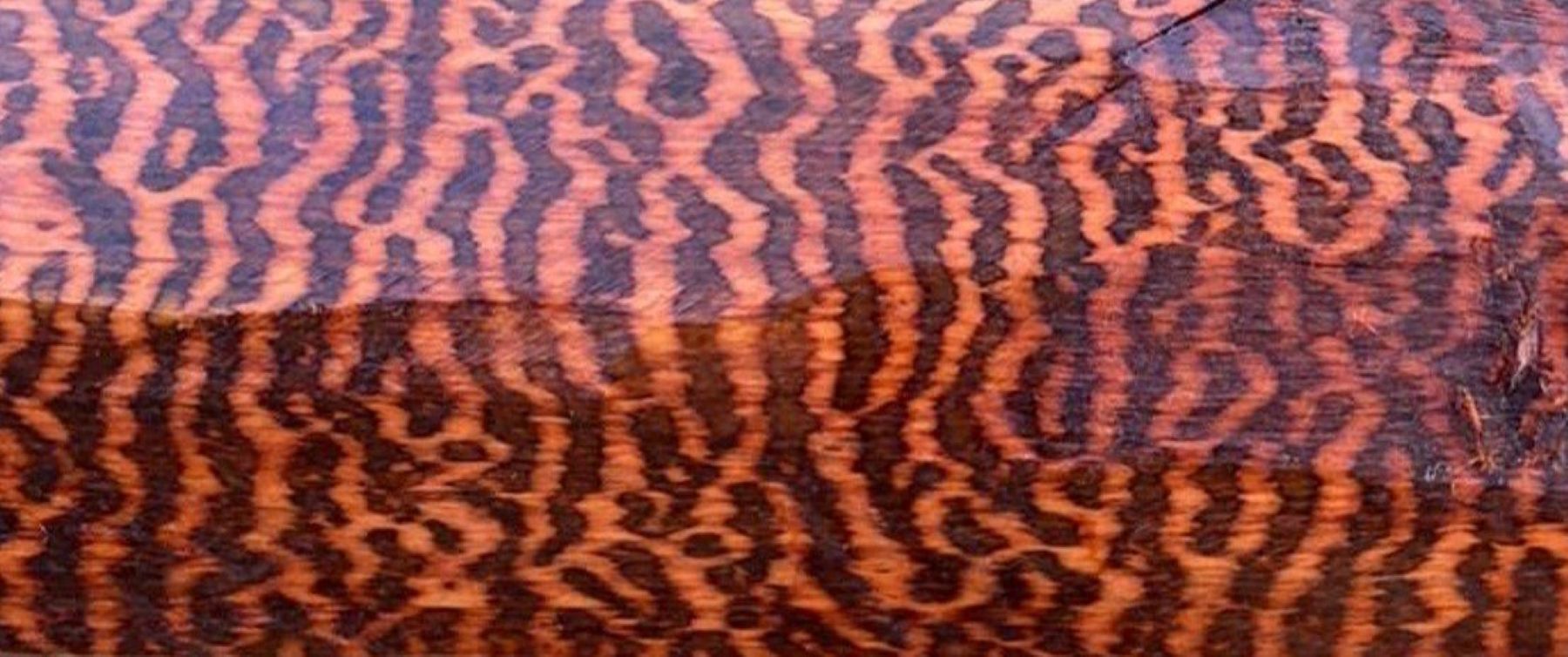
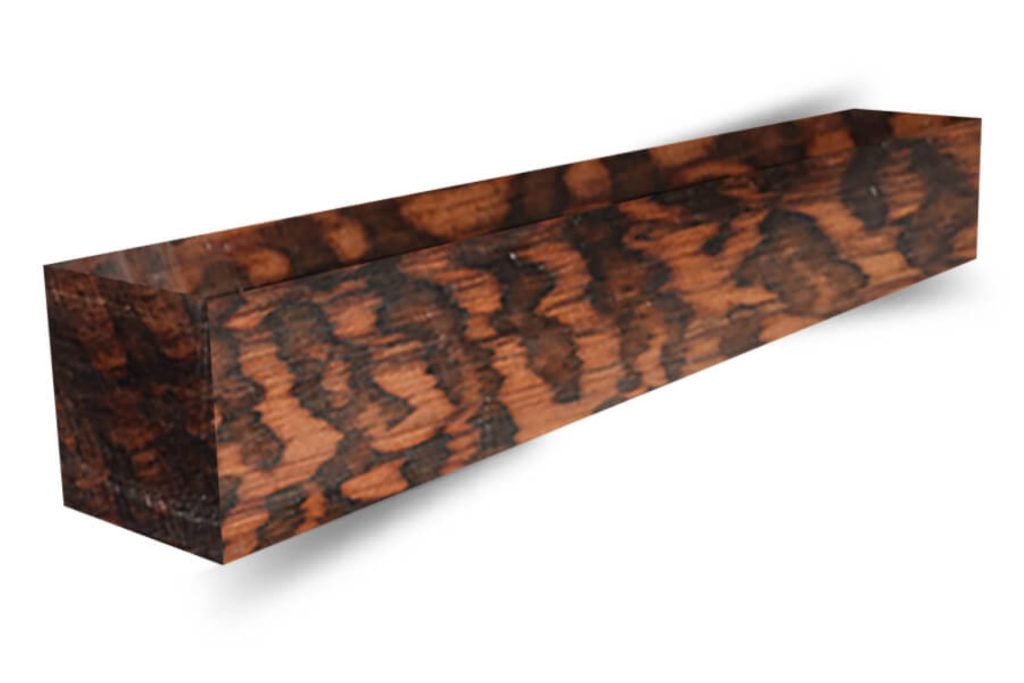
Snakewood is one of the most distinctive and valuable hardwoods in the world, native to northern South America. It is best known for its dramatic pattern of dark brown or black markings over a reddish background, resembling snakeskin.
Highly dense and rare, Snakewood is primarily used in small, high-end applications where its unique appearance can be showcased.
Quick Facts
- Common Name: Snakewood
- Scientific Name: Brosimum guianense
- Region: South American Hardwoods (Northern South America)
- Tree Size: 30–50 ft tall, 1–2 ft trunk diameter
- Average Dried Weight: 75 lbs/ft³ (1,200 kg/m³)
- Janka Hardness: 3,800 lbf
- Color: Reddish brown with dark brown to black mottled pattern
- Grain: Irregular
- Texture: Fine
Identification Characteristics
Snakewood is easily identified by its highly distinctive “snakeskin” pattern, which sets it apart from nearly all other hardwoods.
Key identification traits include:
- Reddish-brown base color
- Dark mottled or speckled pattern resembling snakeskin
- Extremely dense and heavy
- Fine texture with natural luster

Working Properties
Snakewood is extremely difficult to work due to its density and brittleness.
- Very difficult to machine
- Prone to cracking and splitting
- Turns well with care
- Pre-drilling required for fasteners
- Finishes to a very high polish
Safety Note
Dust may cause irritation or allergic reactions. Proper protective equipment is recommended.
Common Uses
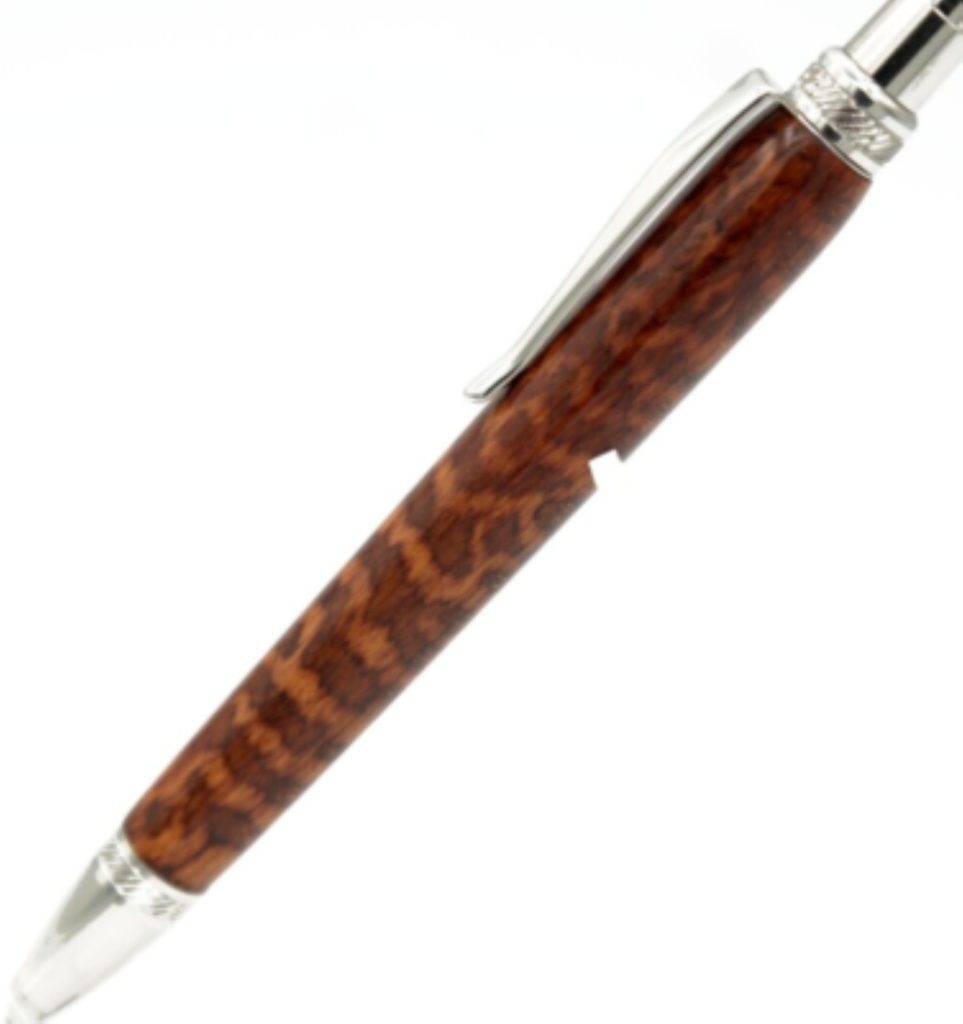

Snakewood is used primarily in small, high-value applications where its unique figure can be highlighted.
- Knife handles
- Turned objects
- Musical instrument parts
- Fine inlay work
- Luxury decorative items
Sustainability & Notes
Snakewood (Brosimum guianense) is not currently listed under CITES, but it is considered rare and is often harvested in limited quantities. Responsible sourcing is strongly encouraged.
Comparative Notes & Related Species
Leopardwood – Another visually patterned wood, though with a more uniform flecked appearance.
Zebrawood – Bold contrasting pattern but with linear striping rather than mottling.
Kingwood – Similar density and luxury use, but with a uniform purple tone instead of patterning.
Related Guides
Wood Toxicity and Allergies Guide – Learn which wood species may cause skin irritation, respiratory reactions, or allergic responses, along with practical safety recommendations for cutting, sanding, and finishing wood.
Best Woods for Knife Handles – Discover the best hardwoods for custom knife handles based on density, stability, durability, appearance, moisture resistance, and long-term performance.
Preventing Tear-Out in Interlocked Grain
Helpful when dealing with irregular grain patterns.
Compare Wood Properties
See how this species ranks in density and hardness using our Wood Density & Janka Hardness Chart. You can also explore Hardest Woods, Softest Woods, and Most Dense Woods for quick comparisons.
Collector Notes
Snakewood is one of the most sought-after species for collectors due to its rarity and unmistakable appearance. High-quality pieces with strong, well-defined patterning are especially valuable, and even small samples are highly prized.
Video Overview
Share Your Photos of This Species
Do you have lumber, wood samples, tree photographs, woodworking projects, furniture, carvings, turnings, musical instruments, or other items made from this species?
Exotic Woods of the World welcomes photographs from woodworkers, collectors, sawyers, researchers, and wood enthusiasts around the world. Selected submissions may be featured on this page and throughout our website to help document and showcase real-world examples of this species.
When submitting photos, please include the common name, scientific name (if known), a brief description, and any information you would like us to share with the image.
Wood Sample Collection
This species is part of an ongoing effort to document and preserve wood samples from around the world.
Learn more about contributing to the collection:
Resources
Authoritative botanical and forestry references used in compiling information about this species include:
• USDA Forest Service – Wood Handbook: Wood as an Engineering Material
https://www.fpl.fs.usda.gov/products/publications/
• The Wood Database – Global reference for wood identification, physical properties, and woodworking characteristics
https://www.wood-database.com/
• Royal Botanic Gardens, Kew – Plants of the World Online – Botanical taxonomy and species distribution database
https://powo.science.kew.org/
• International Union for Conservation of Nature (IUCN Red List) – Global conservation status assessments
https://www.iucnredlist.org/
• Convention on International Trade in Endangered Species (CITES) – International trade regulations for protected plant species
https://cites.org/
Additional forestry publications, academic research papers, and regional timber studies may also be referenced where available.
Love This Species?
Enjoy learning about this wood species?
Help support the continued growth of Exotic Woods of the World by participating in our Adopt a Species program. Your support helps fund species research, educational content, photography, videos, and future conservation awareness initiatives.
Support Forest Conservation
This species is part of the growing Exotic Woods of the World reference archive, dedicated to documenting and preserving knowledge of the world’s wood species.
Through the Adopt a Species program, visitors can help support ongoing species research, educational content, photography, video production, and future conservation awareness initiatives.
Contributions help fund the continued expansion of this archive while promoting sustainable forestry education and the long-term appreciation of the world’s forests.
Interested in supporting this species? Visit our Adopt a Species and Conservation Partners pages to learn more.
Availability & Where to Buy
Exotic hardwood availability can vary significantly depending on region, sustainability regulations, and supplier inventory.
As this archive grows, recommended suppliers and specialty wood retailers will be listed here to help woodworkers locate responsibly sourced material.
Lumber Suppliers:
Availability varies — see the Where to Buy Exotic Woods page for current sources.
Related Tools & Products:
• RUITOOL Japanese Double Edge Ryoba Pull Saw for precise flush cuts, joinery, and detailed woodworking
https://amzn.to/4ukw5Vg
• 800W Compact Wood Router Tool Kit with 15-Piece Router Bit Set for trimming, edge work, and shaping wood surfaces
https://amzn.to/498gKP4
• IRWIN Quick-Grip One-Handed Mini Bar Clamps for holding woodworking pieces securely during assembly and glue-ups
https://amzn.to/4wvTvsl
Share This Wood Species
Stay Connected
Follow the latest species additions, educational resources, videos, conservation initiatives, and major project milestones through our Site Updates archive.
The Site Updates archive provides a permanent record of new content, library growth, and future developments across Exotic Woods of the World.