
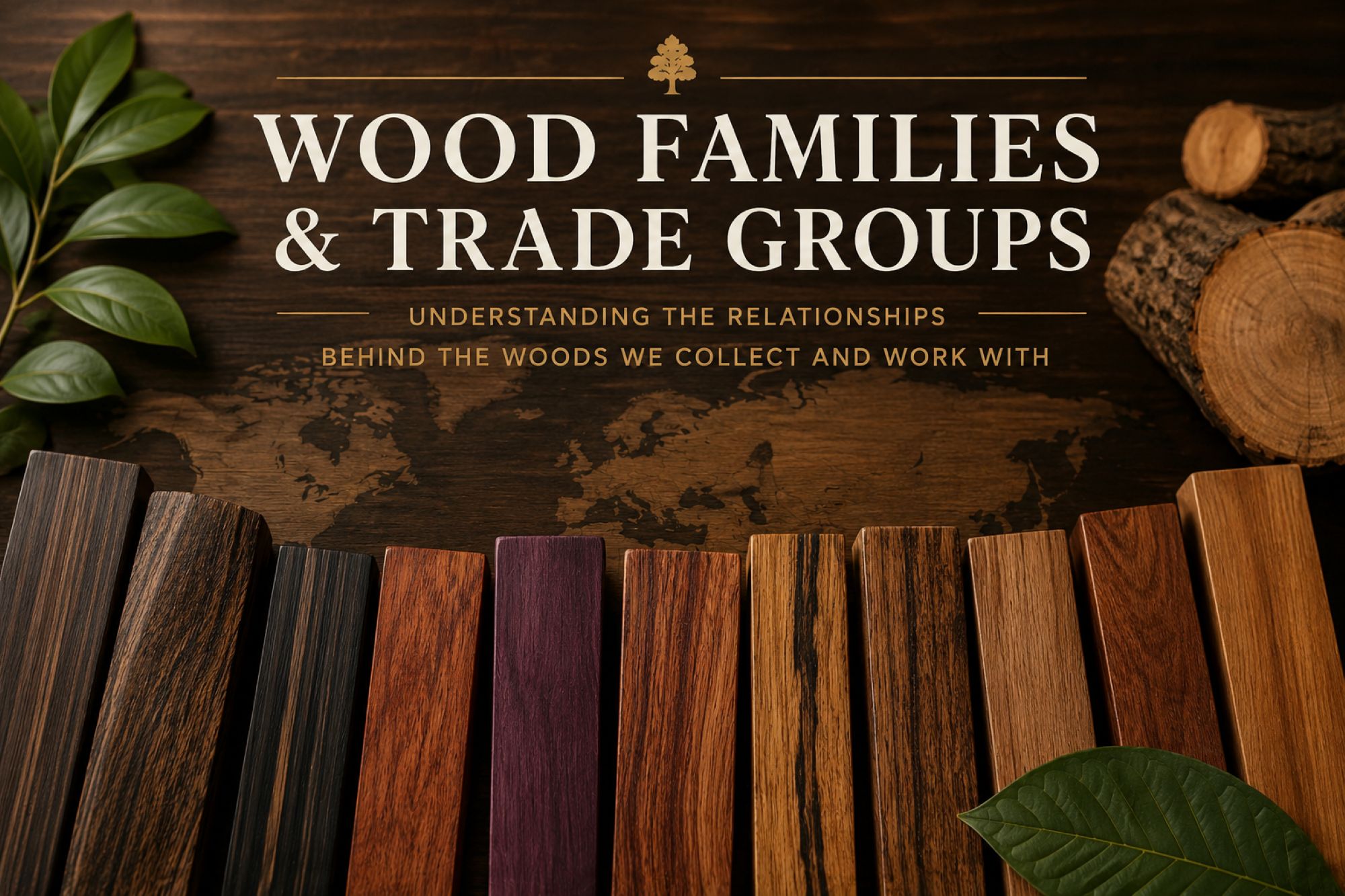
Wood Families & Trade Groups
The Wood Families & Trade Groups section is designed to organize broader wood groups, genera, and trade classifications that include multiple related species rather than a single exact scientific species.
While the Exotic Woods of the World archive primarily focuses on exact species pages, many woods are commonly grouped together in trade, woodworking, collecting, and identification under broader family or genus names. These overview pages help explain the relationships between species, regional variants, trade names, and identification characteristics across entire wood groups.
This section serves as an educational reference for understanding how related woods connect botanically, visually, and commercially.
Current Family & Trade Group Pages
Rosewoods of the World
Overview of Dalbergia rosewood species and related woods commonly marketed as rosewood.
Ebony Species of the World
Overview of Diospyros ebony species and related dark tropical hardwoods.
Shorea Species Overview
Overview of Shorea hardwood groups including Meranti, Balau, Lauan, Batu, and related Southeast Asian trade woods.
Khaya Species Guide
Overview of Khaya mahogany species and related African mahogany woods.
Purpleheart Species Guide
Overview of Peltogyne species commonly grouped as Purpleheart.
Cedar Species Guide
Explore true cedars and other commercially important woods commonly known as cedar, comparing their appearance, properties, durability, workability, and common woodworking uses.
Elm Species Guide
Explore elm species from North America, Europe, and Asia, comparing their grain, hardness, strength, workability, appearance, and traditional woodworking uses.
Hickory Species Guide
Overview of North American Carya species commonly classified as Hickory.
Acacia Species Guide
Overview of Acacia species and related woods including Australian Blackwood and Hawaiian Koa.
Albizia Species Guide
Overview of Albizia species and related lightweight tropical hardwoods.
Quebracho Species Guide
Overview of major Schinopsis species commonly marketed as Quebracho and valued for their exceptional density, hardness, durability, and industrial applications.
Dipterocarp Species Overview
Overview of Dipterocarpus species including Keruing and related Southeast Asian hardwood groups.
Pterocarpus Species Guide
Overview of Pterocarpus species including Padauk, Narra, Muninga, and related hardwoods.
Casuarina Species Guide
Overview of major Casuarina species commonly known as Sheoak and valued for furniture, turnery, flooring, specialty woodworking, and ornamental planting.
Pine Species Overview
Overview of Pinus species, including commercial pines from North America, Europe, Asia, and other regions valued for construction, woodworking, millwork, and specialty applications.
Fir Species Overview
Overview of Abies species, including true firs from North America, Europe, Asia, and North Africa valued for construction, millwork, plywood, furniture, and specialty woodworking applications.
Maple Species Guide
Overview of major Acer maple species including hard maple, soft maple, and regional varieties.
Nyatoh Species Guide
Overview of major Palaquium and Payena species commonly marketed as Nyatoh and used in furniture, millwork, cabinetry, veneer production, and general woodworking.
Oak Species Guide
Overview of Quercus oak species including white oak, red oak, European oak, and related groups.
Calophyllum Species Guide
Overview of major Calophyllum species used in furniture, millwork, boatbuilding, veneer production, and tropical timber applications.
Walnut Species Guide
Overview of major Juglans species including Black Walnut, English Walnut, Claro Walnut, Butternut, and other commercially important walnut woods.
Ash Species Guide
Overview of major Fraxinus species valued for their strength, shock resistance, workability, and use in furniture, flooring, tool handles, and sporting goods.
Beech Species Guide
Overview of major Fagus species used in furniture making, cabinetry, flooring, bentwood products, and commercial timber production throughout the world.
Mahogany Species Guide
Overview of major mahogany species including Swietenia woods and related mahogany groups valued for furniture, cabinetry, boatbuilding, millwork, and fine woodworking.
Birch Species Guide
Overview of major Betula species including Yellow Birch, Paper Birch, Sweet Birch, and other important hardwoods used in furniture, flooring, plywood, and woodworking.
Eucalyptus Species Overview
Overview of major Eucalyptus species used in woodworking, flooring, and timber production.
Magnolia Species Guide
Overview of Magnolia species from the Americas and Asia, including trees formerly classified as Michelia, Manglietia, and Elmerrillia, exploring their wood characteristics, botanical relationships, regional diversity, and woodworking uses.
Spruce Species Guide
Overview of Picea species from North America, Europe, and Asia, comparing their appearance, working properties, and use in construction, musical instruments, millwork, and specialty woodworking.
Poplar Species Guide
Overview of Populus species, including poplars, cottonwoods, aspens, and important hybrids, exploring their identification, wood properties, and use in furniture components, plywood, packaging, and paper production.
Why Family & Trade Group Pages Matter
Many woods are commonly grouped together under shared trade names despite containing multiple distinct scientific species. In other cases, closely related species may appear visually similar while differing significantly in density, hardness, stability, workability, or conservation status.
These overview pages help organize:
- botanical relationships
- trade terminology
- regional variants
- identification similarities
- conservation issues
- internal species relationships
They also create stronger internal linking structures across the Exotic Woods of the World archive.
Related Guides
- Wood Collecting and Preservation
- Wood Identification Guide
- Wood Grain Patterns and Figure Explained
- Wood Density and Janka Hardness Chart
- Sustainability and Exotic Hardwood Trade
Collector Notes
Many of the world’s most collectible hardwoods belong to larger species groups that include multiple regional variants, trade names, or closely related species. Understanding these broader relationships can improve identification, collecting accuracy, and long-term documentation within the exotic wood community.