
Eucalyptus Species Overview
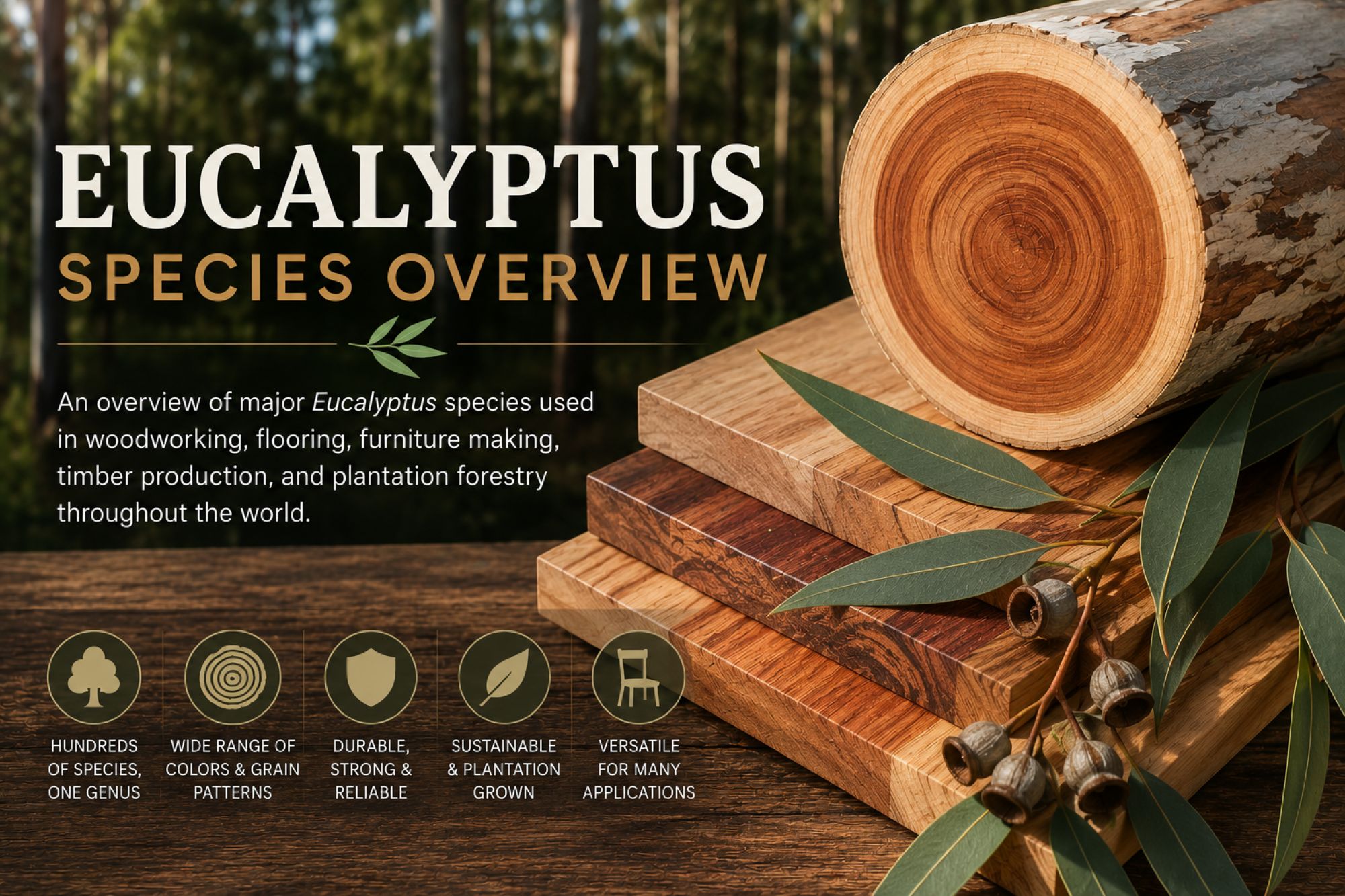
Overview of major Eucalyptus species used in woodworking, flooring, furniture making, timber production, and plantation forestry throughout the world.
Overview
The Eucalyptus genus is one of the largest and most important hardwood groups in the world. Native primarily to Australia, Eucalyptus species have been widely planted across Africa, Asia, Europe, North America, and South America for timber production, pulpwood, fuelwood, and environmental management.
Containing more than 700 recognized species, the genus produces a remarkable range of hardwoods that vary significantly in density, color, grain pattern, durability, and working characteristics. Some species yield highly durable structural timber, while others are prized for flooring, furniture, turning, and decorative woodworking.
This guide serves as an overview of the broader Eucalyptus group and its most notable timber-producing species.
The Eucalyptus Genus
The Eucalyptus genus belongs to the Myrtaceae family and represents one of the most commercially significant hardwood groups on Earth.
Eucalyptus species are known for:
- Rapid growth rates
- Exceptional adaptability
- Wide geographic distribution
- Strong timber properties
- Plantation suitability
- Diverse wood characteristics
- Important ecological value
- Commercial forestry importance
Today, Eucalyptus plantations provide a significant portion of the world’s hardwood timber supply.
Notable Eucalyptus Species
The Eucalyptus genus contains hundreds of species used in forestry, construction, furniture making, and specialty woodworking.
Featured Eucalyptus Species
Red River Gum (Eucalyptus camaldulensis)
One of Australia’s most widespread Eucalyptus species, valued for its durability, strength, and attractive reddish-brown timber.
Jarrah (Eucalyptus marginata)
A world-renowned Australian hardwood known for its durability, rich coloration, and resistance to decay.
Karri (Eucalyptus diversicolor)
One of the tallest hardwood trees in the world, producing strong and attractive timber widely used in construction and flooring.
Manna Gum (Eucalyptus viminalis)
An important Australian species used for timber production, pulpwood, and forestry applications.
Blue Gum (Eucalyptus globulus)
One of the most widely planted Eucalyptus species globally, valued for both timber and pulp production.
Additional Eucalyptus Species
The following species are notable members of the Eucalyptus genus and may be added to the Exotic Woods of the World archive in the future:
- Eucalyptus grandis (Flooded Gum)
- Eucalyptus saligna (Sydney Blue Gum)
- Eucalyptus pilularis (Blackbutt)
- Eucalyptus regnans (Mountain Ash)
- Eucalyptus cladocalyx (Sugar Gum)
- Eucalyptus sideroxylon (Red Ironbark)
- Eucalyptus paniculata (Grey Ironbark)
- Eucalyptus crebra (Narrow-Leaved Ironbark)
- Eucalyptus microcorys (Tallowwood)
- Eucalyptus delegatensis (Alpine Ash)
- Eucalyptus resinifera (Red Mahogany)
- Eucalyptus robusta (Swamp Mahogany)
As additional Eucalyptus species are added to Exotic Woods of the World, they will be incorporated into this guide and linked to their individual species pages.
Common Characteristics of Eucalyptus Woods
Because the genus contains hundreds of species, wood properties can vary significantly. However, many Eucalyptus species share several common traits.
Common Eucalyptus Traits
- Medium to high-density hardwood structure
- Good strength properties
- Attractive coloration
- Fine to medium texture
- Moderate to high durability
- Good wear resistance
- Excellent flooring performance
- Strong structural capabilities
Many species are considered premium hardwoods for both decorative and structural applications.
Common Uses
Eucalyptus woods are used throughout the world in a wide variety of applications.
Common Applications
- Flooring
- Furniture
- Cabinetry
- Construction lumber
- Structural timbers
- Decking
- Railroad ties
- Veneer
- Turned objects
- Utility poles
- Pulp and paper production
- Plantation forestry
The diversity of the genus allows Eucalyptus woods to serve both industrial and fine woodworking markets.
Identification Characteristics
Although species vary widely, many Eucalyptus woods share recognizable visual characteristics.
Common Identification Traits
- Pale pink to reddish-brown coloration
- Fine to medium texture
- Straight to interlocked grain
- Moderate natural luster
- Dense appearance
- Distinct growth-ring patterns
- Good finishing qualities
Accurate species identification often requires examination of leaves, bark, habitat, and wood anatomy.
Sustainability and Conservation
Eucalyptus is one of the most extensively planted hardwood genera in the world.
Sustainability considerations vary depending on:
- Species
- Plantation management
- Native forest harvesting
- Regional forestry regulations
- Certification programs
Many commercially harvested Eucalyptus species benefit from large-scale plantation cultivation, helping reduce pressure on native forests.
Related Wood Family and Trade Group Pages
Explore additional wood family and trade-group guides:
- Acacia Species Guide
- Casuarina Species Guide
- Hickory Species Guide
- Nyatoh Species Guide
- Wood Families & Trade Groups
Compare Wood Properties
Compare Eucalyptus woods alongside hundreds of hardwood species using the Exotic Woods of the World database.
Related resources:
- Wood Density and Janka Hardness Chart
- Hardest Woods in the World
- Most Dense Woods in the World
- Wood Grain Patterns and Figure Explained
Collector Notes
Eucalyptus represents one of the most diverse and economically important hardwood genera in the world. From the towering forests of Australia to plantation forests across multiple continents, Eucalyptus species provide an extraordinary range of timber products. Understanding the broader Eucalyptus genus helps collectors appreciate the diversity, importance, and global influence of these remarkable hardwoods.