
How to Identify Exotic Hardwood by Grain Pattern
Grain pattern is one of the most reliable visual indicators when identifying exotic hardwood species. While color can fade, darken, or shift over time, grain structure remains structurally consistent. Understanding how to read grain patterns allows collectors and woodworkers to narrow identification even before referencing density, hardness, or origin.
What “Grain” Actually Means
In hardwood terminology, grain refers to the direction, arrangement, and visual expression of wood fibers within a board. It is influenced by:
- Growth rate
- Species genetics
- Environmental stress
- Sawing orientation
Grain pattern is not simply aesthetic — it reflects structural behavior.
Primary Grain Categories in Exotic Hardwoods
1. Straight Grain
Fibers run parallel to the length of the board with minimal deviation.
Characteristics:
- Predictable machining behavior
- Cleaner planing surfaces
- Lower tear-out risk
- Uniform appearance
Common in species such as:
- Swietenia macrophylla
- Khaya ivorensis
2. Interlocked Grain
Fibers alternate direction in layers, creating ribbon or striped effects, especially when quarter-sawn.
Characteristics:
- Ribbon stripe figure
- Increased tear-out during machining
- Reflective chatoyance
- Structural strength
Seen prominently in:
Entandrophragma cylindricum
Microberlinia brazzavillensis


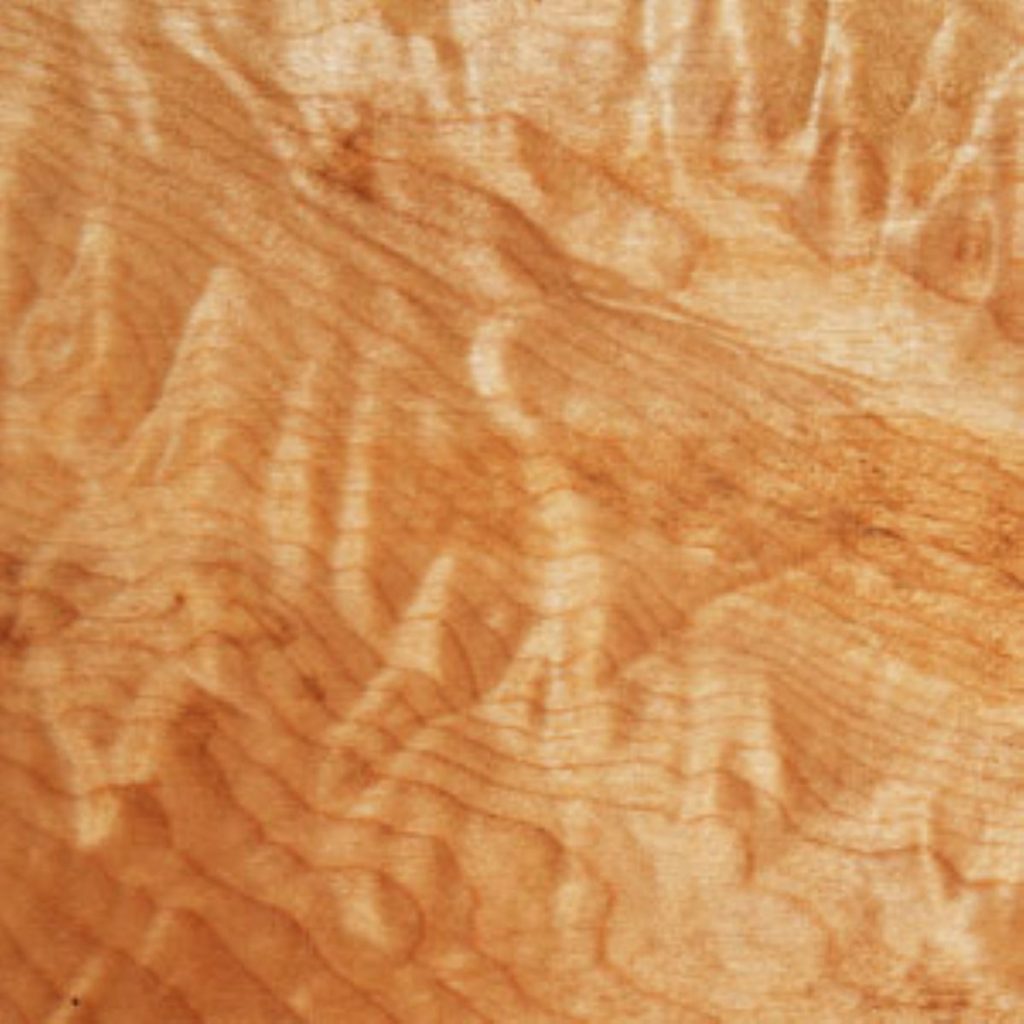
3. Wavy or Figured Grain
Growth irregularities produce undulating fiber patterns.
Characteristics:
- Light-reflective movement
- Decorative applications
- Increased machining difficulty
- Higher market value

4. Coarse Open Pore Structure
Large visible pores create dramatic texture.
Characteristics:
- Visible vessel openings
- Requires grain filling for smooth finishes
- Often associated with African species
Example:
Millettia laurentii


How Sawing Orientation Affects Grain Appearance
Grain pattern appearance changes dramatically depending on cut:
- Flat-sawn: cathedral arches
- Quarter-sawn: ribbon striping (especially in interlocked grain)
- Rift-sawn: linear grain with minimal figure
Understanding cut orientation prevents misidentification.
Why Grain Is More Reliable Than Color
Color shifts due to:
- UV exposure
- Oxidation
- Oil application
- Aging
For example:
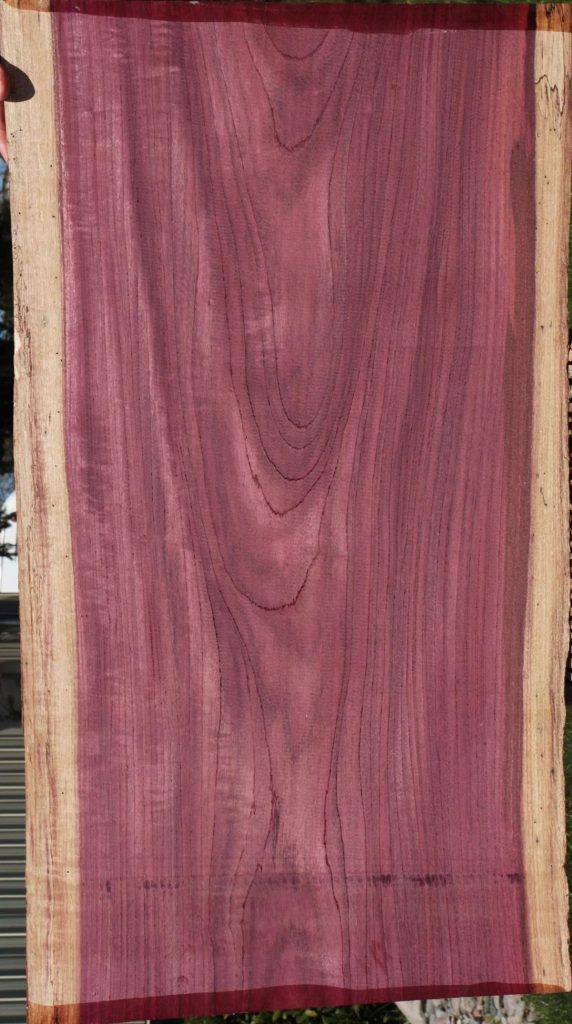
Peltogyne spp. turns from bright violet to deep brown-purple
Pterocarpus soyauxii darkens from bright red-orange to reddish brown
Grain pattern remains structurally consistent.

Identification Strategy Framework
When identifying an unknown exotic hardwood:
- Examine pore size (open vs closed)
- Assess grain direction (straight vs interlocked)
- Check weight relative to size (density clue)
- Observe color but treat it as secondary
- Compare to documented species profiles
This is where your species pages reinforce the guide.
Species Commonly Identified by Grain Pattern
Ribbon-striped African hardwoods (Sapele, Zebrawood)
Deep open-pored African species (Wenge)
Dense, fine-textured tropical hardwoods (Purpleheart, Curupay)
Institutional Note
Grain analysis is most effective when paired with documented species data including density, hardness, origin, and growth characteristics. For accurate identification, consult the full species library and compare structural traits rather than relying on color alone.
Compare Wood Properties
See how different species rank in density and hardness using our Wood Density & Janka Hardness Chart. You can also explore Hardest Woods, Softest Woods, and Most Dense Woods for quick comparisons
Sourcing Materials:
Looking to find these species or similar materials? View recommended suppliers on our Where to Buy Exotic Woods page.
Building a Collection:
For those building a physical reference library, explore our Wood Collecting & Preservation guide.