
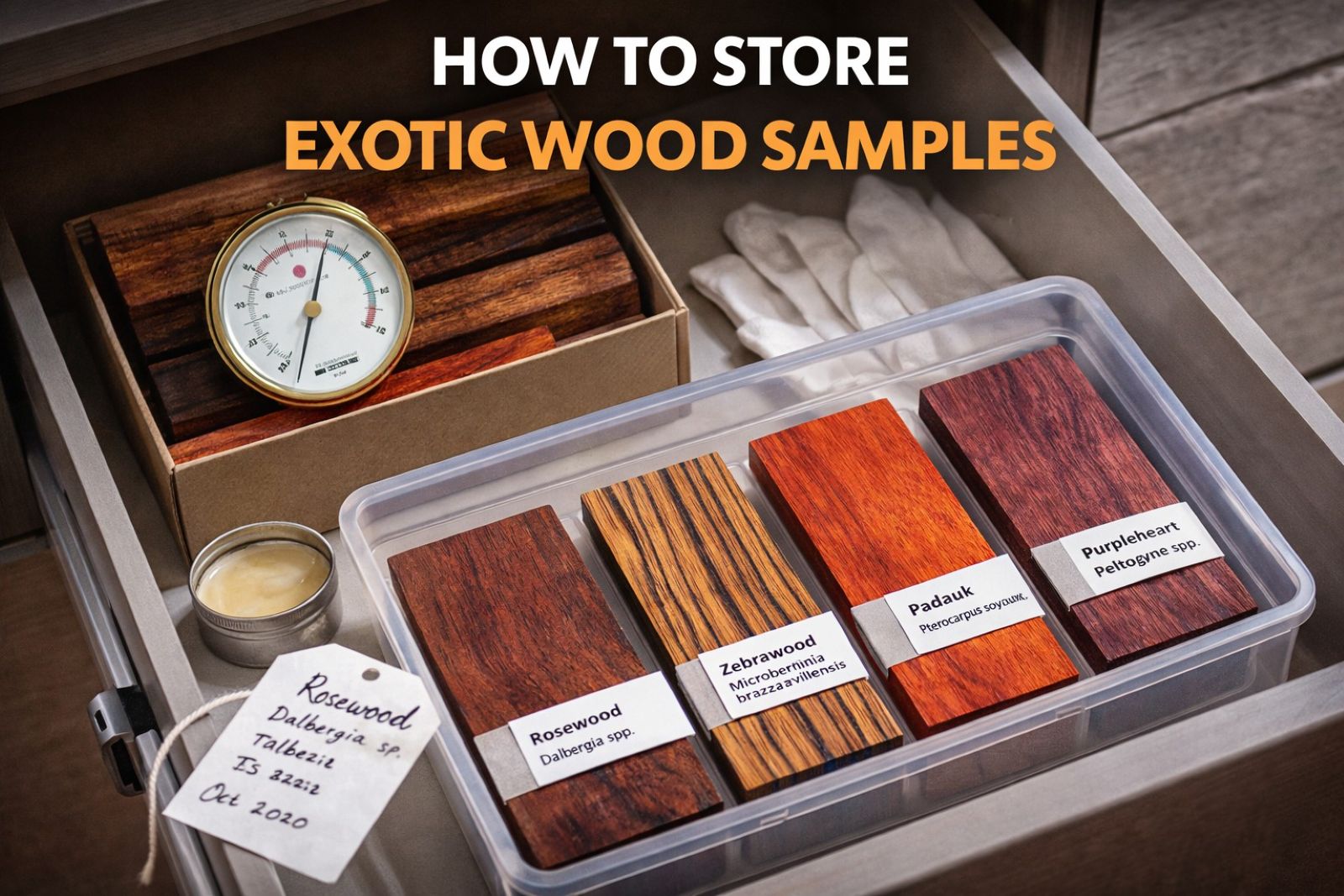
How to Store Exotic Wood Samples
Exotic hardwood samples serve both educational and archival purposes. Proper storage preserves grain clarity, color integrity, and structural stability. Without controlled handling, even small samples may warp, crack, fade, or lose identifying value over time.
This guide outlines best practices for storing and preserving exotic wood samples for long-term documentation.
Why Proper Storage Matters
Wood is hygroscopic. Even small samples respond to changes in humidity and temperature.
Improper storage may result in:
- Surface checking
- End splits
- Warping
- Color fading
- Mold growth in high humidity
For collectors, deterioration reduces both identification value and archival integrity.
Ideal Environmental Conditions
For long-term storage, aim for:
Temperature:
60–75°F (15–24°C)
Relative Humidity:
35–55%
Consistency is more important than exact numbers. Avoid frequent swings in humidity or temperature.
Climate-controlled indoor spaces are strongly preferred.
Avoid Direct Sunlight
Ultraviolet exposure accelerates color change in many tropical hardwoods.
Species such as Purpleheart and African Padauk may:
- Darken rapidly
- Lose vibrancy
- Shift tone unevenly
Store samples away from windows or use UV-filtered display cases.
Proper Stacking Techniques
If storing multiple samples:
- Lay samples flat
- Avoid heavy stacking pressure
- Allow minimal but sufficient airflow
- Do not store directly on concrete floors
Small spacer strips may be used if stacking multiple boards.
Labeling & Documentation
Every sample should be clearly labeled with:
- Common name
- Scientific name
- Region of origin
- Acquisition date
- Source (if known)
Use archival-safe labeling methods.
Avoid adhesive labels directly on finished surfaces if possible.
Protecting End Grain
End grain loses moisture faster than face grain.
To prevent checking:
- Apply light end-seal wax if long-term storage is planned
- Avoid high airflow environments
This is especially important for thicker samples.
Finished vs Unfinished Samples
Unfinished samples preserve natural surface characteristics.
Finished samples demonstrate appearance under oil or film finishes.
For archival collections, consider:
- Keeping one raw sample
- Keeping one finished sample
- Documenting both photographically
This provides educational comparison over time.
Storage Containers
Appropriate storage options include:
- Shallow drawer systems
- Archival boxes
- Sealed cabinets with humidity control
- Labeled specimen trays
Avoid airtight plastic containers unless humidity is monitored.
Trapped moisture increases mold risk.
Preventing Pest Damage
While dense tropical hardwoods are often resistant to insects, long-term storage should still:
- Avoid damp environments
- Maintain airflow
- Keep storage area clean
Periodic inspection is recommended.
Handling Practices
When examining samples:
- Handle with clean, dry hands
- Avoid prolonged outdoor exposure
- Return samples promptly to storage
Repeated environmental cycling accelerates color and moisture shifts.
Documenting Color Progression
If tracking color change:
- Photograph samples at acquisition
- Photograph again after 6–12 months
- Maintain consistent lighting conditions
This adds research value to the collection.
Long-Term Preservation Goals
The purpose of storage is not merely protection but documentation.
A well-maintained wood sample collection becomes:
- An identification reference
- A structural comparison archive
- A historical sourcing record
- An educational resource
Preservation supports long-term species understanding.
Institutional Note
Exotic hardwood samples are structural records of species characteristics. Proper storage ensures continued educational value and accurate long-term documentation. Environmental stability, labeling accuracy, and careful handling are central to responsible collection management.
Compare Wood Properties
See how different species rank in density and hardness using our Wood Density & Janka Hardness Chart. You can also explore Hardest Woods, Softest Woods, and Most Dense Woods for quick comparisons
Building a Collection:
For those building a physical reference library, explore our Wood Collecting & Preservation guide.