
Longleaf Pine
Scientific name: Pinus palustris
Overview
Longleaf Pine is a dense southern yellow pine associated with the fire-maintained forests and savannas of the southeastern United States. Its wood combines prominent grain with substantially greater hardness than many familiar light-colored softwoods. It has an important history in structural timber, flooring, and the naval-stores industry.
For woodworkers, the distinction between a species name and a trade description matters. Southern yellow pine includes several species; heart pine describes heartwood and does not by itself prove Longleaf Pine. Reclaimed boards can be excellent material, but age, tight rings, and amber color are not substitutes for a documented source.
Quick Facts
- Common Name: Longleaf Pine
- Alternate Common Names: Southern yellow pine (commercial group); heart pine (heartwood trade name)
- Scientific Name: Pinus palustris
- Region: North American Woods — southeastern United States, from Virginia to Florida and west to eastern Texas
- Family: Pinaceae
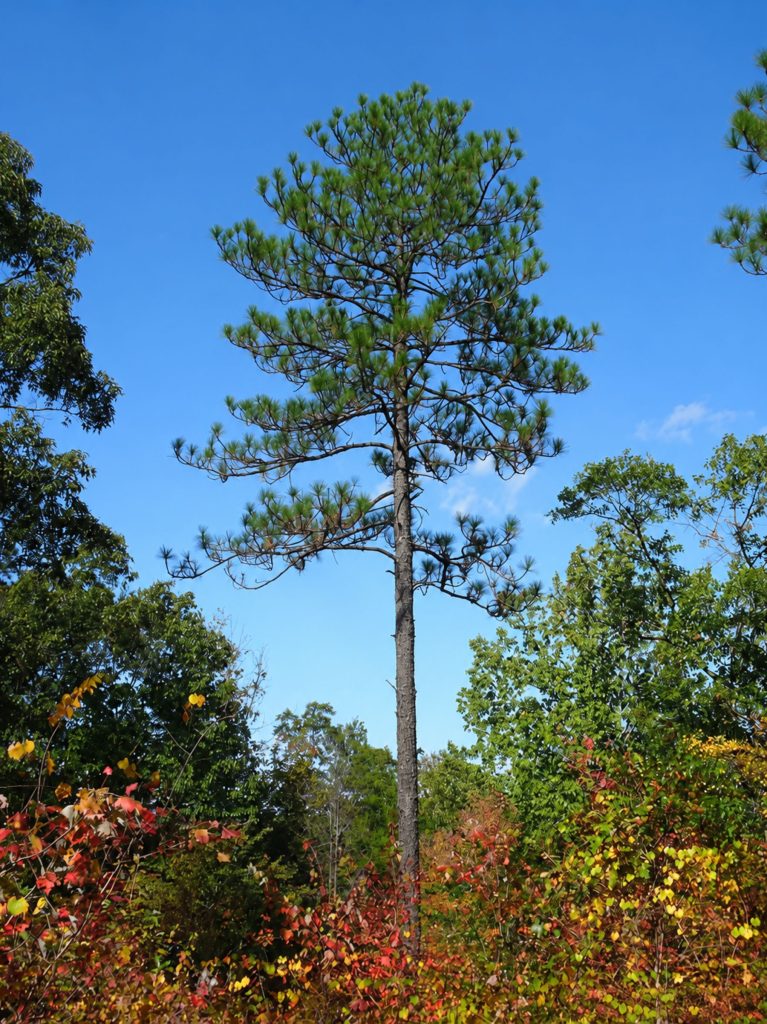
- Tree Size: Typically 100–115 ft (30–35 m) tall, with a trunk 2–3 ft (0.6–1 m) in diameter
- Average Dried Weight: Approximately 41 lb/ft³ (650 kg/m³)
- Janka Hardness: Approximately 870 lbf
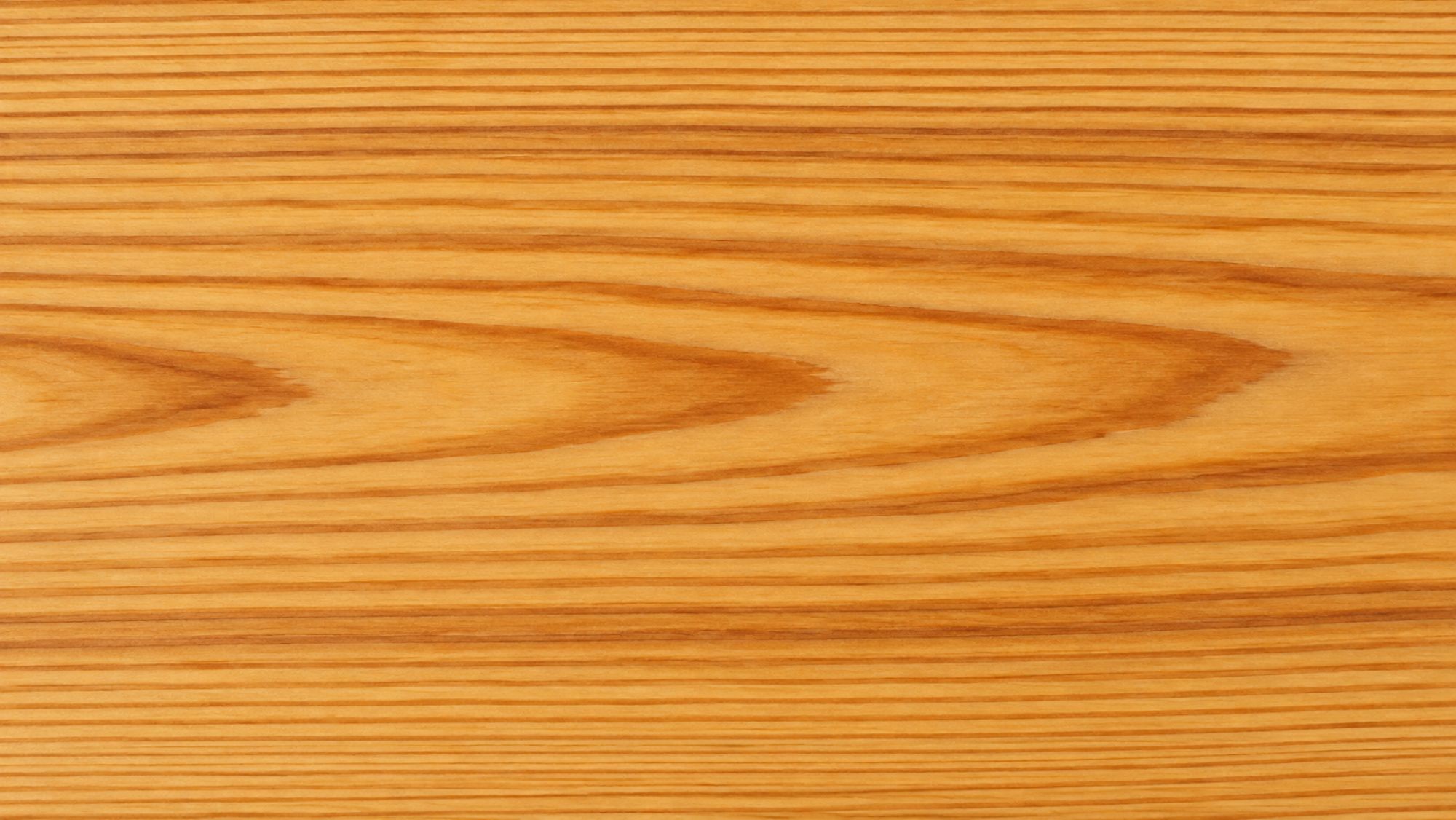
- Color: Yellow-white sapwood and orange to reddish-brown heartwood
- Grain: Usually straight, with strongly contrasting growth rings
- Texture: Fine to medium, with a pronounced earlywood–latewood difference
Identification Characteristics
A clean end-grain surface shows strong bands of dense latewood separated from lighter earlywood. Normal resin canals are conspicuous under magnification. Flat-sawn boards often display bold cathedral patterns, while quarter-sawn faces show straighter parallel lines.
These features support identification as a hard pine, but separating Longleaf from other southern yellow pines by appearance alone is unreliable. Obtain the harvest location or reclamation history, and retain photographs of needles, cones, or bark when the sample comes from a known tree.
Key identification traits include:
- Strong contrast between pale earlywood and darker latewood
- Resin canals visible on carefully prepared end grain
- Heartwood often orange-brown or reddish brown
- Usually straight grain; knots can interrupt machining
- Density and growth-ring spacing vary within the species

Working Properties
Choose cutting settings for the alternating soft and hard bands rather than treating the board as uniformly dense. A sharp plane and a light final cut help limit ridging; a firm sanding block helps avoid hollowing the earlywood. Check the surface under raking light before applying a finish.
Resin can collect on blades and abrasives. Clean tools as needed and test the proposed coating on an offcut containing a representative knot or resinous patch. Acclimate flooring and wide boards to their service environment and allow for seasonal movement.
- Use sharp cutters and support exit edges to reduce splintering
- Predrill near ends and around dense latewood or knots
- Prepare clean, fresh joint surfaces before gluing
- Test stain absorption and knot sealing on spare material
- Inspect reclaimed lumber for embedded metal before machining
Safety Note
Wood dust can irritate the skin, eyes and respiratory tract. Use effective dust extraction, eye protection and suitable respiratory protection when machining or sanding. Inspect salvaged material for embedded metal, cracks and decay before cutting, and assess dead standing trees professionally before removal.
Common Uses
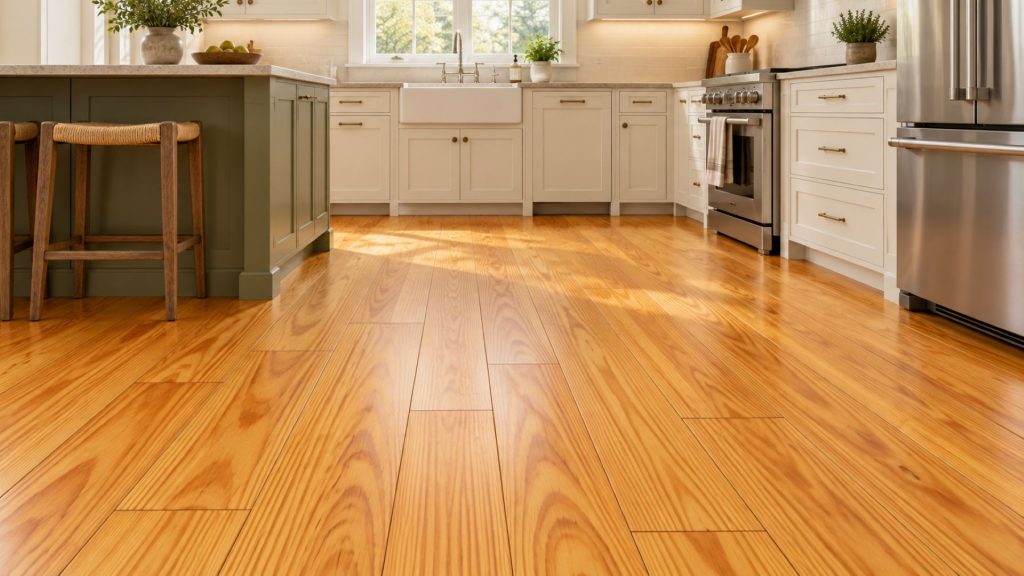
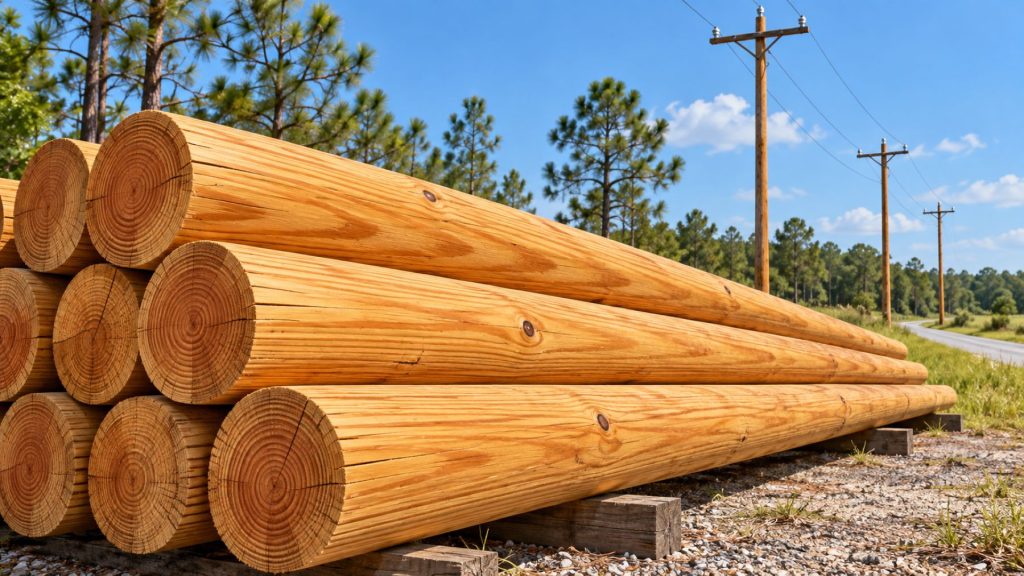
Longleaf Pine supplies structural lumber and utility poles, while selected heartwood is valued for flooring, paneling, and restoration projects. The grade, condition, and dimensions of a particular board determine its suitability; clear-wood averages cannot establish a beam’s load capacity.
Moderate heartwood decay resistance should not be interpreted as permission for untreated ground contact. Exterior specifications must account for exposure, preservative treatment where required, and detailing that sheds water.
- Flooring and interior paneling
- Restoration millwork and reclaimed furniture
- Graded framing, joists, and heavy timber
- Utility poles and treated exterior components
- General interior woodworking from selected clear stock
Sustainability & Notes
Longleaf Pine ecosystems were greatly reduced by historic logging, land conversion, and fire exclusion. Restoration now combines tree establishment with management of the open, fire-dependent habitat; growing trees alone does not recreate the full ecosystem.
Ask suppliers to distinguish new managed-forest timber from reclaimed material and provide a traceable origin. For salvaged flooring or beams, retain building history where available and assess coatings, contamination, and structural condition before reuse.
Comparative Notes & Related Species
Related Guides
- Pine Species Guide
- Best Woods for Flooring: Choosing the Right Hardwood for Your Home
- Understanding Wood Strength: What Makes Wood Strong?
- Wood Movement and Seasonal Expansion Explained
- Finishing Oils vs Polyurethane on Exotic Species
Compare Wood Properties
See how this species ranks in density and hardness using our Wood Density & Janka Hardness Chart. You can also explore Hardest Woods, Softest Woods, and Most Dense Woods for quick comparisons.
Collector Notes
Keep a labeled end-grain specimen alongside both flat-sawn and quarter-sawn faces if available. Record whether the piece is new growth, reclaimed building timber, or submerged salvage, without treating any of those descriptions as species confirmation.
A useful comparison set includes a documented southern yellow pine, a lighter white pine, and a true fir. Photograph untreated and finished surfaces separately so changes caused by a coating are not mistaken for natural color.
Share Your Photos of This Species
Do you have lumber, wood samples, tree photographs, woodworking projects, furniture, carvings, turnings, musical instruments, or other items made from this species?
Exotic Woods of the World welcomes photographs from woodworkers, collectors, sawyers, researchers, and wood enthusiasts around the world. Selected submissions may be featured on this page and throughout our website to help document and showcase real-world examples of this species.
When submitting photos, please include the common name, scientific name (if known), a brief description, and any information you would like us to share with the image.
Wood Sample Collection
This species is part of an ongoing effort to document and preserve wood samples from around the world.
Learn more about contributing to the collection:
Resources
Authoritative botanical and forestry references used in compiling information about this species include:
• USDA Forest Service – Wood Handbook: Wood as an Engineering Material
https://www.fpl.fs.usda.gov/products/publications/
• The Wood Database – Global reference for wood identification, physical properties, and woodworking characteristics
https://www.wood-database.com/
• Royal Botanic Gardens, Kew – Plants of the World Online – Botanical taxonomy and species distribution database
https://powo.science.kew.org/
• International Union for Conservation of Nature (IUCN Red List) – Global conservation status assessments
https://www.iucnredlist.org/
• Convention on International Trade in Endangered Species (CITES) – International trade regulations for protected plant species
https://cites.org/
Additional forestry publications, academic research papers, and regional timber studies may also be referenced where available.
Love This Species?
Enjoy learning about this wood species?
Help support the continued growth of Exotic Woods of the World by participating in our Adopt a Species program. Your support helps fund species research, educational content, photography, videos, and future conservation awareness initiatives.
Support Forest Conservation
This species is part of the growing Exotic Woods of the World reference archive, dedicated to documenting and preserving knowledge of the world’s wood species.
Through the Adopt a Species program, visitors can help support ongoing species research, educational content, photography, video production, and future conservation awareness initiatives.
Contributions help fund the continued expansion of this archive while promoting sustainable forestry education and the long-term appreciation of the world’s forests.
Interested in supporting this species? Visit our Adopt a Species and Conservation Partners pages to learn more.
Availability & Where to Buy
Exotic hardwood availability can vary significantly depending on region, sustainability regulations, and supplier inventory.
As this archive grows, recommended suppliers and specialty wood retailers will be listed here to help woodworkers locate responsibly sourced material.
Lumber Suppliers:
Availability varies — see the Where to Buy Exotic Woods page for current sources.
Related Tools & Products:
Availability varies — see the Where to Buy Exotic Woods page for current sources.
Share This Wood Species
Stay Connected
Follow the latest species additions, educational resources, videos, conservation initiatives, and major project milestones through our Site Updates archive.
The Site Updates archive provides a permanent record of new content, library growth, and future developments across Exotic Woods of the World.