
Red Oak
Scientific Name: Quercus rubra
Overview
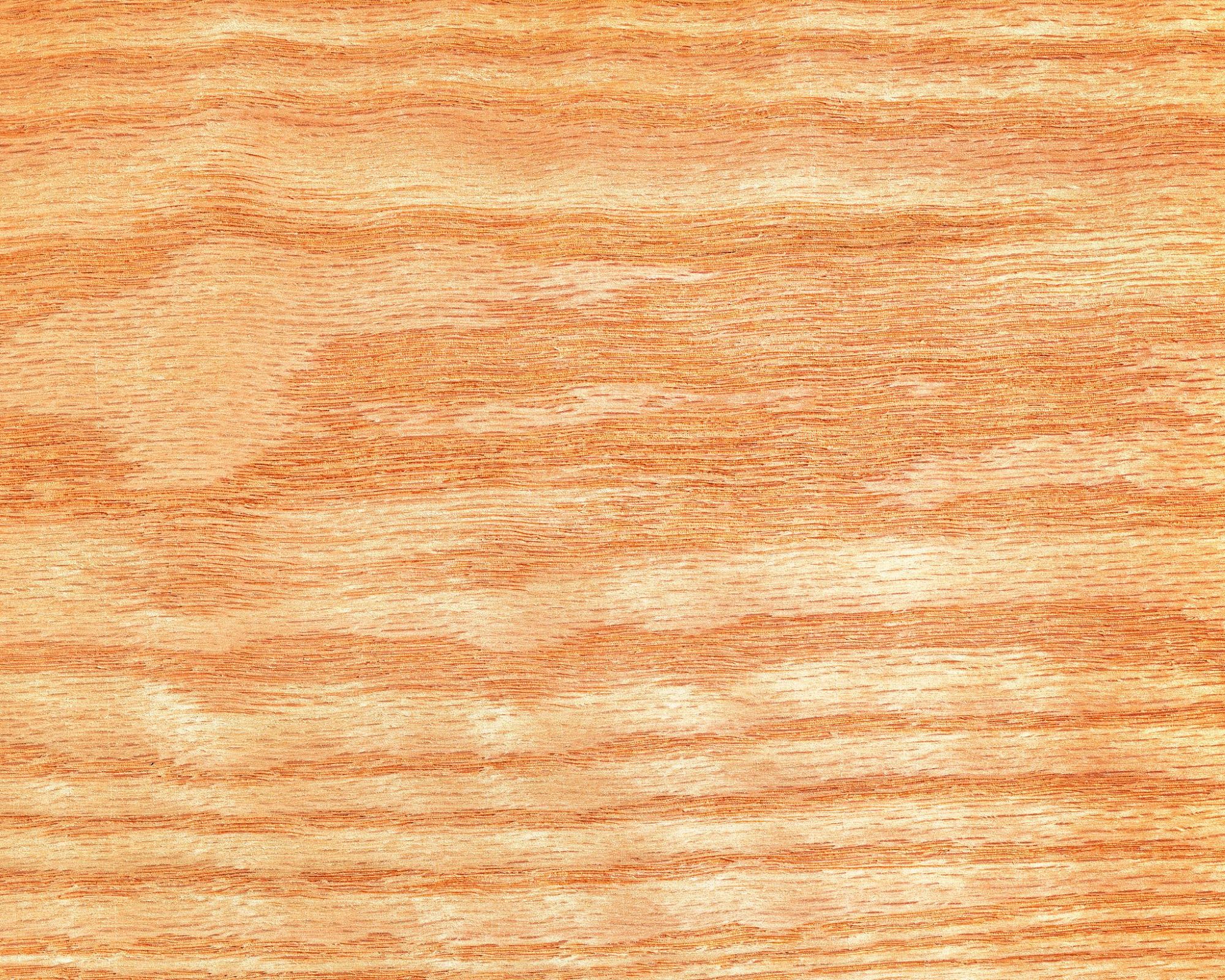
Red Oak is one of the most widely distributed and commercially important hardwoods in North America. Native to the eastern and central United States and parts of southeastern Canada, it is valued for its strength, availability, and distinctive open grain.
Red Oak is commonly used in flooring, cabinetry, and interior millwork. Its pronounced grain pattern and relative affordability make it a staple species in both residential and commercial applications.
Quick Facts
- Common Name: Red Oak
- Scientific Name: Quercus rubra
- Region: North American Hardwoods (Eastern United States & Canada)
- Tree Size: 60–100 ft tall, 2–4 ft trunk diameter
- Average Dried Weight: 44 lbs/ft³ (705 kg/m³)
- Janka Hardness: 1,290 lbf
- Color: Light to medium reddish brown
- Grain: Straight, open grain
- Texture: Coarse
Identification Characteristics
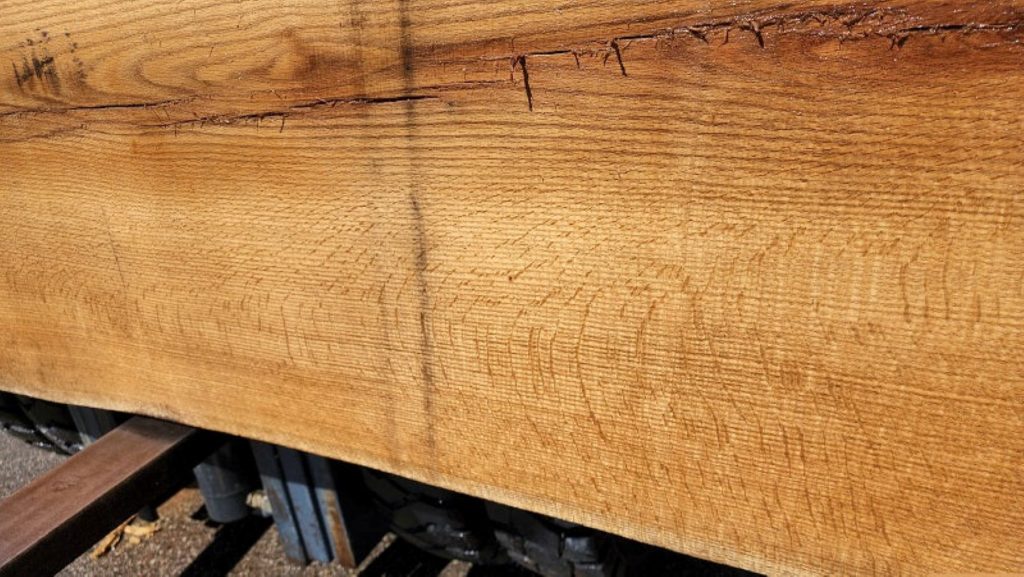
Red Oak is best identified by its prominent ring-porous structure and coarse texture. Earlywood pores are large and form a distinct row along each growth ring, creating a strong grain pattern.
The heartwood ranges from light brown to reddish brown. When examining end grain, Red Oak’s pores remain open and visible, often appearing as continuous lines across the growth ring.
Key identification traits include:
- Reddish brown coloration
- Large earlywood pores forming clear rings
- Coarse, open grain
- Visible ray fleck when quartersawn

Working Properties
Red Oak machines well and is relatively easy to work with standard tools. Its open pores make it receptive to stains, though grain filling may be required for a smooth finish.
- Machines and sands well
- Stains readily
- Glues reliably
- Accepts finishes well
- May require grain filler for smooth surfaces
Safety Note
Red Oak has low reported toxicity. Wood dust may cause mild irritation. Standard dust protection is recommended.
Common Uses

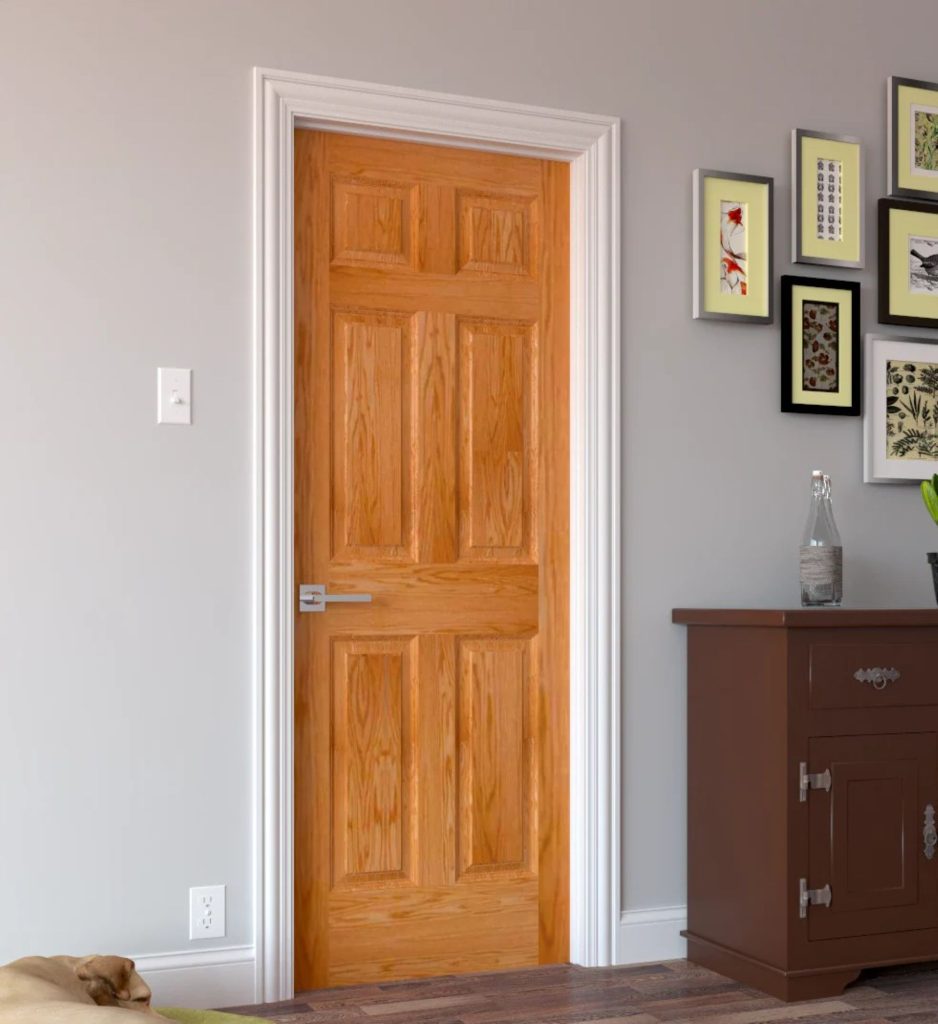
Red Oak is commonly used in:
- Hardwood flooring
- Cabinetry
- Furniture
- Interior trim
- Stair treads
- Doors
- Veneer
Sustainability & Notes
Red Oak is widely available and sustainably harvested throughout its range. It remains one of the most economically important hardwood species in North America.
Due to its open pore structure, Red Oak is not considered naturally rot-resistant and is generally limited to interior applications.
Comparative Notes & Related Specie
White Oak – A closely related oak species with greater resistance to moisture and decay, commonly used in furniture, flooring, and cooperage.
Chinkapin Oak – A member of the white oak group with similar grain structure and strength, often used in furniture and construction.
European Oak – A widely used hardwood with comparable durability and applications in flooring, furniture, and architectural millwork.
Related Guides
Red Oak vs. White Oak – Explore the key differences between red and white oak, including appearance, durability, moisture resistance, workability, and which species is best for flooring, furniture, cabinetry, and outdoor projects.
Understanding Wood Shrinkage Values – Learn how radial, tangential, and volumetric shrinkage affect wood movement, dimensional stability, and long-term performance in furniture, flooring, cabinetry, and woodworking projects.
Best Woods for Flooring – Compare hardwood flooring species based on hardness, wear resistance, stability, appearance, maintenance requirements, and overall performance in residential and commercial spaces.
Maple vs. Oak
Explore Maple vs. Oak for a practical comparison of these major hardwood groups and their performance in furniture, flooring, cabinetry, and general woodworking.
Compare Wood Properties
See how this species ranks in density and hardness using our Wood Density & Janka Hardness Chart. You can also explore Hardest Woods, Softest Woods, and Most Dense Woods for quick comparisons.
Collector Notes
While Red Oak is common, quartersawn material displaying strong ray fleck can be visually striking. This figure is especially valued in mission-style furniture.
Color variation and growth rate can differ by region, affecting density and grain prominence.
Video Overview
Share Your Photos of This Species
Do you have lumber, wood samples, tree photographs, woodworking projects, furniture, carvings, turnings, musical instruments, or other items made from this species?
Exotic Woods of the World welcomes photographs from woodworkers, collectors, sawyers, researchers, and wood enthusiasts around the world. Selected submissions may be featured on this page and throughout our website to help document and showcase real-world examples of this species.
When submitting photos, please include the common name, scientific name (if known), a brief description, and any information you would like us to share with the image.
Wood Sample Collection
This species is part of an ongoing effort to document and preserve wood samples from around the world.
Learn more about contributing to the collection:
Resources
Authoritative botanical and forestry references used in compiling information about this species include:
• USDA Forest Service – Wood Handbook: Wood as an Engineering Material
https://www.fpl.fs.usda.gov/products/publications/
• The Wood Database – Global reference for wood identification, physical properties, and woodworking characteristics
https://www.wood-database.com/
• Royal Botanic Gardens, Kew – Plants of the World Online – Botanical taxonomy and species distribution database
https://powo.science.kew.org/
• International Union for Conservation of Nature (IUCN Red List) – Global conservation status assessments
https://www.iucnredlist.org/
• Convention on International Trade in Endangered Species (CITES) – International trade regulations for protected plant species
https://cites.org/
Additional forestry publications, academic research papers, and regional timber studies may also be referenced where available.
Love This Species?
Enjoy learning about this wood species?
Help support the continued growth of Exotic Woods of the World by participating in our Adopt a Species program. Your support helps fund species research, educational content, photography, videos, and future conservation awareness initiatives.
Support Forest Conservation
This species is part of the growing Exotic Woods of the World reference archive, dedicated to documenting and preserving knowledge of the world’s wood species.
Through the Adopt a Species program, visitors can help support ongoing species research, educational content, photography, video production, and future conservation awareness initiatives.
Contributions help fund the continued expansion of this archive while promoting sustainable forestry education and the long-term appreciation of the world’s forests.
Interested in supporting this species? Visit our Adopt a Species and Conservation Partners pages to learn more.
Availability & Where to Buy
Exotic hardwood availability can vary significantly depending on region, sustainability regulations, and supplier inventory.
As this archive grows, recommended suppliers and specialty wood retailers will be listed here to help woodworkers locate responsibly sourced material.
Lumber Suppliers:
Availability varies — see the Where to Buy Exotic Woods page for current sources.
Related Tools & Products:
• Diablo Fine Finish Saw Blade with 60 Hi-ATB Teeth for ultra-smooth and precise woodworking cuts
https://amzn.to/4f0ShPq
• Mirka Abranet Sanding Mesh Discs Assorted Grit Pack for dust-free sanding and fine surface finishing
https://amzn.to/4dGY5LM
• Tried & True Danish Oil Finish for enhancing wood grain and protecting woodworking projects with a natural finish
https://amzn.to/4tVNF0R
Share This Wood Species
Stay Connected
Follow the latest species additions, educational resources, videos, conservation initiatives, and major project milestones through our Site Updates archive.
The Site Updates archive provides a permanent record of new content, library growth, and future developments across Exotic Woods of the World.