

Zebrawood
Scientific name: Microberlinia brazzavillensis
Overview
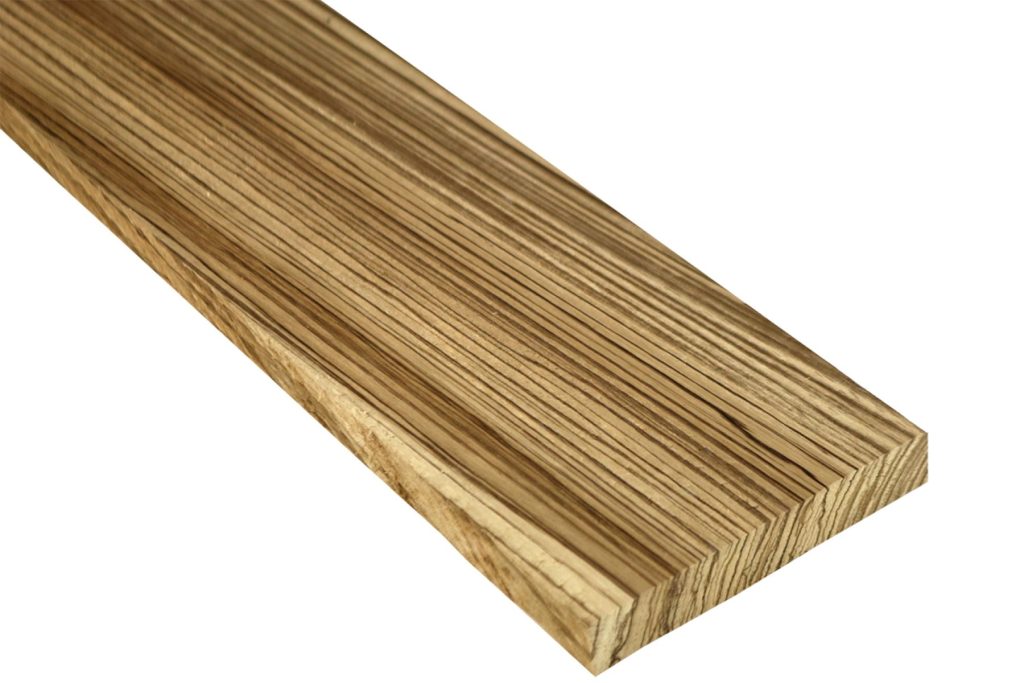
Zebrawood is a highly distinctive exotic hardwood named for its dramatic dark striping over a light golden background. Native to West Africa, it has long been prized for decorative woodworking where bold visual contrast is desired.
While not the easiest wood to work with, Zebrawood is valued for its striking appearance and is most often used in applications where aesthetics outweigh ease of machining.
Watch Video Overview
Watch a visual overview of Zebrawood including grain patterns, color variation, working characteristics, and common woodworking uses.
Jump directly to the video section below to see this species in greater detail.
Quick Facts
- Common Name: Zebrawood, Zingana
- Scientific Name: Microberlinia brazzavillensis
- Region: African Hardwoods (West Africa – Cameroon, Gabon)
- Tree Size: 65–100 ft tall, 3–5 ft trunk diameter
- Average Dried Weight: 50 lbs/ft³ (800 kg/m³)
- Janka Hardness: 1,830 lbf
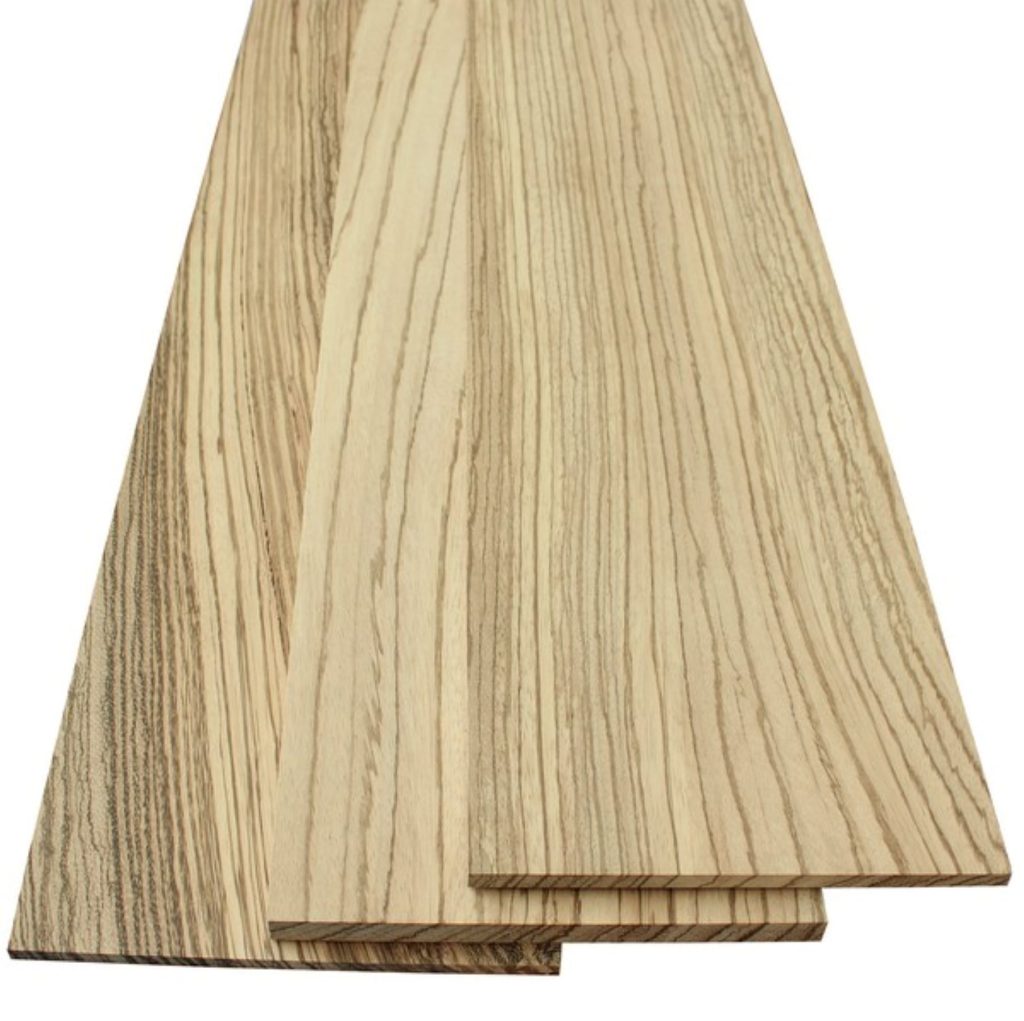
- Color: Light brown to golden yellow with dark brown to black stripes
- Grain: Interlocked
- Texture: Coarse
Identification Characteristics
- Zebrawood is best identified by its strongly contrasting striped grain, which runs lengthwise across the board. The light background color contrasts sharply with dark growth zones, creating the wood’s signature zebra-like appearance.
- The grain is usually interlocked, and quartersawn material may display a ribbon-striped effect. The coarse texture and visible pores are noticeable both visually and to the touch.
Working Properties
Zebrawood is considered moderately difficult to work, primarily due to its interlocked grain.
- Tear-out is common during planing and surfacing
- Sharp tools or spiral cutterheads are recommended
- Sands adequately but may require grain filling for a smooth finish
- Glues and finishes reliably when surfaces are properly prepared
Proper drying and careful machining improve results significantly.
Safety note: Dust from Zebrawood can cause skin, eye, and respiratory irritation in some individuals. Proper dust collection, eye protection, and a suitable respirator are recommended when cutting, sanding, or machining this species.
Common Uses
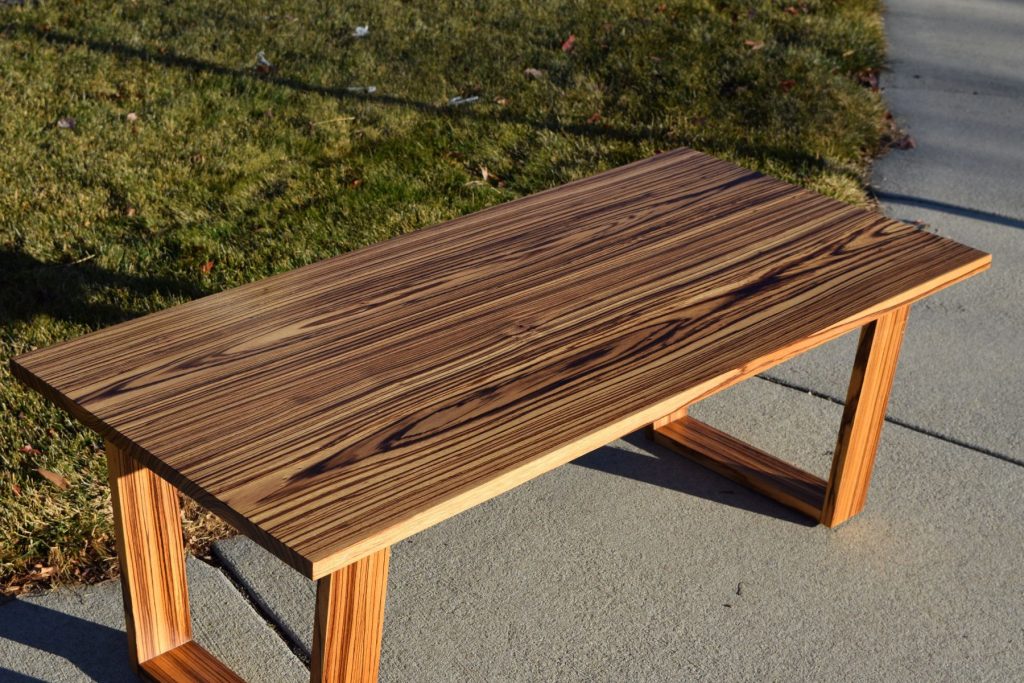

Common applications include:
- Furniture panels and accents
- Cabinetry and architectural millwork
- Veneer applications
- Turned objects
- Musical instrument components
Because of its bold appearance, Zebrawood is often most effective when used selectively rather than across large uninterrupted surfaces.
Sustainability and Notes
Zebrawood is not currently listed under CITES restrictions, but responsible sourcing is still encouraged. Much of the material available today is sold as veneer, allowing for wider use while conserving raw material.
As with all exotic hardwoods, buyers should prioritize reputable suppliers and ethically sourced stock.
Comparative Notes & Related Species
Wenge – A dark African hardwood with bold grain contrast, often used in furniture and flooring, providing a visual opposite to zebrawood’s light-and-dark striping.
Ovangkol – A related African hardwood with varied grain patterns and coloration, commonly used in furniture and musical instruments.
Bubinga – A dense decorative hardwood known for its reddish tones and figured grain, often used in high-end furniture and veneers.
Related Guides
How to Identify Wood by End Grain Patterns
Learn how to identify wood species by examining pores, rays, and growth rings through the end grain—the most accurate method for wood identification.
Understanding Interlocked vs Straight Grain
Explains how interlocked grain affects wood behavior, appearance, and workability, which is especially important when working with Zebrawood’s distinctive striped structure.
Identifying Unknown Wood Samples
Techniques for identifying wood species using grain patterns, color variation, density, and other physical characteristics, especially when working with visually distinctive woods like Zebrawood.
Zebrawood vs. Goncalo Alves
Explore Zebrawood vs. Goncalo Alves to compare two boldly figured exotic hardwoods and see how their appearance, density, workability, and applications differ.
Compare Wood Properties
See how this species ranks in density and hardness using our Wood Density & Janka Hardness Chart. You can also explore Hardest Woods, Softest Woods, and Most Dense Woods for quick comparisons.
Collector Notes
Zebrawood is prized by collectors for its unmistakable striping and bold visual contrast. Well-seasoned material typically features a pale golden to cream-colored base accented by dark brown to nearly black streaks, with the contrast becoming more refined and consistent as the wood ages and is properly finished.
Boards with strong, evenly spaced striping are especially sought after and are often reserved for decorative panels, veneer, and accent furniture pieces. More irregular or widely spaced striping is commonly kept for reference or secondary use, as visual uniformity plays a significant role in collector preference for this species.
Properly dried and stabilized Zebrawood is particularly desirable, as the wood’s interlocked grain can contribute to movement if inadequately seasoned. Collectors often favor older stock that has already acclimated, making it more predictable for long-term storage, curated wood libraries, or showcase applications where its dramatic appearance is used selectively for maximum impact.
Video Overview
Learn Through Video
Watch a visual overview of Zebrawood, including its bold striped grain, color characteristics, and common woodworking uses.
Share Your Photos of This Species
Do you have lumber, wood samples, tree photographs, woodworking projects, furniture, carvings, turnings, musical instruments, or other items made from this species?
Exotic Woods of the World welcomes photographs from woodworkers, collectors, sawyers, researchers, and wood enthusiasts around the world. Selected submissions may be featured on this page and throughout our website to help document and showcase real-world examples of this species.
When submitting photos, please include the common name, scientific name (if known), a brief description, and any information you would like us to share with the image.
Wood Sample Collection
This species is part of an ongoing effort to document and preserve wood samples from around the world.
Learn more about contributing to the collection:
Resources
Authoritative botanical and forestry references used in compiling information about this species include:
• USDA Forest Service – Wood Handbook: Wood as an Engineering Material
https://www.fpl.fs.usda.gov/products/publications/
• The Wood Database – Global reference for wood identification, physical properties, and woodworking characteristics
https://www.wood-database.com/
• Royal Botanic Gardens, Kew – Plants of the World Online – Botanical taxonomy and species distribution database
https://powo.science.kew.org/
• International Union for Conservation of Nature (IUCN Red List) – Global conservation status assessments
https://www.iucnredlist.org/
• Convention on International Trade in Endangered Species (CITES) – International trade regulations for protected plant species
https://cites.org/
Additional forestry publications, academic research papers, and regional timber studies may also be referenced where available.
Love This Species?
Enjoy learning about this wood species?
Help support the continued growth of Exotic Woods of the World by participating in our Adopt a Species program. Your support helps fund species research, educational content, photography, videos, and future conservation awareness initiatives.
Support Forest Conservation
This species is part of the growing Exotic Woods of the World reference archive, dedicated to documenting and preserving knowledge of the world’s wood species.
Through the Adopt a Species program, visitors can help support ongoing species research, educational content, photography, video production, and future conservation awareness initiatives.
Contributions help fund the continued expansion of this archive while promoting sustainable forestry education and the long-term appreciation of the world’s forests.
Interested in supporting this species? Visit our Adopt a Species and Conservation Partners pages to learn more.
Availability & Where to Buy
Exotic hardwood availability can vary significantly depending on region, sustainability regulations, and supplier inventory.
As this archive grows, recommended suppliers and specialty wood retailers will be listed here to help woodworkers locate responsibly sourced material.
Lumber Suppliers:
Availability varies — check the Where to Buy Exotic Woods page for current sources
Related Tools & Products:
- Wood finishing oils to enhance grain and color
- Carbide-tipped saw blades for clean, precise cuts
- High-quality sanding discs for surface preparation
Share This Wood Species
Stay Connected
Follow the latest species additions, educational resources, videos, conservation initiatives, and major project milestones through our Site Updates archive.
The Site Updates archive provides a permanent record of new content, library growth, and future developments across Exotic Woods of the World.