

How to Identify Wood by End Grain Patterns
Identifying wood by end grain is one of the most accurate and reliable methods available. While color and grain patterns can vary widely due to lighting, finish, and age, the structure visible in the end grain reveals the internal anatomy of the wood.
Every species has a unique cellular structure. By learning how to read pores, rays, and growth rings, you can begin to identify wood species with a much higher level of confidence.
What Is End Grain?

End grain is the surface of wood that is exposed when it is cut perpendicular to the growth direction of the tree. This view reveals the internal structure of the wood, including pores, rays, and growth rings.
Unlike flat-sawn or quarter-sawn surfaces, end grain shows how the tree actually grew, making it the most useful surface for identification.
Key Features to Look For

Pores are the small openings in hardwoods that once carried water through the tree.
There are three main types:
Ring-porous
Large pores concentrated in early growth rings. Common in oak and ash.
Diffuse-porous
Small pores evenly distributed throughout the growth ring. Found in maple and birch.
Semi-ring-porous
A transition between the two, with moderate pore variation. Seen in species like walnut.
Rays
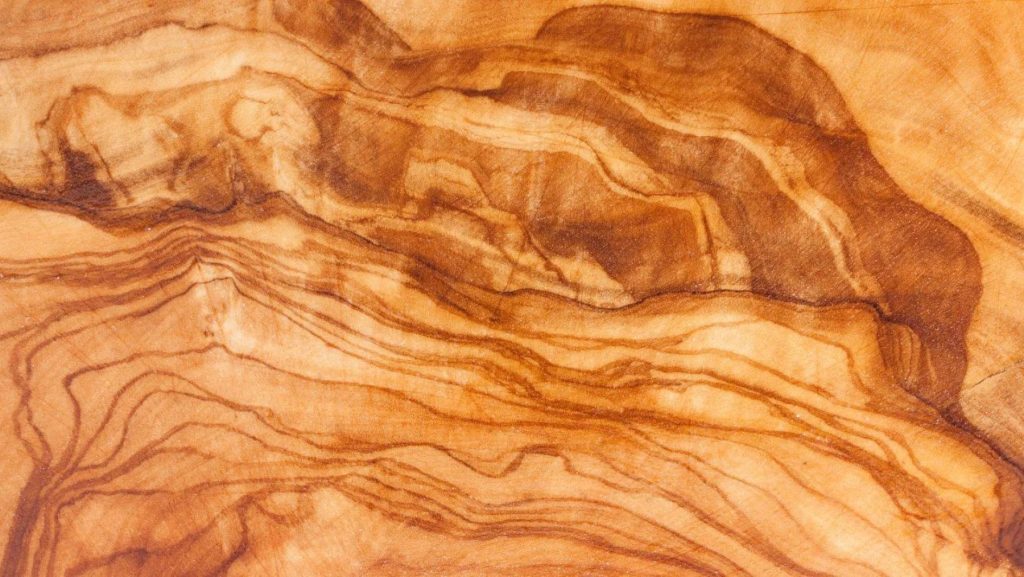
Rays are ribbon-like structures that run perpendicular to the growth rings.
They are often very visible in species like oak, where they can appear as wide bands. In other woods, rays may be small and difficult to see without magnification.
Rays are a key identifying feature, especially when comparing similar-looking species.
Growth Rings

Growth rings represent the annual growth cycle of the tree.
Earlywood (formed in spring) is usually lighter and more porous.
Latewood (formed in summer) is denser and darker.
The contrast between these can help identify whether a wood is ring-porous or diffuse-porous.
Hardwood vs Softwood (End Grain Differences)

Hardwoods (like oak, mahogany, and walnut) contain visible pores.
Softwoods (like pine and spruce) do not have pores. Instead, they have a more uniform structure made up of tracheids.
This is often the easiest first step in identifying an unknown wood.
Tools That Help with End Grain Identification
To properly examine end grain, you will often need a few basic tools:
- 10x hand lens or magnifier
- Sharp knife or razor blade (for a clean cut)
- Good lighting
- Sandpaper (to refine the surface if needed)
A clean, smooth surface is critical. Rough cuts can obscure important details.
Common Mistakes to Avoid
- Relying on color alone
- Looking at finished or sealed surfaces
- Not preparing a clean end grain surface
- Ignoring pore structure
- Confusing similar species without checking rays and pores
End grain identification takes practice, but these mistakes can slow down your progress significantly.
Practical Example
When identifying a wood sample:
Start by asking:
- Are there visible pores?
- Are the pores large or small?
- Are they arranged in rings or evenly distributed?
- Are rays visible?
- How distinct are the growth rings?
By answering these questions step by step, you can narrow down the species quickly.
Compare Wood Properties
See how different species rank in density and hardness using our Wood Density & Janka Hardness Chart. You can also explore Hardest Woods, Softest Woods, and Most Dense Woods for quick comparisons.
Building a Collection
For those building a physical reference library, exploring end grain is essential. Each sample you collect becomes easier to identify over time as you begin to recognize patterns and structures across species.
Explore our Wood Collecting & Preservation guide to start building your own reference set.
Related Guides
Understanding Interlocked vs Straight Grain
Density & Hardness Explained (Janka Scale Guide)
How to Identify Exotic Hardwood by Grain Pattern
Final Thoughts
End grain is the most reliable way to identify wood because it reveals the structure that defines each species.
With practice, a simple magnifier and a clean cut surface can allow you to distinguish between woods that otherwise look nearly identical.
Mastering end grain identification is one of the most valuable skills any woodworker or collector can develop.