

Sitka Spruce
Scientific name: Picea sitchensis
Overview
Sitka Spruce is a large conifer of the cool, moist Pacific coast of North America. Its timber is particularly valued where stiffness and strength must be obtained with limited weight. Clear, carefully selected material has a long history in musical instruments, boat spars and other demanding specialty products.
The wood’s reputation depends on selection. A pale spruce board is not automatically soundboard stock, and ordinary lumber cannot be assumed suitable for an aircraft component. Grain direction, defects, stiffness, density, drying quality and the requirements of the finished part all matter.
Quick Facts
- Common Name: Sitka Spruce
- Alternate Common Names: Coast Spruce
- Scientific Name: Picea sitchensis
- Region: North American Woods — Pacific coastal North America, from Alaska through British Columbia to northern California
- Family: Pinaceae
- Tree Size: Commonly 130–160 ft (40–50 m) tall and 4–6 ft (1.2–1.8 m) in trunk diameter; exceptional trees are much larger
- Average Dried Weight: Approximately 27 lb/ft³ (425 kg/m³)
- Janka Hardness: Approximately 510 lbf (2,270 N)
- Color: Cream to pale yellow, sometimes with a pinkish cast
- Grain: Usually straight; occasional bearclaw figure
- Texture: Fine and even
Identification Characteristics
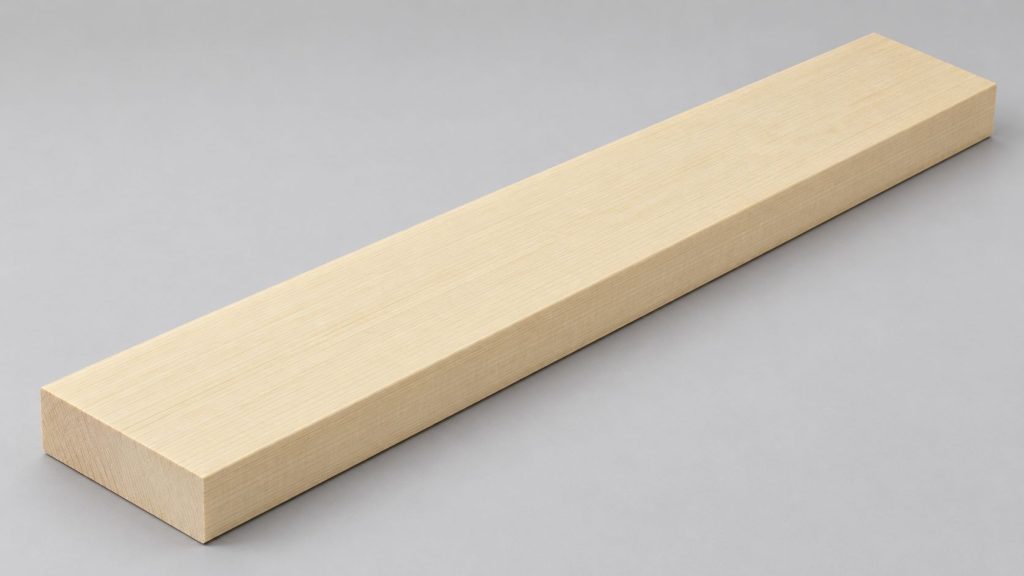
Sitka Spruce is usually cream to pale yellow, occasionally with a subtle pink cast. Sapwood and heartwood are not strongly separated by color. Straight grain and a fine texture give a relatively even face, while some pieces show the irregular markings called bearclaw figure.
As a softwood, it lacks hardwood vessel pores. Resin canals may be visible on a well-prepared end-grain surface with magnification, but distinguishing spruce species by a board alone is difficult. Keep reliable source records and use microscopic identification when the distinction has practical importance.
Key identification traits include:
- Pale cream to yellow color
- Usually straight grain
- Fine, even texture
- Little color separation between sapwood and heartwood
- Resin canals on prepared end grain
- High stiffness relative to weight in suitably selected stock

Working Properties
Clear Sitka Spruce generally cuts and glues readily. The soft earlywood can compress under tools and clamps, so use sharp edges and distribute pressure. Inspect the grain on more than one face before laying out a narrow component; surface lines can conceal grain runout through the thickness.
For instrument plates, start with material selected for that purpose and maintain controlled moisture conditions during joining and shaping. For general interior work, test any coloring schedule because stain can absorb unevenly. Do not remove unnecessary thickness in an attempt to sand out every variation in growth-ring texture.
- Select clear stock with appropriate grain orientation
- Check grain runout on multiple faces
- Use sharp tools to avoid crushed fibers
- Protect soft surfaces from dents
- Control moisture during joining and assembly
- Test stain or toner before coloring a project
- Inspect knots and resin pockets before layout
- Use application-specific grading for structural or specialty parts
Safety Note
Spruce dust may irritate the skin and respiratory tract and can cause sensitization in susceptible people. Use dust extraction, eye protection and suitable respiratory protection when machining or sanding. Check salvaged or reclaimed stock for hidden metal, decay and cracks before cutting.
Common Uses
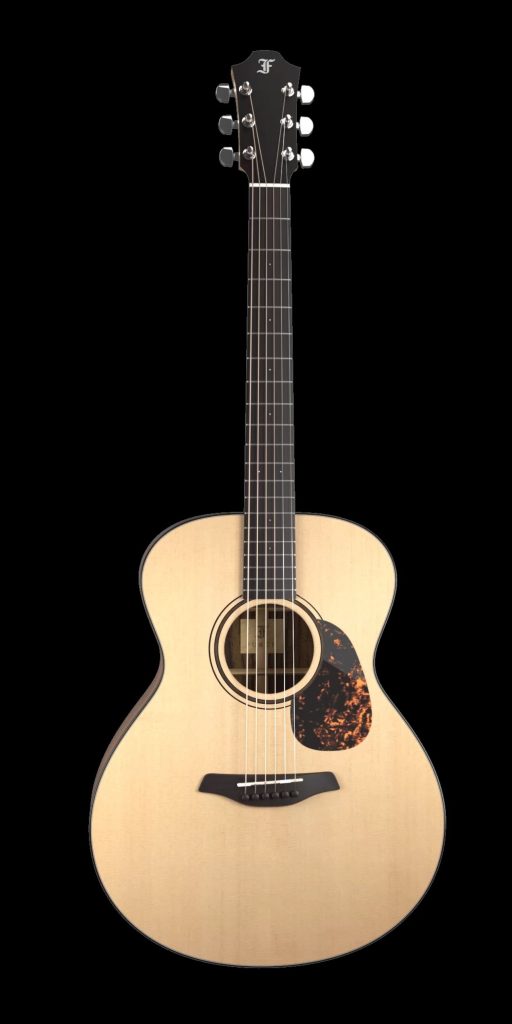
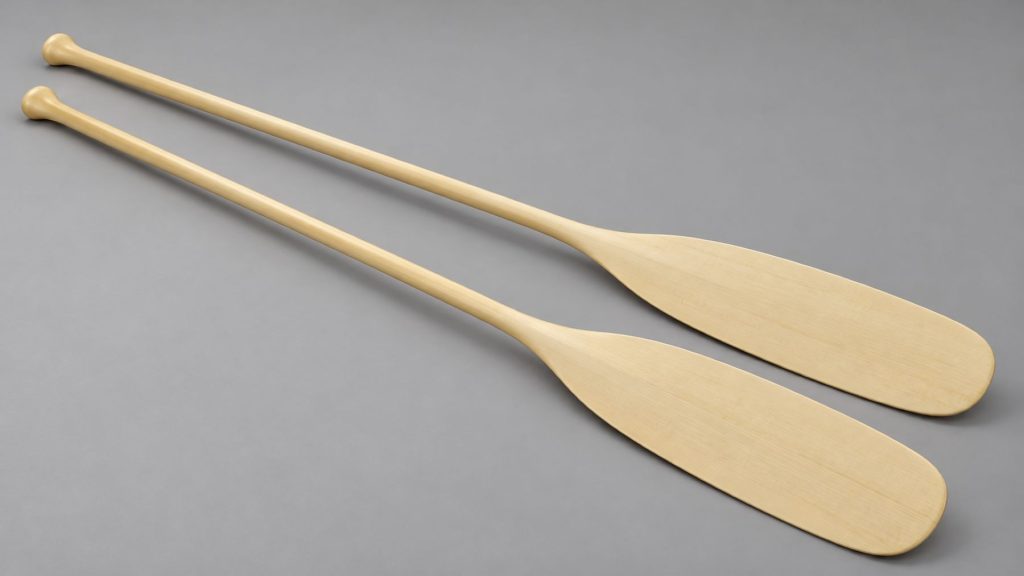
Clear Sitka Spruce has been used for piano soundboards, guitar tops, oars, boat planking, masts and spars. Its favorable strength-to-weight relationship also led to historical and specialist aircraft uses. These applications require selected stock and appropriate design rather than a species name alone.
Other grades can serve in lumber, millwork, packaging and ordinary projects. Reserve unusually clear or well-oriented material for jobs that benefit from those qualities, and use shorter sound pieces efficiently when defects restrict a board’s full length.
- Guitar tops and other instrument soundboards
- Piano soundboards
- Boat masts and spars
- Selected oars and planking
- Specialist aircraft components from appropriately specified stock
- Millwork, lumber and packaging
Sustainability & Notes
Sitka Spruce grows in coastal forest ecosystems that also support wildlife, fisheries and other values. Source timber through documented, responsible management, especially when purchasing large clear billets that may have come from older trees. Retain supplier and origin records with premium instrument stock.
Good material use includes allocating the clearest stock to applications that need it and recovering smaller pieces for other work. Sitka Spruce is not naturally durable against decay, so keep stored billets dry and use suitable protective design in exposed applications.
Comparative Notes & Related Species
Related Guides
- Best Woods for Guitar Building
- Understanding Wood Strength: What Makes Wood Strong?
- Moisture Content & Long Term Stability
- Drying & Acclimating Exotic Woods
- How to Identify Wood by End Grain Patterns
Compare Wood Properties
See how this species ranks in density and hardness using our Wood Density & Janka Hardness Chart. You can also explore Hardest Woods, Softest Woods, and Most Dense Woods for quick comparisons.
Collector Notes
Include a clean transverse face and straight longitudinal faces, and record the cut orientation. A soundboard offcut is informative when its supplier, grade and intended use are known; it should not be assumed to represent the full range of commercial spruce lumber.
Keep ordinary and bearclaw-figured pieces separately documented. When comparing stiffness or weight, record dimensions, moisture condition and grain orientation. A useful collection can show both the material’s light weight and the selection that distinguishes a specialty billet from a general-purpose board.
Share Your Photos of This Species
Do you have lumber, wood samples, tree photographs, woodworking projects, furniture, carvings, turnings, musical instruments, or other items made from this species?
Exotic Woods of the World welcomes photographs from woodworkers, collectors, sawyers, researchers, and wood enthusiasts around the world. Selected submissions may be featured on this page and throughout our website to help document and showcase real-world examples of this species.
When submitting photos, please include the common name, scientific name (if known), a brief description, and any information you would like us to share with the image.
Wood Sample Collection
This species is part of an ongoing effort to document and preserve wood samples from around the world.
Learn more about contributing to the collection:
Resources
Authoritative botanical and forestry references used in compiling information about this species include:
• USDA Forest Service – Wood Handbook: Wood as an Engineering Material
https://www.fpl.fs.usda.gov/products/publications/
• The Wood Database – Global reference for wood identification, physical properties, and woodworking characteristics
https://www.wood-database.com/
• Royal Botanic Gardens, Kew – Plants of the World Online – Botanical taxonomy and species distribution database
https://powo.science.kew.org/
• International Union for Conservation of Nature (IUCN Red List) – Global conservation status assessments
https://www.iucnredlist.org/
• Convention on International Trade in Endangered Species (CITES) – International trade regulations for protected plant species
https://cites.org/
Additional forestry publications, academic research papers, and regional timber studies may also be referenced where available.
Love This Species?
Enjoy learning about this wood species?
Help support the continued growth of Exotic Woods of the World by participating in our Adopt a Species program. Your support helps fund species research, educational content, photography, videos, and future conservation awareness initiatives.
Support Forest Conservation
This species is part of the growing Exotic Woods of the World reference archive, dedicated to documenting and preserving knowledge of the world’s wood species.
Through the Adopt a Species program, visitors can help support ongoing species research, educational content, photography, video production, and future conservation awareness initiatives.
Contributions help fund the continued expansion of this archive while promoting sustainable forestry education and the long-term appreciation of the world’s forests.
Interested in supporting this species? Visit our Adopt a Species and Conservation Partners pages to learn more.
Availability & Where to Buy
Exotic hardwood availability can vary significantly depending on region, sustainability regulations, and supplier inventory.
As this archive grows, recommended suppliers and specialty wood retailers will be listed here to help woodworkers locate responsibly sourced material.
Lumber Suppliers:
Availability varies — see the Where to Buy Exotic Woods page for current sources.
Related Tools & Products:
Availability varies — see the Where to Buy Exotic Woods page for current sources.
Share This Wood Species
Stay Connected
Follow the latest species additions, educational resources, videos, conservation initiatives, and major project milestones through our Site Updates archive.
The Site Updates archive provides a permanent record of new content, library growth, and future developments across Exotic Woods of the World.