

Balsa
Scientific name: Ochroma pyramidale
Overview
Balsa (Ochroma pyramidale) is one of the most unique woods in the world and is widely recognized as the lightest commercially important hardwood. Native to tropical regions of South America, particularly Ecuador, Peru, and neighboring countries, Balsa grows remarkably fast and can reach harvestable size within just a few years. Despite being classified botanically as a hardwood, its low density and soft texture make it more comparable to softwoods in practical use.
Balsa has played an important role in aviation, model building, marine construction, wind energy, and lightweight engineering applications for decades. Today, Ecuador remains the world’s leading producer of commercial balsa wood.
Quick Facts
- Common Name: Balsa
- Scientific Name: Ochroma pyramidale
- Region: South American Hardwoods
- Tree Size: 60–100 ft (18–30 m) tall, 2–4 ft (0.6–1.2 m) trunk diameter
- Average Dried Weight: 7–12 lbs/ft³ (112–192 kg/m³)
- Janka Hardness: Approximately 100 lbf (445 N)
- Color: Pale cream to nearly white
- Grain: Straight
- Texture: Coarse and open
Identification Characteristics
Balsa is immediately recognizable due to its exceptionally low weight and pale appearance. Even large pieces can often be lifted with one hand. The wood typically exhibits a uniform cream-colored surface with little distinction between heartwood and sapwood.
Key identification traits include:
- Extremely lightweight
- Pale cream to white coloration
- Straight grain Coarse, open texture
- Large pores visible on cut surfaces
- Soft enough to dent easily with fingernail pressure


Working Properties
Balsa is exceptionally easy to work with hand tools and machinery due to its softness and low density. Because of its softness, sharp tools and light pressure are recommended when shaping or sanding.
- Cuts easily with hand tools
- Sands rapidly
- Glues exceptionally well
- Accepts paint and coatings readily
- Minimal wear on cutting edges
- Can crush or dent during machining if not handled carefully
Safety Note
Balsa has no widely reported toxicity concerns. Standard dust collection and respiratory protection are recommended when machining or sanding any wood species.
Common Uses
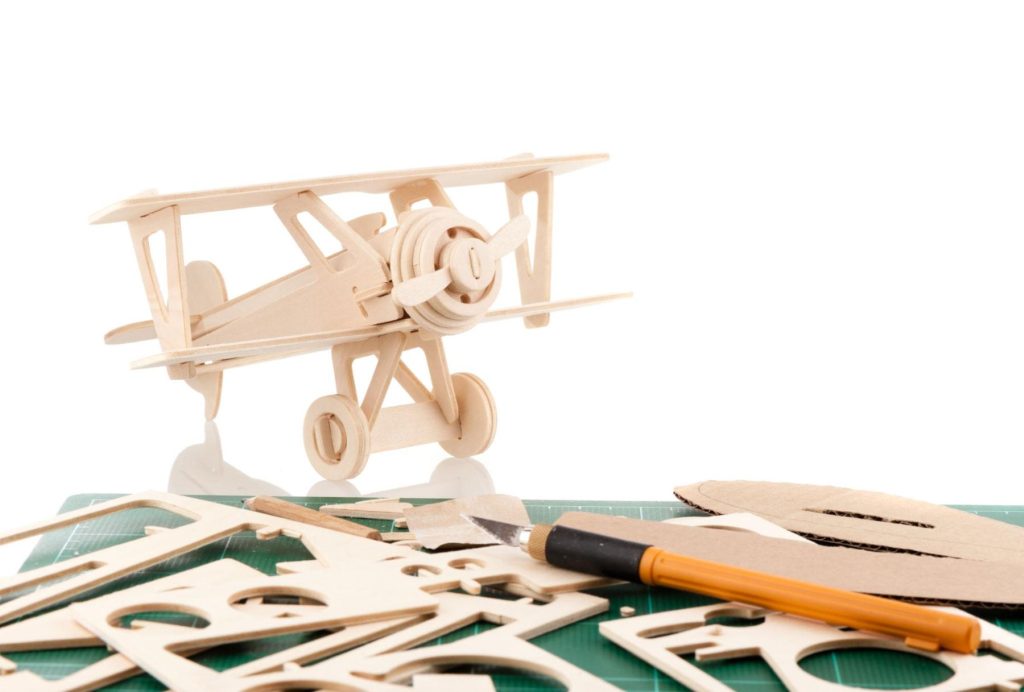

Balsa’s unique combination of light weight and strength has made it valuable across numerous industries.
- Model airplanes
- Architectural models
- Hobby and craft projects
- Lightweight marine cores
- Wind turbine blade cores
- Insulation applications
- Surfboards
- Buoyancy devices
- Experimental aircraft construction
- Packaging and protective materials
Sustainability & Notes
Balsa is generally considered a sustainable resource due to its rapid growth rate. Commercial plantations, particularly in Ecuador, supply much of the global demand. Trees often reach harvestable size within 5–10 years, making Balsa one of the fastest-growing commercial timber species.
Demand for Balsa increased significantly with the expansion of the wind energy industry, where the wood is used as a lightweight core material in turbine blades.
Comparative Notes & Related Species
Paulownia – Another exceptionally lightweight wood, though generally heavier than Balsa.
Kahikatea – A lightweight New Zealand timber historically used for boxes and containers.
Marupa – A South American species that is lightweight and easy to work but significantly denser than Balsa.
Related Guides
Softwoods vs. Hardwoods: What’s the Difference? – Learn why Balsa is technically classified as a hardwood despite being lighter and softer than most softwood species.
Wood Identification Guide (How to Identify Wood Species) – Explore how color, grain, texture, density, and other characteristics can be used to identify wood species, including lightweight woods such as Balsa.
How Wood Density Affects Strength, Weight, and Performance – Discover how wood density influences durability, workability, and structural performance, and why Balsa’s exceptionally low density makes it unique among commercial timbers.
Compare Wood Properties
See how this species ranks in density and hardness using our Wood Density & Janka Hardness Chart. You can also explore Hardest Woods, Softest Woods, and Most Dense Woods for quick comparisons.
Collector Notes
Balsa is not considered a rare collector species, but it occupies a unique position in any wood collection due to its remarkably low density. Many collectors include Balsa as a benchmark specimen because it provides a dramatic contrast when compared to dense tropical hardwoods such as Snakewood, Lignum Vitae, or Quebracho. Its importance in aviation, marine engineering, and renewable energy industries further enhances its educational value.
Share Your Photos of This Species
Do you have lumber, wood samples, tree photographs, woodworking projects, furniture, carvings, turnings, musical instruments, or other items made from this species?
Exotic Woods of the World welcomes photographs from woodworkers, collectors, sawyers, researchers, and wood enthusiasts around the world. Selected submissions may be featured on this page and throughout our website to help document and showcase real-world examples of this species.
When submitting photos, please include the common name, scientific name (if known), a brief description, and any information you would like us to share with the image.
Wood Sample Collection
This species is part of an ongoing effort to document and preserve wood samples from around the world.
Learn more about contributing to the collection:
Resources
Authoritative botanical and forestry references used in compiling information about this species include:
• USDA Forest Service – Wood Handbook: Wood as an Engineering Material
https://www.fpl.fs.usda.gov/products/publications/
• The Wood Database – Global reference for wood identification, physical properties, and woodworking characteristics
https://www.wood-database.com/
• Royal Botanic Gardens, Kew – Plants of the World Online – Botanical taxonomy and species distribution database
https://powo.science.kew.org/
• International Union for Conservation of Nature (IUCN Red List) – Global conservation status assessments
https://www.iucnredlist.org/
• Convention on International Trade in Endangered Species (CITES) – International trade regulations for protected plant species
https://cites.org/
Additional forestry publications, academic research papers, and regional timber studies may also be referenced where available.
Love This Species?
Enjoy learning about this wood species?
Help support the continued growth of Exotic Woods of the World by participating in our Adopt a Species program. Your support helps fund species research, educational content, photography, videos, and future conservation awareness initiatives.
Support Forest Conservation
This species is part of the growing Exotic Woods of the World reference archive, dedicated to documenting and preserving knowledge of the world’s wood species.
Through the Adopt a Species program, visitors can help support ongoing species research, educational content, photography, video production, and future conservation awareness initiatives.
Contributions help fund the continued expansion of this archive while promoting sustainable forestry education and the long-term appreciation of the world’s forests.
Interested in supporting this species? Visit our Adopt a Species and Conservation Partners pages to learn more.
Availability & Where to Buy
Exotic hardwood availability can vary significantly depending on region, sustainability regulations, and supplier inventory.
As this archive grows, recommended suppliers and specialty wood retailers will be listed here to help woodworkers locate responsibly sourced material.
Lumber Suppliers:
Availability varies — see the Where to Buy Exotic Woods page for current sources.
Related Tools & Products:
Availability varies — see the Where to Buy Exotic Woods page for current sources.
Share This Wood Species
Stay Connected
Follow the latest species additions, educational resources, videos, conservation initiatives, and major project milestones through our Site Updates archive.
The Site Updates archive provides a permanent record of new content, library growth, and future developments across Exotic Woods of the World.