
Celery-Top Pine
Scientific name: Phyllocladus aspleniifolius
Overview
Celery-Top Pine (Phyllocladus aspleniifolius) is a distinctive Tasmanian rainforest conifer named for its flattened, celery-like phylloclades, which perform the work of leaves. Its strong, durable, fine-textured yellow-brown timber has long been valued for boatbuilding, flooring, joinery, furniture, and exterior construction.
Quick Facts
- Common Name: Celery-Top Pine
- Alternate Common Name(s): Celery-Top, Celery Pine
- Scientific Name: Phyllocladus aspleniifolius
- Region: Oceania & Pacific Woods
- Tree Size: Typically 65–100 ft (20–30 m) tall, occasionally larger
- Average Dried Weight: Approximately 39 lb/ft³ (625 kg/m³)
- Janka Hardness: Approximately 1,160 lbf (5,160 N)
- Grain: Usually straight; growth rings visible but generally indistinct
- Texture: Fine and even
Identification Characteristics
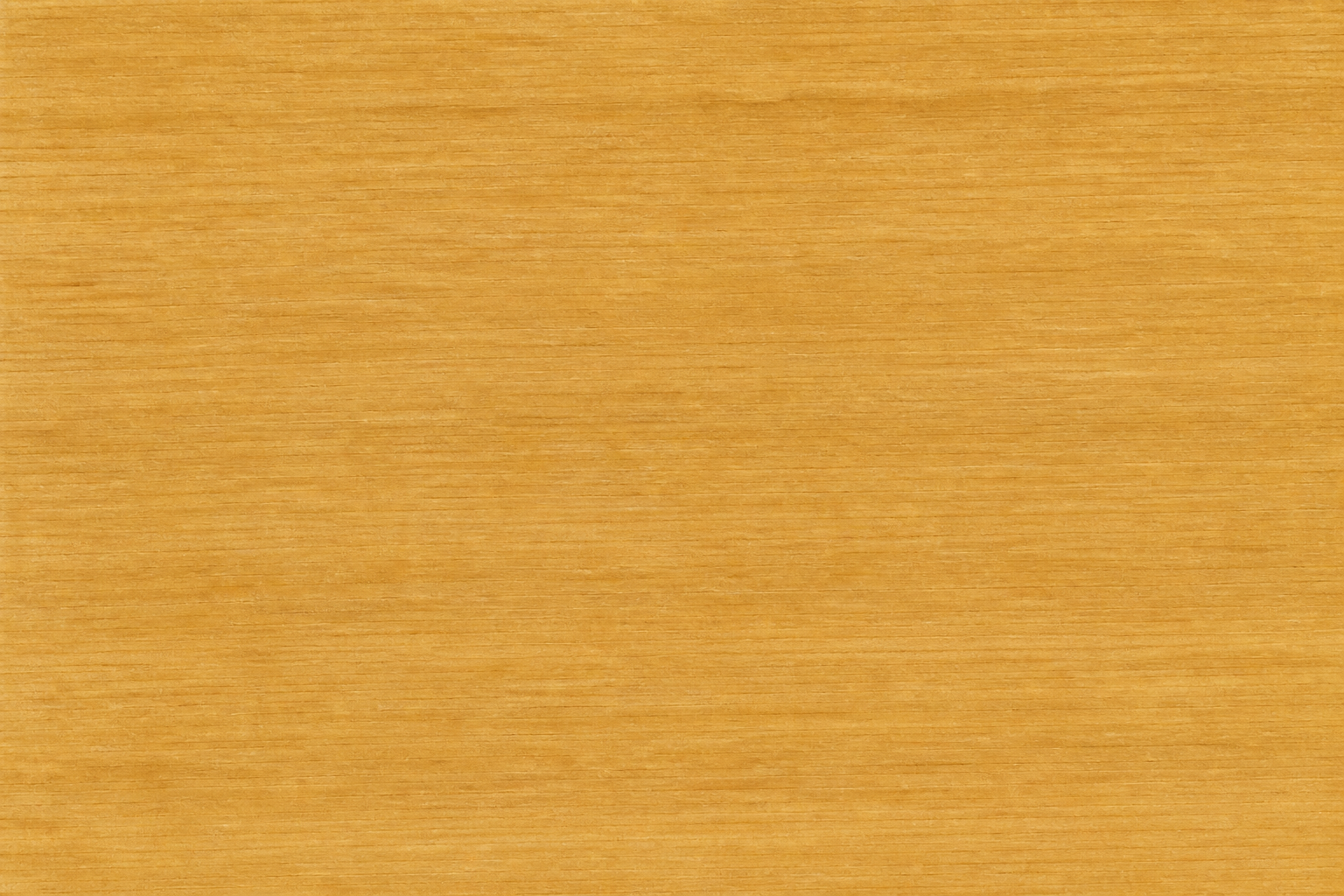
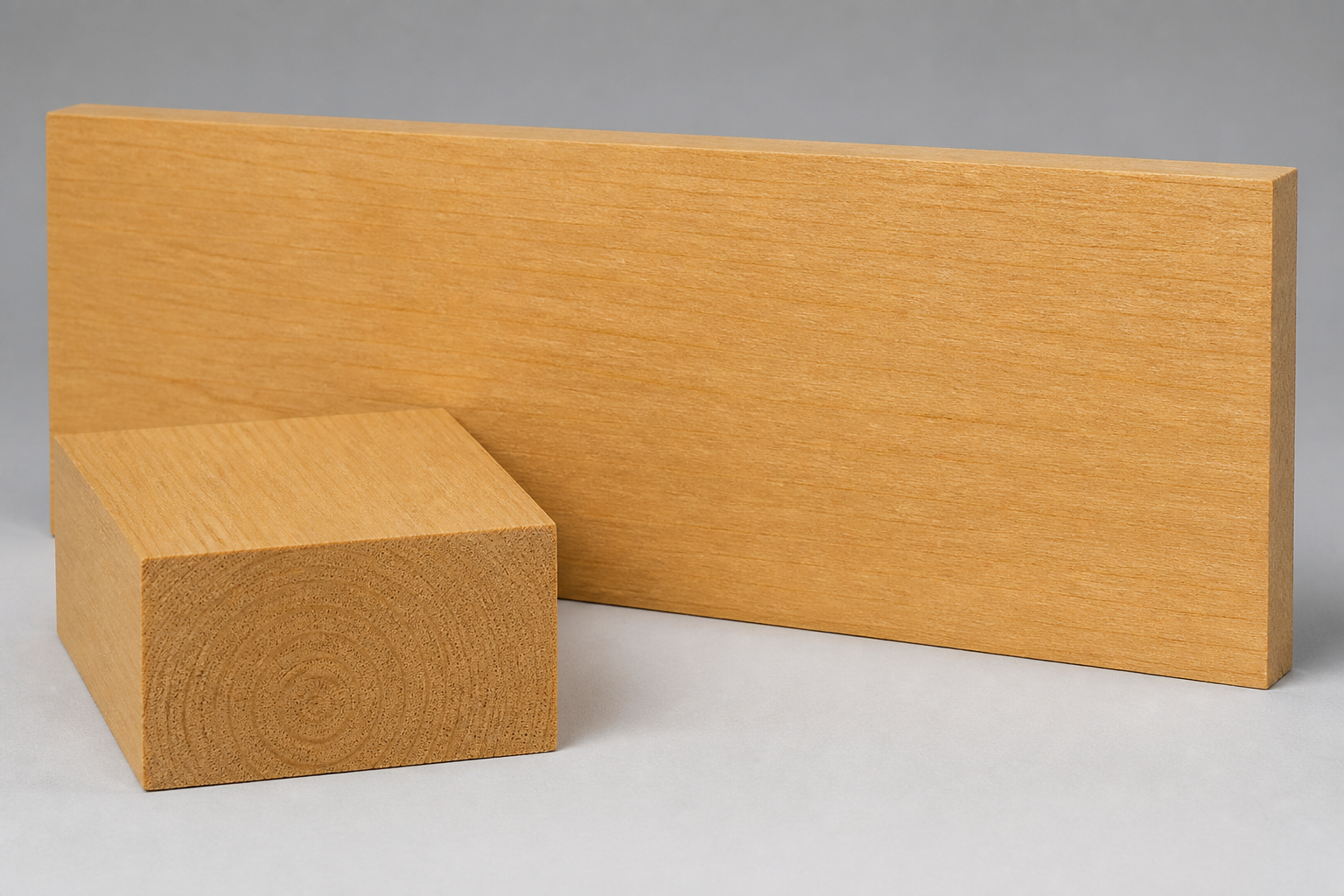
Celery-Top Pine is recognized by its dark fibrous bark and flattened, lobed, leaf-like phylloclades. Small true leaves are reduced to scales. Its heartwood is pale yellow-brown to golden brown, with fine even texture and generally straight grain.
- Tall narrow conifer native only to Tasmania
- Fibrous reddish-brown bark on mature trunks
- Drooping branchlets with small overlapping leaves
- Small rounded woody cones
- Pale yellow to pinkish-brown wood with fine even texture

Working Properties
Celery-Top Pine is generally easy to saw, machine, turn, glue, and finish. Its fine, uniform texture allows clean mouldings and smooth painted or clear-finished surfaces. Resin pockets, knots, and localized grain deviation may occur, and fasteners near board ends should be pre-drilled when splitting is a concern.
- Machines and sands readily with sharp, well-maintained cutters.
- Usually planes cleanly because the grain is predominantly straight.
- Glues, nails, and screws satisfactorily under normal shop practice.
- Accepts paint, stain, and clear finishes evenly after careful preparation.
- Use properly dried stock for stable joinery and dimensionally accurate components.
Safety Note
Avoid breathing Celery-Top Pine dust during sawing, routing, turning, or sanding. Use effective dust extraction, suitable respiratory and eye protection, and wash exposed skin after handling. As with other softwoods, individual sensitivity to dust or resin can vary.
Common Uses
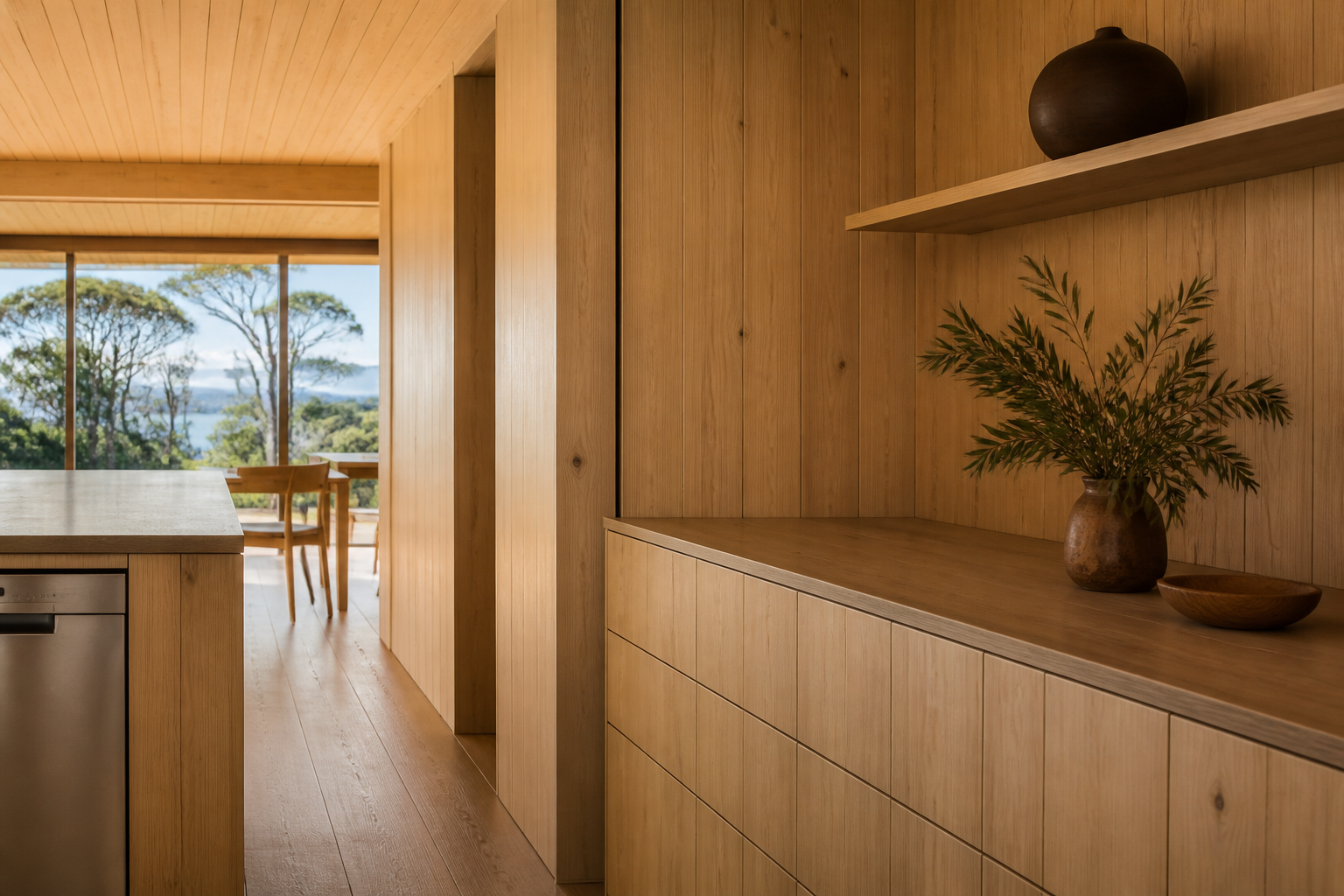
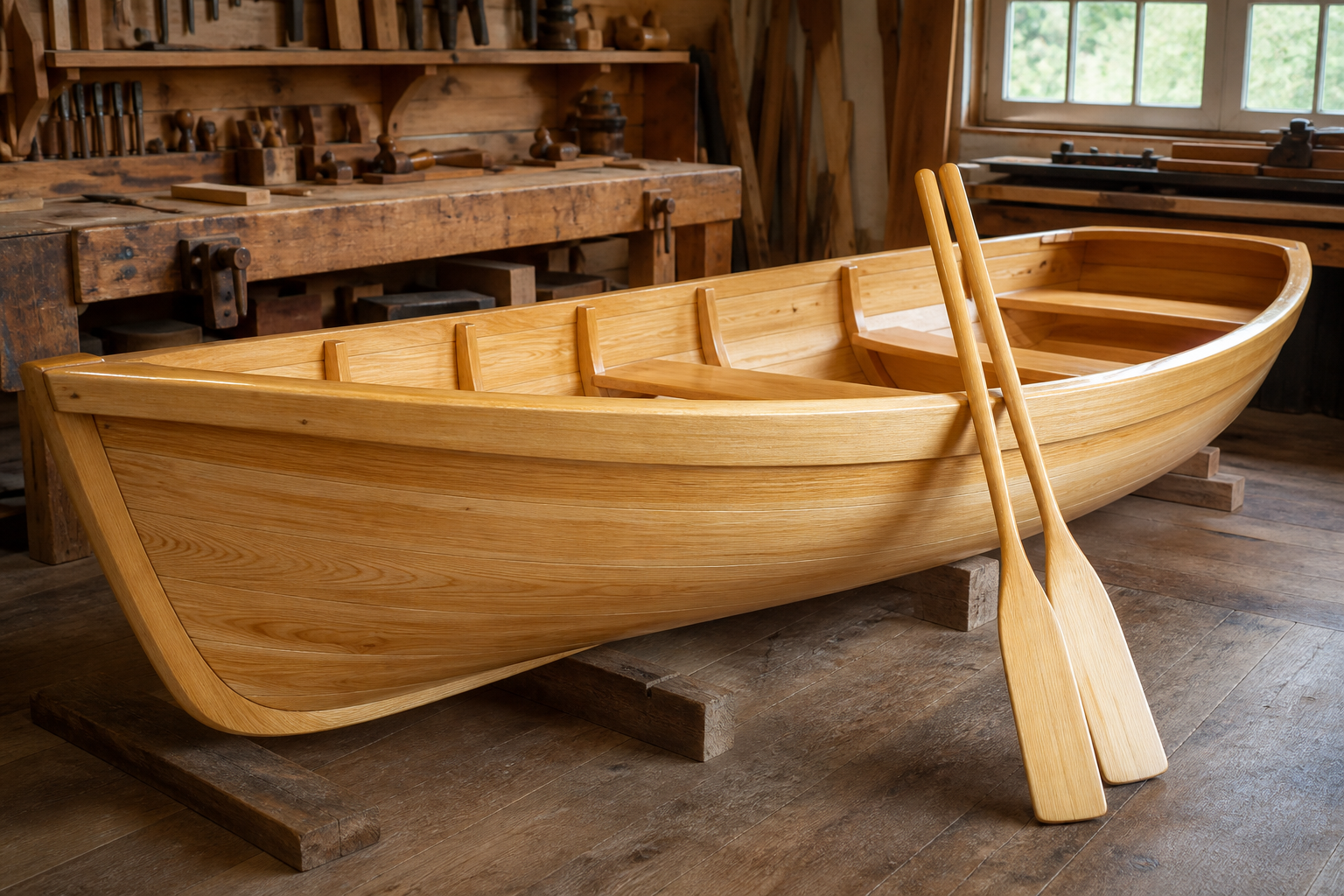
Celery-Top Pine is light, stable, and generally easy to work with sharp tools. It planes, turns, carves, glues, and finishes well, but old dry stock can be brittle and the scarcity of legal material makes careful layout essential.
- Furniture, cabinetry, shelving, and interior joinery
- Boatbuilding, marine planking, and oars
- Flooring, furniture, cabinetry, and joinery
- Exterior construction, shingles, and decking
- Veneer and heritage restoration work
- Boatbuilding and selected musical-instrument components
Sustainability & Notes
Celery-Top Pine remains native to Tasmania and is slow growing. Historic logging reduced accessible old-growth stands, while fire and habitat disturbance remain concerns. Buyers should favor clearly documented legal timber, salvage, or responsibly managed sources.
Comparative Notes & Related Species
- Norfolk Island Pine – A close relative in the genus Araucaria, with similarly pale timber but a distinctive symmetrical landscape form.
- Australian Cypress Pine – A durable Australian conifer whose stronger odor, darker color, and natural decay resistance contrast with Celery-Top Pine.
- Caribbean Pine – A plantation softwood useful for comparing resin content, grain character, and structural applications.
- Radiata Pine – A widely planted construction softwood that is generally coarser and more visibly ringed than fine-textured Celery-Top Pine.
Related Guides
- Pine Species Guide – Compare commonly traded timbers called pine and their woodworking characteristics.
- Oceania & Pacific Woods – Explore timber species native to Australia, New Guinea, New Zealand, and neighboring islands.
- Plantation vs. Wild-Harvested Hardwoods – Understand how timber origin affects availability, properties, and responsible sourcing.
- Understanding Wood Grain – Learn how grain direction and growth-ring structure influence machining and appearance.
- Wood Identification – Review practical features used to identify unknown wood samples.
Compare Wood Properties
See how this species ranks in density and hardness using our Wood Density & Janka Hardness Chart. You can also explore Hardest Woods, Softest Woods, and Most Dense Woods for quick comparisons.
Collector Notes
Sugar Gum is a valuable reference sample for collectors because its pale color and exceptional density challenge the assumption that very heavy Australian eucalypts are always dark red. A documented specimen should include face grain and end grain, geographic origin, tree age if known, and whether the material came from a plantation, farm shelterbelt, salvage source, or the restricted native range.
Share Your Photos of This Species
Do you have lumber, wood samples, tree photographs, woodworking projects, furniture, carvings, turnings, musical instruments, or other items made from this species?
Exotic Woods of the World welcomes photographs from woodworkers, collectors, sawyers, researchers, and wood enthusiasts around the world. Selected submissions may be featured on this page and throughout our website to help document and showcase real-world examples of this species.
When submitting photos, please include the common name, scientific name (if known), a brief description, and any information you would like us to share with the image.
Wood Sample Collection
This species is part of an ongoing effort to document and preserve wood samples from around the world.
Learn more about contributing to the collection:
Resources
Authoritative botanical and forestry references used in compiling information about this species include:
• USDA Forest Service – Wood Handbook: Wood as an Engineering Material
https://www.fpl.fs.usda.gov/products/publications/
• The Wood Database – Global reference for wood identification, physical properties, and woodworking characteristics
https://www.wood-database.com/
• Royal Botanic Gardens, Kew – Plants of the World Online – Botanical taxonomy and species distribution database
https://powo.science.kew.org/
• International Union for Conservation of Nature (IUCN Red List) – Global conservation status assessments
https://www.iucnredlist.org/
• Convention on International Trade in Endangered Species (CITES) – International trade regulations for protected plant species
https://cites.org/
Additional forestry publications, academic research papers, and regional timber studies may also be referenced where available.
Love This Species?
Enjoy learning about this wood species?
Help support the continued growth of Exotic Woods of the World by participating in our Adopt a Species program. Your support helps fund species research, educational content, photography, videos, and future conservation awareness initiatives.
Support Forest Conservation
This species is part of the growing Exotic Woods of the World reference archive, dedicated to documenting and preserving knowledge of the world’s wood species.
Through the Adopt a Species program, visitors can help support ongoing species research, educational content, photography, video production, and future conservation awareness initiatives.
Contributions help fund the continued expansion of this archive while promoting sustainable forestry education and the long-term appreciation of the world’s forests.
Interested in supporting this species? Visit our Adopt a Species and Conservation Partners pages to learn more.
Availability & Where to Buy
Exotic hardwood availability can vary significantly depending on region, sustainability regulations, and supplier inventory.
As this archive grows, recommended suppliers and specialty wood retailers will be listed here to help woodworkers locate responsibly sourced material.
Lumber Suppliers:
Availability varies — see the Where to Buy Exotic Woods page for current sources.
Related Tools & Products:
Availability varies — see the Where to Buy Exotic Woods page for current sources.
Share This Wood Species
Stay Connected
Follow the latest species additions, educational resources, videos, conservation initiatives, and major project milestones through our Site Updates archive.
The Site Updates archive provides a permanent record of new content, library growth, and future developments across Exotic Woods of the World.