
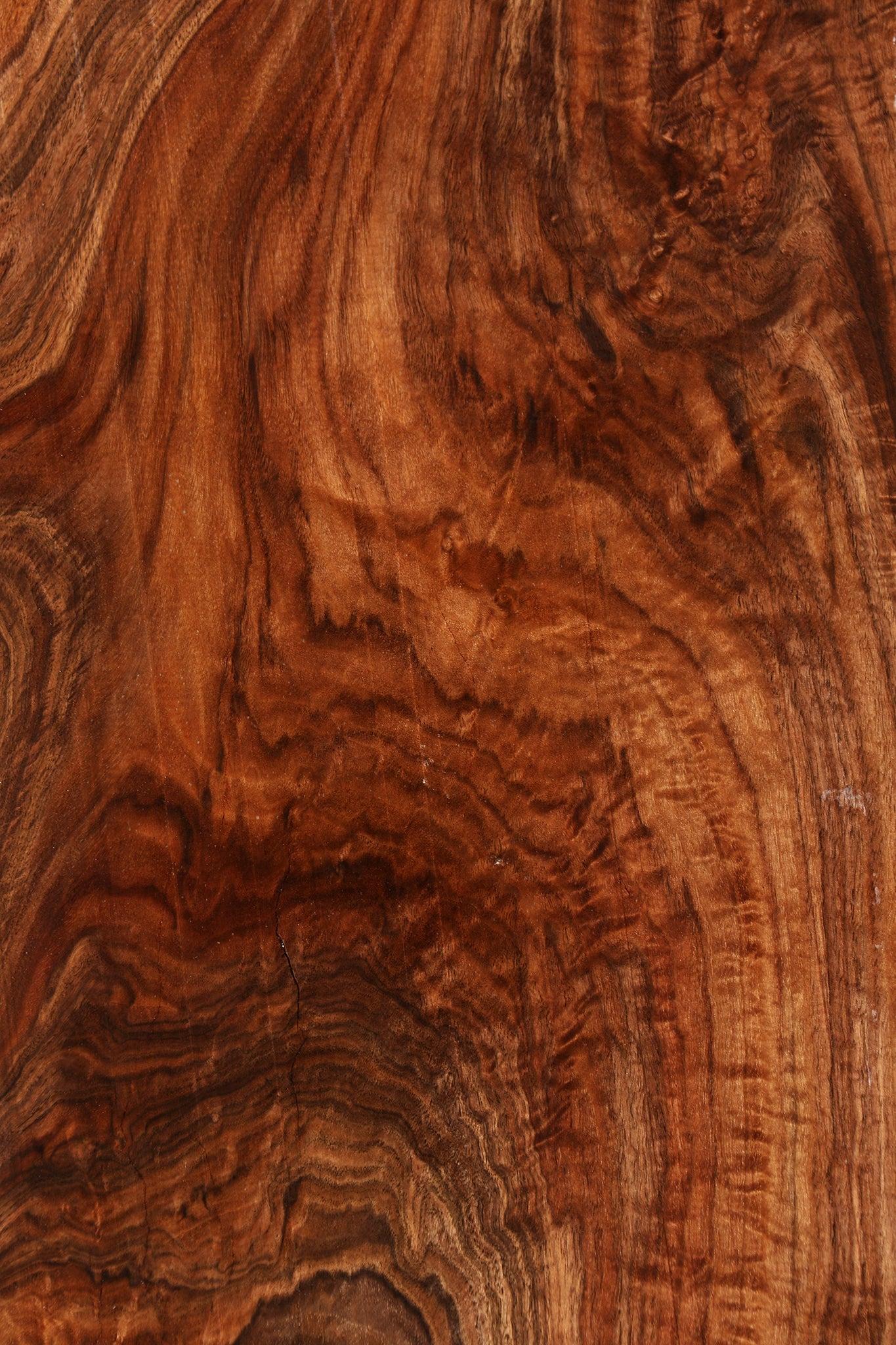
Claro Walnut
Scientific name: Juglans hindsii
Overview
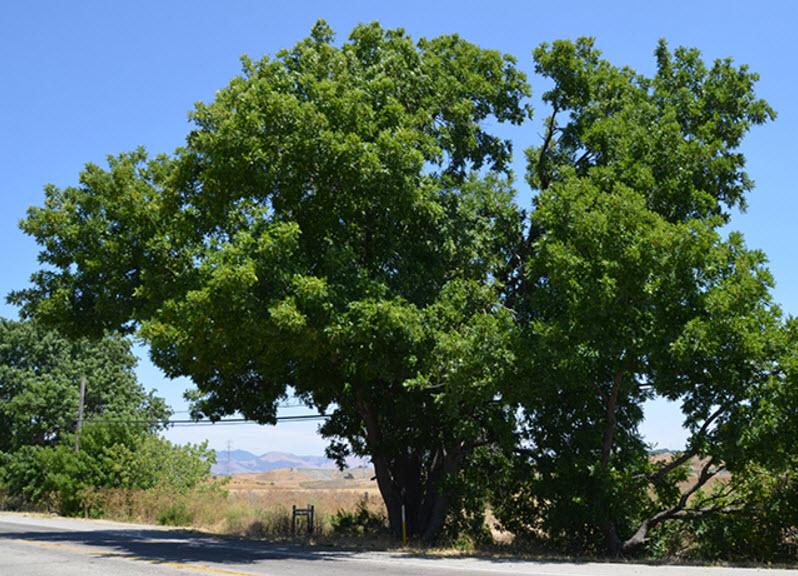
Claro Walnut is a medium to large deciduous hardwood native to northern California and a small portion of southern Oregon. Juglans hindsii belongs to the Juglandaceae family and is one of the distinctive western North American members of the walnut genus.
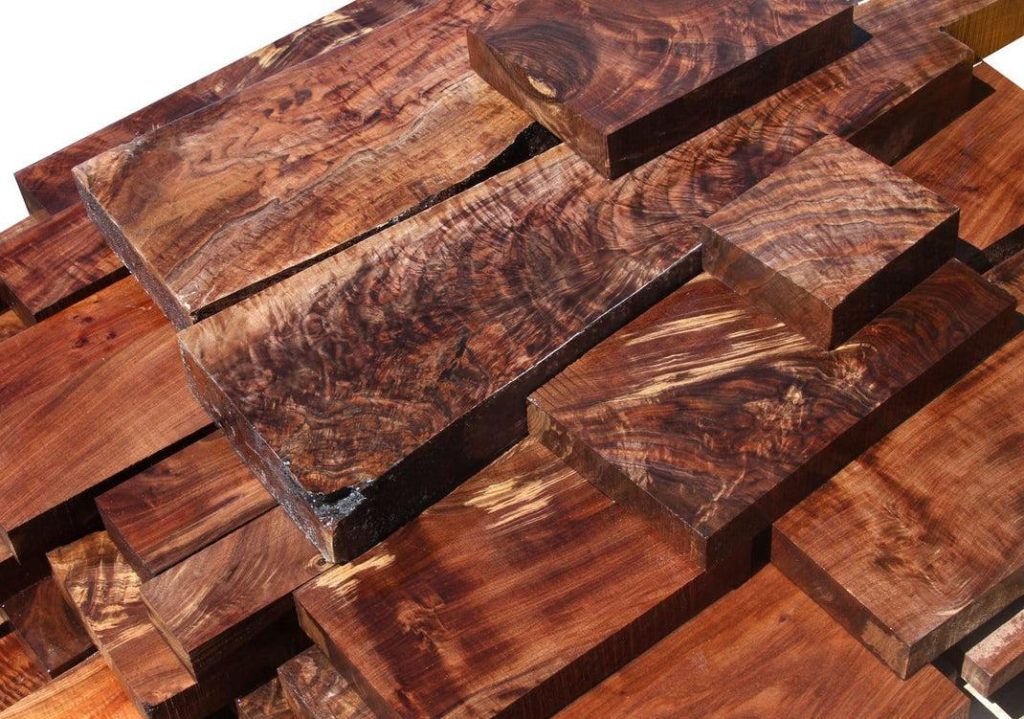
The wood is prized for its rich coloration and highly variable figure. Heartwood can range from medium brown to dark chocolate brown and frequently contains reddish, purplish, gray, or nearly black streaks. Curly, crotch, burl, and other figured material can be particularly dramatic. The sapwood is considerably paler and provides strong contrast with the darker heartwood.
Claro Walnut is valued for fine furniture, cabinetry, veneer, gunstocks, turning, carving, musical instruments, and decorative woodworking. It has also played an important role as rootstock for commercial walnut orchards, and some of the most striking lumber comes from older orchard trees and grafted walnut trees removed at the end of their productive lives.
Quick Facts
- Common Name: Claro Walnut
- Alternate Common Names: Northern California Walnut, Northern California Black Walnut, Hinds’ Black Walnut
- Scientific Name: Juglans hindsii
- Region: North American Hardwoods
- Tree Size: Approximately 40–80 ft (12–24 m) tall, with trunks commonly 2–4 ft (0.6–1.2 m) in diameter and occasionally larger
- Average Dried Weight: Approximately 38–40 lbs/ft³ (610–640 kg/m³)
- Janka Hardness: Approximately 1,130 lbf
- Grain: Generally straight to irregular or figured
- Texture: Medium and relatively even
Identification Characteristics
Claro Walnut generally produces medium to dark brown heartwood with exceptional natural color variation. Individual boards can display chocolate brown, reddish brown, purplish brown, gray-brown, and nearly black streaks.
Sapwood ranges from cream to pale yellowish brown and normally contrasts strongly with the darker heartwood. Grain can be straight in ordinary trunk wood but may become curly, wavy, irregular, or highly figured around crotches, burls, graft unions, and other areas of unusual growth.
Key identification traits include:
- Medium to dark chocolate-brown heartwood
- Reddish, purplish, gray, or nearly black streaking
- Pale cream to yellowish-brown sapwood
- Strong heartwood and sapwood contrast
- Straight to highly figured grain
- Medium, relatively even texture
- Potential curly, crotch, burl, and feather figure
Working Properties
Claro Walnut is generally considered an excellent woodworking species. It machines well with hand and power tools, while its moderate density provides a useful balance between strength and workability.
Straight-grained material usually planes cleanly, while highly figured sections require additional care to prevent tear-out. Sharp cutting tools and lighter passes are particularly helpful when working curly, crotch, or burl material.
- Machines well with sharp tools
- Turns exceptionally well
- Carves well
- Sands to a smooth surface
- Glues satisfactorily
- Accepts oils and clear finishes exceptionally well
- Figured grain may require careful machining
Safety Note
Walnut wood dust may cause skin, eye, or respiratory irritation in sensitive individuals. Repeated exposure to fine hardwood dust should be minimized.
Appropriate dust collection, eye protection, and respiratory protection are recommended during sawing, routing, turning, carving, and sanding.
Common Uses
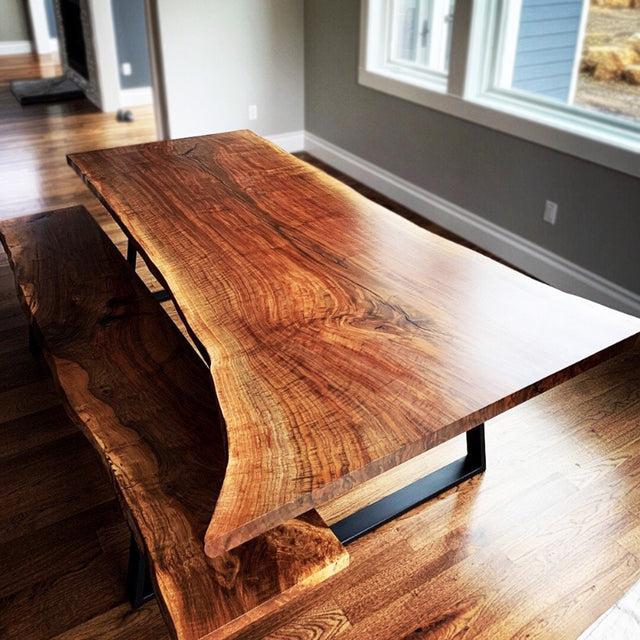
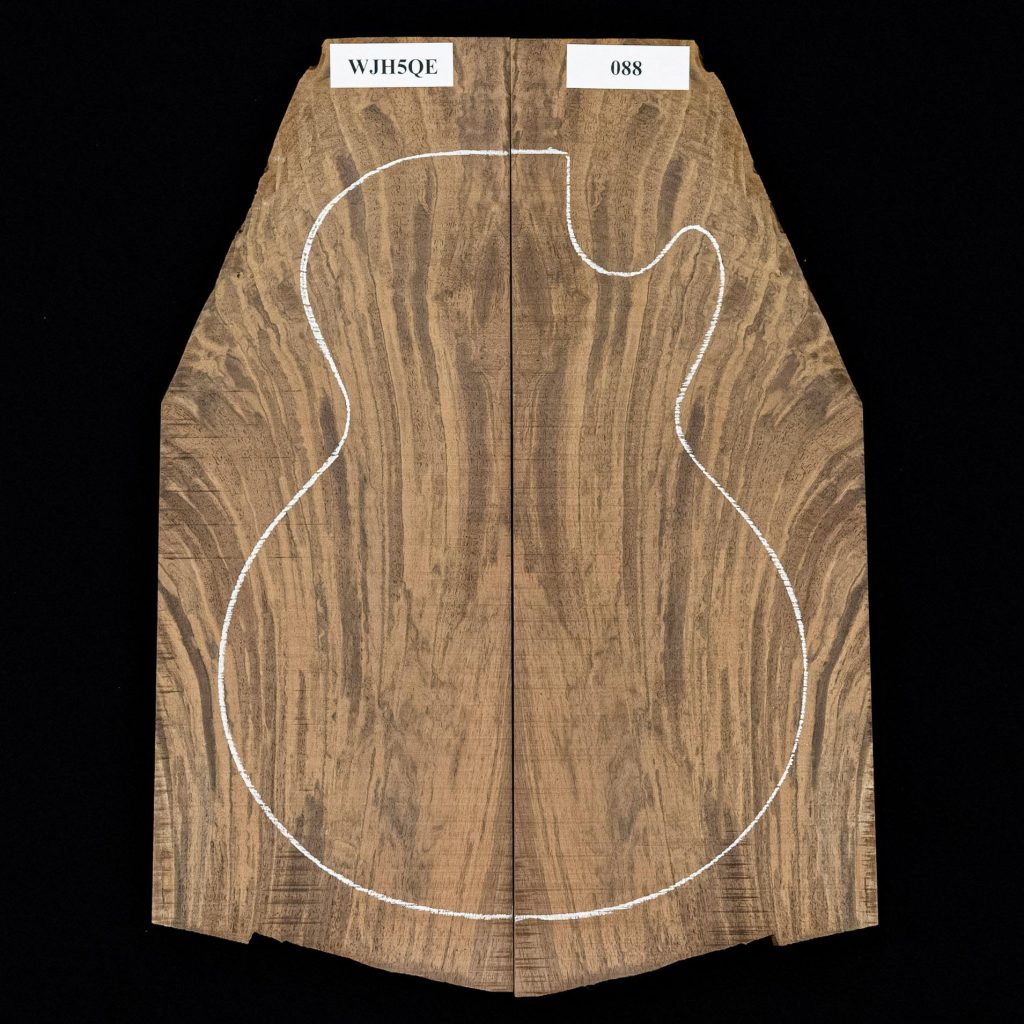
Its rich coloration, attractive figure, excellent workability, and ability to take a beautiful finish make Claro Walnut suitable for numerous woodworking applications, including:
- Fine furniture
- Cabinetry
- Decorative veneer
- Gun stocks
- Wood turning
- Carving
- Musical instrument components
- Decorative boxes
- Architectural millwork
- Specialty woodworking
Sustainability & Notes
Claro Walnut has a relatively limited native distribution compared with Black Walnut and several other North American walnuts. Natural populations are concentrated primarily in northern and central California, with the species extending into a small portion of southern Oregon.
The species has also had considerable agricultural importance because it was historically used as rootstock for commercial walnut orchards. Grafted orchard trees can produce unusual wood where the rootstock and upper walnut variety meet.
Older orchard removals, urban-tree salvage, storm-damaged trees, and other legitimate removals can therefore provide valuable woodworking material without requiring harvest specifically for lumber.
Because naturally occurring populations have greater conservation importance than ordinary commercial walnut plantations, provenance should be considered when purchasing or collecting Claro Walnut.
Comparative Notes & Related Species
Arizona Walnut – A southwestern North American walnut producing attractive brown heartwood and providing an excellent geographic comparison with Claro Walnut.
Southern California Walnut – A closely related California walnut with a more southerly natural distribution and similarly limited commercial lumber availability.
Little Walnut – A smaller walnut native to the south-central and southwestern United States, providing an interesting comparison in tree size, distribution, and wood characteristics.
Related Guides
Walnut Species Guide
Explore walnut species from around the world and compare Claro Walnut with Black Walnut, English Walnut, Andean Walnut, Arizona Walnut, Southern California Walnut, Little Walnut, and other members of Juglans.
Understanding Chatoyance in Wood
Learn how changing grain orientation and reflected light create the shifting visual depth seen in curly, crotch, feathered, and other highly figured walnut.
Walnut vs. Cherry
Compare two classic furniture woods based on color, grain, hardness, workability, aging characteristics, finishing, and common applications.
Best Woods for Guitar Building
Explore woods used in acoustic and electric instruments and learn how appearance, stability, weight, resonance, and machining characteristics influence material selection.
Best Woods for Wood Turning
Compare turning woods based on grain, figure, density, stability, cutting characteristics, and their ability to produce smooth finished surfaces.
Compare Wood Properties
See how this species ranks in density and hardness using our Wood Density & Janka Hardness Chart. You can also explore Hardest Woods, Softest Woods, and Most Dense Woods for quick comparisons.
Collector Notes
Claro Walnut is an outstanding collector species because individual samples can display dramatically different coloration and figure. Straight-grained trunk wood, curly material, crotch figure, burl, and graft-union wood can appear sufficiently different that several specimens from the same species can justify separate places within a collection.
A walnut collection containing Claro Walnut alongside Black Walnut, Andean Walnut, Arizona Walnut, Southern California Walnut, Little Walnut, and West Indian Walnut can demonstrate both the geographic reach and visual diversity of the Juglans genus.
For figured orchard material, documentation identifying the source tree and whether the specimen originated near a graft union can add substantial educational interest.
Share Your Photos of This Species
Do you have lumber, wood samples, tree photographs, woodworking projects, furniture, carvings, turnings, musical instruments, or other items made from this species?
Exotic Woods of the World welcomes photographs from woodworkers, collectors, sawyers, researchers, and wood enthusiasts around the world. Selected submissions may be featured on this page and throughout our website to help document and showcase real-world examples of this species.
When submitting photos, please include the common name, scientific name (if known), a brief description, and any information you would like us to share with the image.
Wood Sample Collection
This species is part of an ongoing effort to document and preserve wood samples from around the world.
Learn more about contributing to the collection:
Resources
Authoritative botanical and forestry references used in compiling information about this species include:
• USDA Forest Service – Wood Handbook: Wood as an Engineering Material
https://www.fpl.fs.usda.gov/products/publications/
• The Wood Database – Global reference for wood identification, physical properties, and woodworking characteristics
https://www.wood-database.com/
• Royal Botanic Gardens, Kew – Plants of the World Online – Botanical taxonomy and species distribution database
https://powo.science.kew.org/
• International Union for Conservation of Nature (IUCN Red List) – Global conservation status assessments
https://www.iucnredlist.org/
• Convention on International Trade in Endangered Species (CITES) – International trade regulations for protected plant species
https://cites.org/
Additional forestry publications, academic research papers, and regional timber studies may also be referenced where available.
Love This Species?
Enjoy learning about this wood species?
Help support the continued growth of Exotic Woods of the World by participating in our Adopt a Species program. Your support helps fund species research, educational content, photography, videos, and future conservation awareness initiatives.
Support Forest Conservation
This species is part of the growing Exotic Woods of the World reference archive, dedicated to documenting and preserving knowledge of the world’s wood species.
Through the Adopt a Species program, visitors can help support ongoing species research, educational content, photography, video production, and future conservation awareness initiatives.
Contributions help fund the continued expansion of this archive while promoting sustainable forestry education and the long-term appreciation of the world’s forests.
Interested in supporting this species? Visit our Adopt a Species and Conservation Partners pages to learn more.
Availability & Where to Buy
Exotic hardwood availability can vary significantly depending on region, sustainability regulations, and supplier inventory.
As this archive grows, recommended suppliers and specialty wood retailers will be listed here to help woodworkers locate responsibly sourced material.
Lumber Suppliers:
Availability varies — see the Where to Buy Exotic Woods page for current sources.
Related Tools & Products:
Availability varies — see the Where to Buy Exotic Woods page for current sources.
Share This Wood Species
Stay Connected
Follow the latest species additions, educational resources, videos, conservation initiatives, and major project milestones through our Site Updates archive.
The Site Updates archive provides a permanent record of new content, library growth, and future developments across Exotic Woods of the World.