
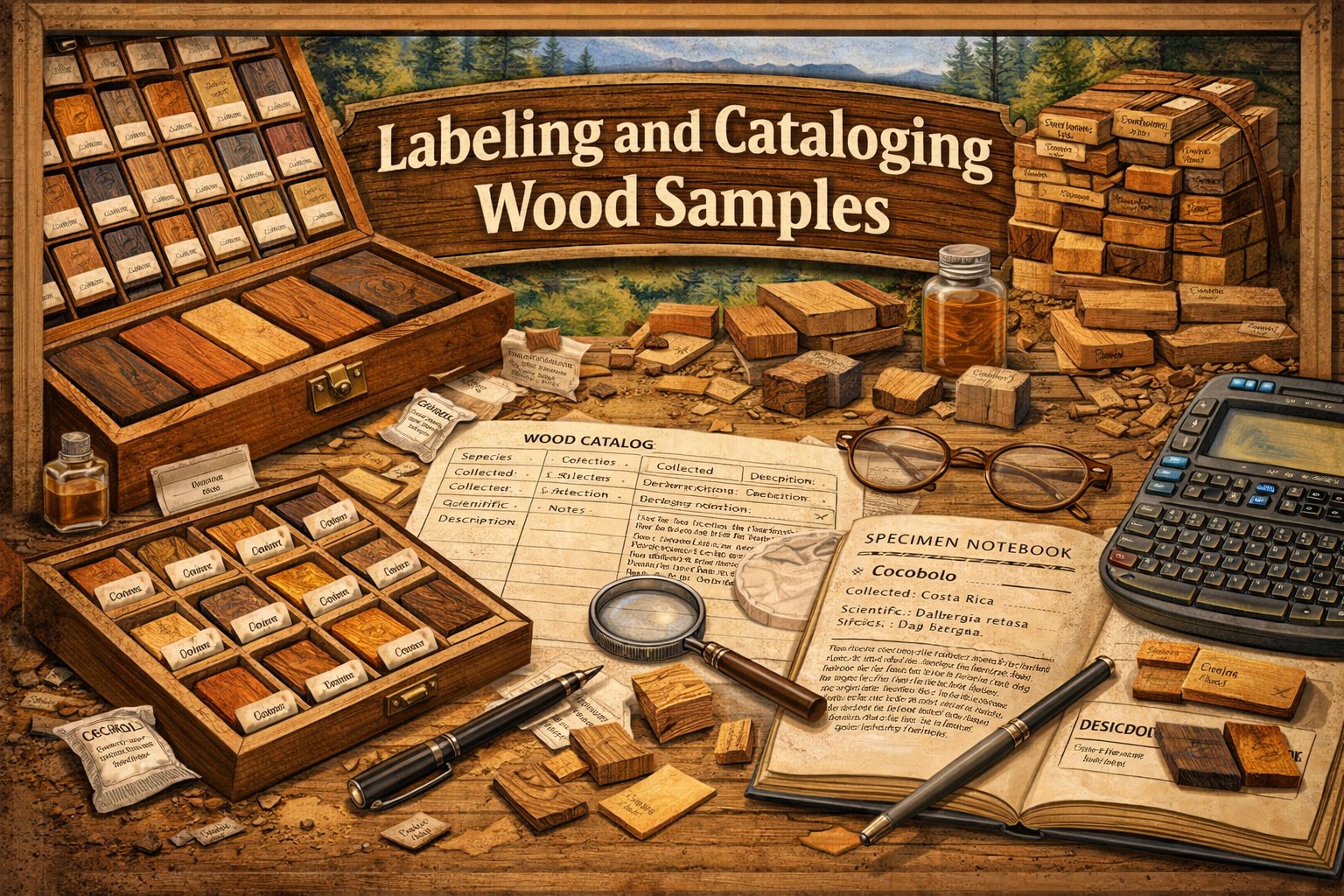
Labeling and Cataloging Wood Samples
Accurate labeling is critical to maintaining the value of a wood collection. Without proper identification, even high-quality or rare samples lose their usefulness as a reference.
A consistent labeling system ensures long-term reliability.
Essential Label Information
Each sample should include:
• Common name
• Scientific name
• Region of origin
Optional Information
Additional details can enhance your collection:
• Date acquired
• Source or supplier
• Notes on density or hardness
• Observations on grain or color
Labeling Methods
Choose a method that is durable and easy to read:
• Adhesive labels
• Tags
• Permanent marker (on end grain or hidden surface)
Labels should remain legible over time.
Creating a Catalog System
In addition to physical labels, maintain a catalog system.
This can include:
• Spreadsheet or database
• Unique ID for each sample
• Notes and observations
Compare Wood Properties
See how different species rank in density and hardness using our Wood Density & Janka Hardness Chart. You can also explore Hardest Woods, Softest Woods, and Most Dense Woods for quick comparisons
Sourcing Materials:
Looking to find these species or similar materials? View recommended suppliers on our Where to Buy Exotic Woods page.
Building a Collection:
For those building a physical reference library, explore our Wood Collecting & Preservation guide.