

Poisonwood
Scientific name: Metopium toxiferum
Overview
Poisonwood is a dense Caribbean hardwood best known for the skin-irritating properties of its sap and bark. Despite its reputation, the properly dried and milled wood is stable and workable. It produces attractive reddish-brown heartwood with moderate density and fine texture.
Native to the Bahamas and Greater Antilles, Poisonwood grows in coastal and dry forest environments. While not widely exported as commercial lumber, it is valued regionally for small craftwork and specialty turning.
Quick Facts
- Common Name: Poisonwood
- Scientific Name: Metopium toxiferum
- Region: Caribbean & West Indies Hardwoods (Florida, Caribbean, Central America)
- Tree Size: 20–50 ft tall, 1–2 ft trunk diameter
- Average Dried Weight: 63 lbs/ft³ (1,010 kg/m³)
- Janka Hardness: 2,300 lbf
- Color: Orange-brown to reddish brown, often darkening with age
- Grain: Interlocked
- Texture: Fine to medium
Identification Characteristics
Heartwood ranges from medium reddish-brown to deeper brown tones. The grain is generally straight but may show mild interlocking. Texture is fine to medium, and the wood feels moderately heavy in hand.
Key identification traits include:
- Reddish-brown heartwood
- Medium density
- Fine texture
- Subtle luster when finished
- Uniform growth structure


Working Properties
Once properly dried, Poisonwood machines reasonably well.
- Turns smoothly
- Sands to a fine surface
- Accepts finish evenly
- Requires sharp tools
- Pre-drilling recommended for fasteners
Care should be taken during initial milling due to potential sap exposure.
Safety Note
Fresh sap and sawdust from green wood may cause skin irritation in sensitive individuals. Once dried and properly processed, the risk is significantly reduced. Standard dust precautions recommended.
Common Uses
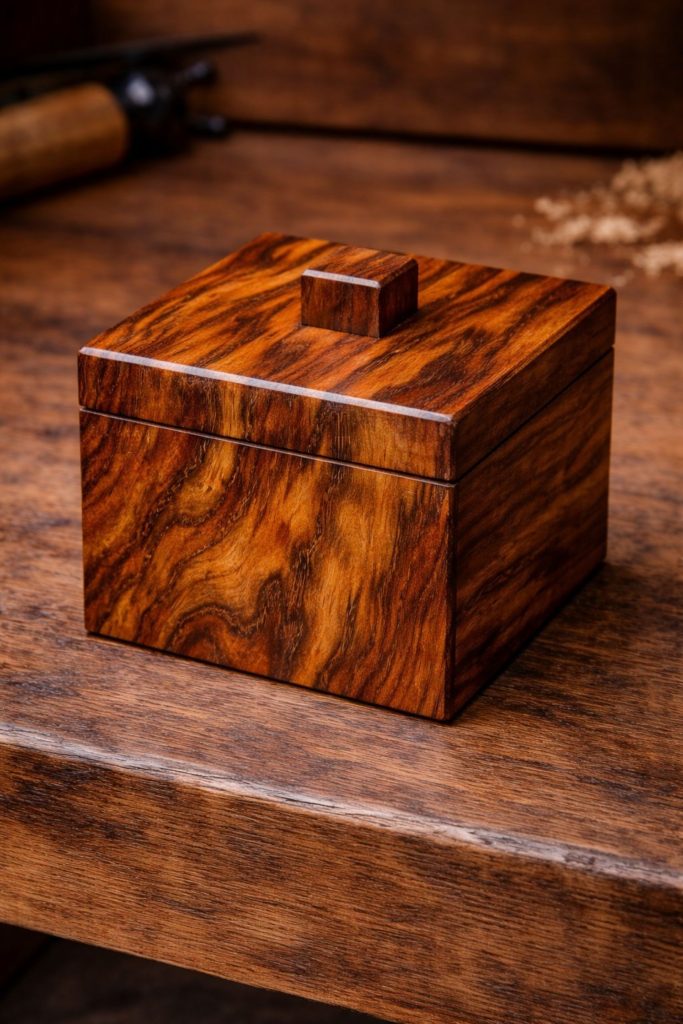
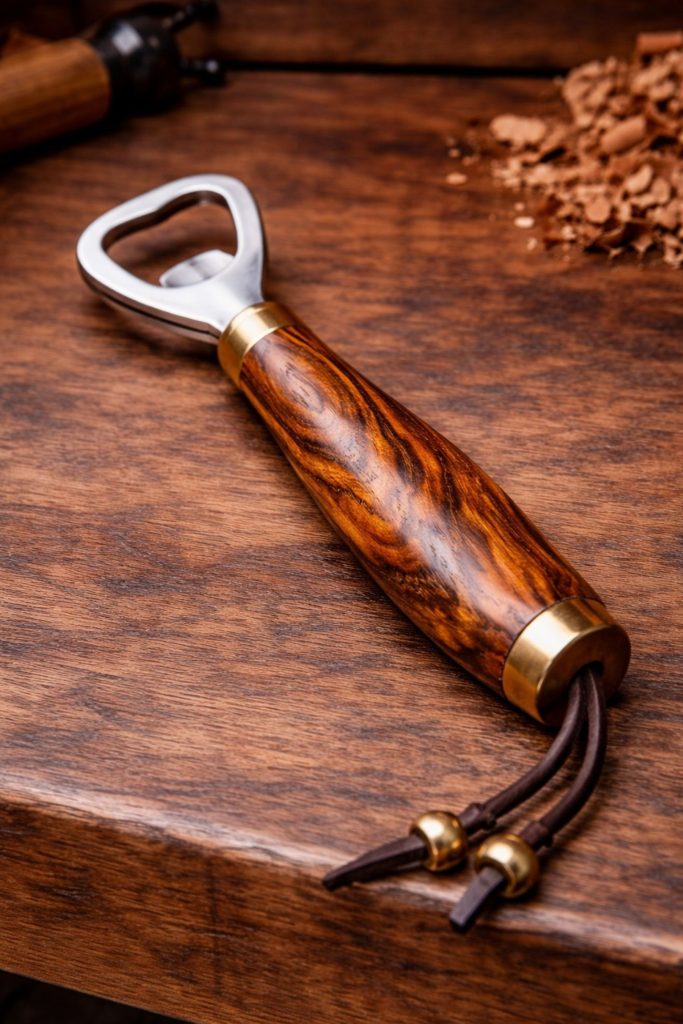
Poisonwood common uses including:
- Turned bowls
- Small boxes
- Tool handles
- Walking sticks
- Decorative craft items
Sustainability & Notes
Poisonwood is typically harvested locally rather than exported in commercial volume. It is more commonly encountered in smaller stock sizes or as regional-use lumber.
Availability outside the Caribbean is limited.
Comparative Notes & Related Species
Lancewood – More consistently straight-grained and less associated with irritant sap.
Masticwood – Typically darker and heavier.
West Indian Satinwood – Brighter and more decorative in tone.
Related Guides
How to Identify Exotic Hardwood by Grain Pattern
Helpful for distinguishing reddish-brown tropical species.
Density & Hardness Explained (Janka Scale Guide)
Places Poisonwood in the mid-density tropical range.
Building a Documented Wood Collection
Important for documenting lesser-exported Caribbean hardwoods.
Compare Wood Properties
See how this species ranks in density and hardness using our Wood Density & Janka Hardness Chart. You can also explore Hardest Woods, Softest Woods, and Most Dense Woods for quick comparisons.
Collector Notes
Poisonwood is most commonly encountered in smaller turning blanks rather than wide boards. When cataloging, note the reddish-brown coloration, moderate density, and documented Caribbean origin. Specimens that show uniform heartwood tone without sapwood intrusion are preferred. Provenance documentation is particularly valuable given its regional nature.
Video Overview
Share Your Photos of This Species
Do you have lumber, wood samples, tree photographs, woodworking projects, furniture, carvings, turnings, musical instruments, or other items made from this species?
Exotic Woods of the World welcomes photographs from woodworkers, collectors, sawyers, researchers, and wood enthusiasts around the world. Selected submissions may be featured on this page and throughout our website to help document and showcase real-world examples of this species.
When submitting photos, please include the common name, scientific name (if known), a brief description, and any information you would like us to share with the image.
Wood Sample Collection
This species is part of an ongoing effort to document and preserve wood samples from around the world.
Learn more about contributing to the collection:
Resources
Authoritative botanical and forestry references used in compiling information about this species include:
• USDA Forest Service – Wood Handbook: Wood as an Engineering Material
https://www.fpl.fs.usda.gov/products/publications/
• The Wood Database – Global reference for wood identification, physical properties, and woodworking characteristics
https://www.wood-database.com/
• Royal Botanic Gardens, Kew – Plants of the World Online – Botanical taxonomy and species distribution database
https://powo.science.kew.org/
• International Union for Conservation of Nature (IUCN Red List) – Global conservation status assessments
https://www.iucnredlist.org/
• Convention on International Trade in Endangered Species (CITES) – International trade regulations for protected plant species
https://cites.org/
Additional forestry publications, academic research papers, and regional timber studies may also be referenced where available.
Love This Species?
Enjoy learning about this wood species?
Help support the continued growth of Exotic Woods of the World by participating in our Adopt a Species program. Your support helps fund species research, educational content, photography, videos, and future conservation awareness initiatives.
Support Forest Conservation
This species is part of the growing Exotic Woods of the World reference archive, dedicated to documenting and preserving knowledge of the world’s wood species.
Through the Adopt a Species program, visitors can help support ongoing species research, educational content, photography, video production, and future conservation awareness initiatives.
Contributions help fund the continued expansion of this archive while promoting sustainable forestry education and the long-term appreciation of the world’s forests.
Interested in supporting this species? Visit our Adopt a Species and Conservation Partners pages to learn more.
Availability & Where to Buy
Exotic hardwood availability can vary significantly depending on region, sustainability regulations, and supplier inventory.
As this archive grows, recommended suppliers and specialty wood retailers will be listed here to help woodworkers locate responsibly sourced material.
Lumber Suppliers:
Availability varies — see the Where to Buy Exotic Woods page for current sources.
Related Tools & Products:
• WETOLS Corner Clamp for Woodworking
https://amzn.to/3QhF4aL
• Worx Pegasus 2-in-1 Folding Work Table & Sawhorse
https://amzn.to/3QVdqjP
• EZARC Countersink Drill Bit Set
https://amzn.to/4d4nvCP
Share This Wood Species
Stay Updated on Rare and Exotic Woods
If you found this species useful, the Exotic Woods of the World newsletter highlights newly documented hardwood species, identification insights, and collector notes as the archive continues to expand.
New issues are published once per month.
Join woodworkers, collectors, and enthusiasts exploring hardwood species from around the world.