
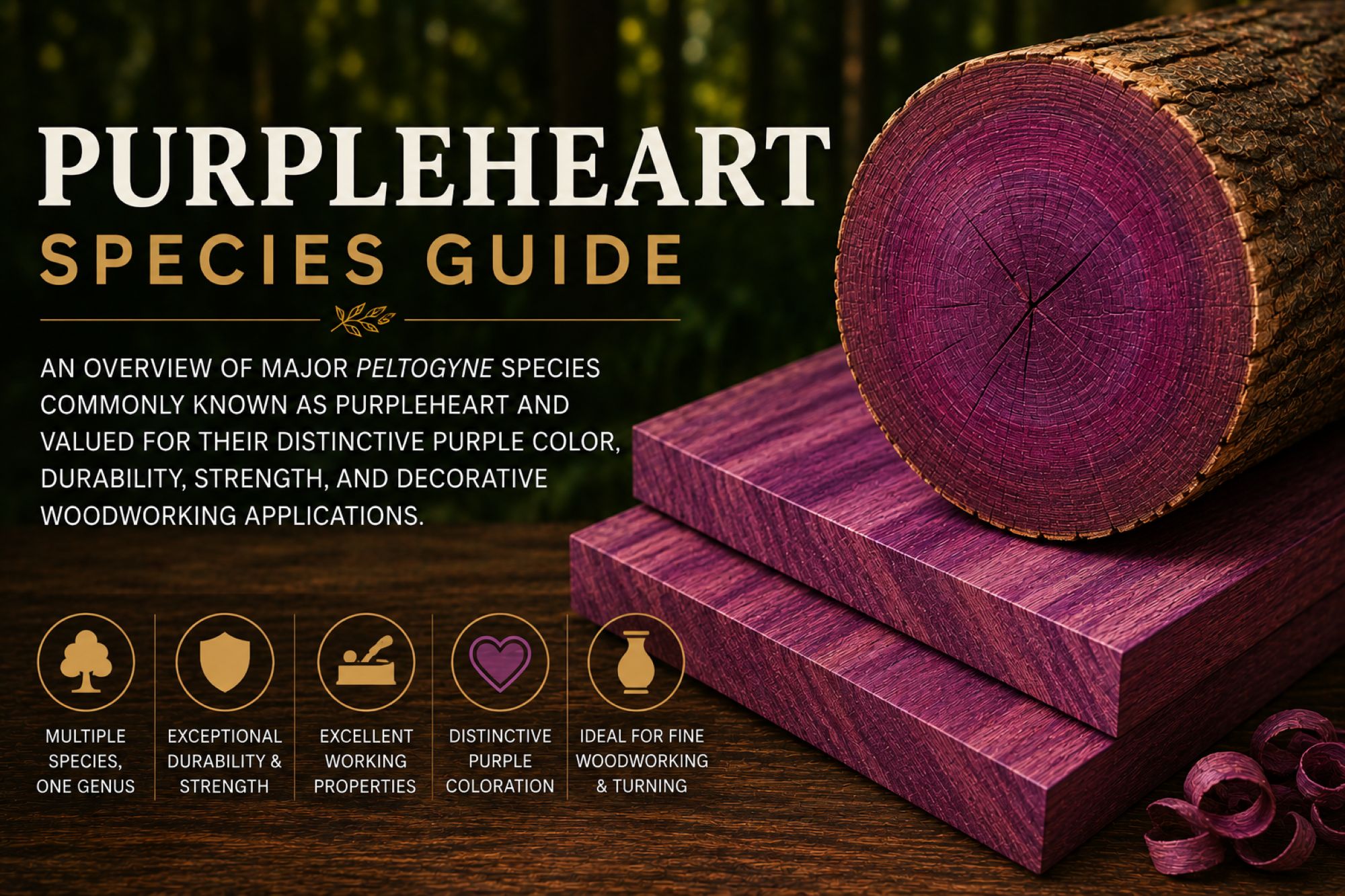
Purpleheart Species Guide
Overview of major Purpleheart species belonging to the Peltogyne genus and valued for their distinctive purple coloration, durability, strength, and decorative woodworking applications.
Overview
Purpleheart is the common name used for a group of tropical hardwoods belonging to the genus Peltogyne. Native to Central America and South America, these trees produce some of the most recognizable lumber in the woodworking world.
The wood is famous for its unique purple coloration, which develops after exposure to air and light. Depending on the species, freshly cut lumber may appear grayish-brown or dull purple before gradually transforming into the vibrant violet and purple hues that have made Purpleheart one of the most sought-after exotic hardwoods.
Rather than referring to a single species, Purpleheart encompasses numerous closely related species within the Peltogyne genus that share similar appearance, working properties, and commercial uses.
This guide serves as an overview of the Purpleheart group and its most notable timber-producing species.
The Peltogyne Genus
The Peltogyne genus belongs to the Fabaceae family, commonly known as the legume family.
Most Purpleheart species are known for:
- Distinctive purple heartwood
- Exceptional durability
- High density
- Excellent wear resistance
- Attractive natural luster
- Good dimensional stability
- Resistance to decay
- Outstanding decorative value
The combination of beauty and durability has made Purpleheart one of the most recognizable exotic hardwood groups in the world.
Notable Purpleheart Species
The Purpleheart group contains numerous species found throughout tropical regions of Central and South America.
Featured Purpleheart Species
Purpleheart (Peltogyne spp.)
The broader Purpleheart group includes multiple species harvested and marketed under the Purpleheart trade name. These woods are valued for furniture, flooring, decorative woodworking, and specialty applications where their distinctive purple coloration can be showcased.
Major Peltogyne Species
Peltogyne venosa
One of the most commonly harvested Purpleheart species and a major contributor to commercial lumber supplies.
Peltogyne paniculata
A tropical hardwood species found throughout parts of northern South America and frequently included within the Purpleheart trade.
Peltogyne pubescens
A durable and dense Purpleheart species known for producing richly colored heartwood.
Peltogyne mexicana
A rare species native to Mexico and one of the northernmost members of the genus.
Peltogyne gracilipes
A South American species occasionally encountered in regional timber production.
Peltogyne recifensis
A lesser-known Purpleheart species native to Brazil.
Additional Peltogyne Species
The following species may be added to the Exotic Woods of the World archive in the future:
- Peltogyne confertiflora
- Peltogyne lecointei
- Peltogyne maranhensis
- Peltogyne pauciflora
- Peltogyne subsessilis
- Peltogyne paradoxa
- Peltogyne catingae
- Peltogyne discolor
- Peltogyne densiflora
- Peltogyne campestris
- Peltogyne chrysopis
As additional Purpleheart species are added to Exotic Woods of the World, they will be incorporated into this guide and linked to their individual species pages.
Common Characteristics of Purpleheart Woods
Although individual species vary somewhat, most Purpleheart woods share several defining characteristics.
Common Purpleheart Traits
- Medium to high-density hardwood structure
- Straight to slightly interlocked grain
- Fine to medium texture
- Distinctive purple heartwood
- Moderate natural luster
- Excellent durability
- Good dimensional stability
- High wear resistance
The wood’s color typically deepens and becomes more vibrant after exposure to air and sunlight.
Common Uses
Purpleheart is widely used in both decorative and structural applications.
Common Applications
- Fine furniture
- Cabinetry
- Flooring
- Inlays
- Decorative veneers
- Turned objects
- Tool handles
- Musical instruments
- Knife handles
- Marine applications
- Specialty woodworking
Its unique appearance makes it particularly popular for accent pieces and decorative projects.
Purpleheart Identification Characteristics
Purpleheart is one of the easiest exotic hardwoods to identify.
Common Identification Traits
- Purple to violet heartwood
- Fine to medium texture
- Straight grain
- High density
- Moderate natural luster
- Excellent durability
- Darkening color with age
Few commercial hardwoods display the distinctive coloration associated with Purpleheart.
Sustainability and Conservation
Purpleheart species are distributed throughout tropical forests of Central and South America.
Sustainability considerations may vary depending on:
- Species
- Harvest region
- Forestry regulations
- Certification programs
- Forest management practices
Responsible sourcing helps ensure the long-term conservation of tropical hardwood resources and biodiversity.
Related Wood Family and Trade Group Pages
Explore additional wood family and trade-group guides:
- Rosewoods of the World
- Acacia Species Guide
- Quebracho Species Guide
- Calophyllum Species Guide
- Wood Families & Trade Groups
Compare Wood Properties
Compare Purpleheart woods alongside hundreds of hardwood species using the Exotic Woods of the World database.
Related resources:
- Wood Density and Janka Hardness Chart
- Hardest Woods in the World
- Most Dense Woods in the World
- Wood Grain Patterns and Figure Explained
Collector Notes
Purpleheart represents one of the most visually distinctive hardwood groups in the world. The Peltogyne genus contains numerous species that contribute to the commercial Purpleheart trade, each sharing the remarkable coloration that has made these woods famous among woodworkers and collectors. Understanding the broader Purpleheart group provides valuable insight into one of South America’s most recognizable and sought-after exotic hardwoods.