
Rock Elm
Scientific name: Ulmus thomasii
Overview
Rock Elm is a hard, heavy native elm valued for tough wood. It is most associated with the lower Great Lakes and Upper Mississippi Valley, growing on both good loamy sites and rocky uplands. The alternate name Cork Elm refers to corky ridges on older branches, not to a lightweight timber.
It belongs to the hard elm group and generally feels substantially denser than American or Slippery Elm. That weight and resistance to splitting can be useful, but they come with more demanding machining and careful drying requirements. Do not confuse a trade description such as rock elm with a confirmed identification of this exact species.
Quick Facts
- Common Name: Rock Elm
- Alternate Common Names: Cork elm
- Scientific Name: Ulmus thomasii
- Region: North American Woods — eastern and central North America, especially the lower Great Lakes and Upper Mississippi Valley
- Family: Ulmaceae
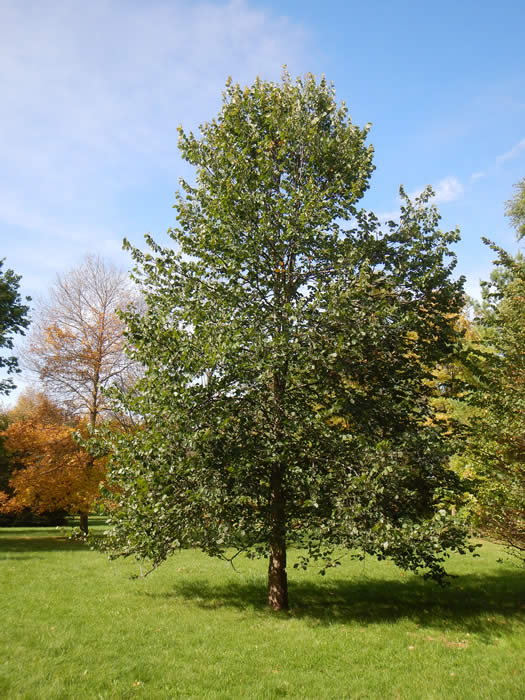
- Tree Size: Typically 65–100 ft (20–30 m) tall, with a trunk 2–4 ft (0.6–1.2 m) in diameter
- Average Dried Weight: Approximately 47 lb/ft³ (755 kg/m³)
- Janka Hardness: Approximately 1,320 lbf (5,870 N)
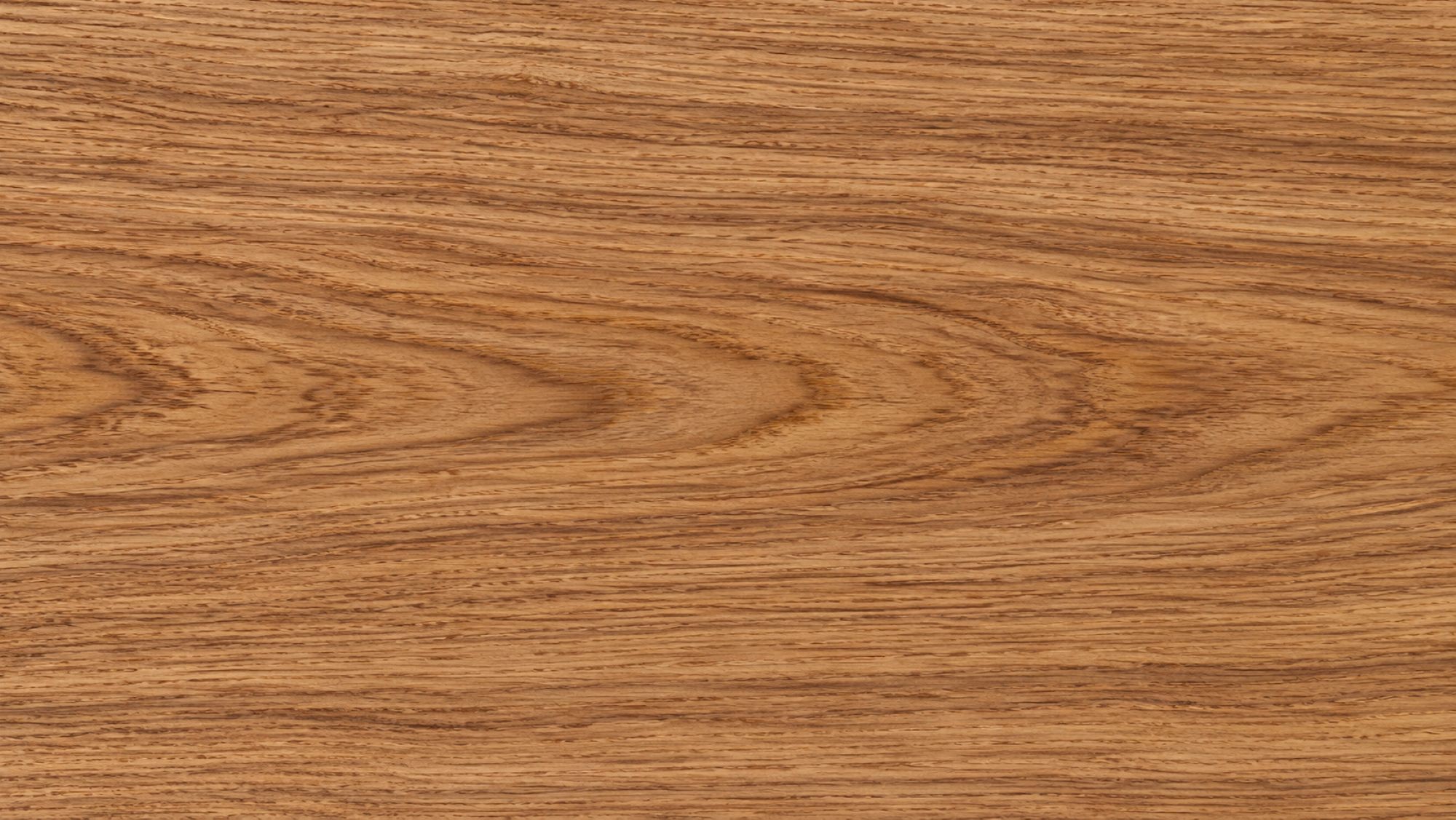
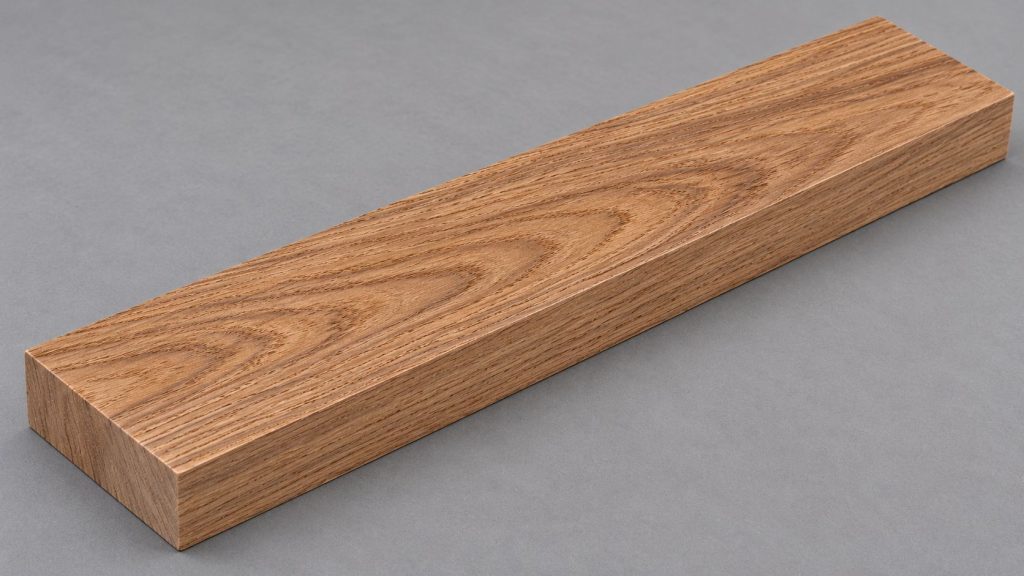
- Color: Light to medium reddish-brown heartwood and distinctly paler sapwood
- Grain: Commonly interlocked
- Texture: Coarse and uneven
Identification Characteristics
Rock Elm is ring-porous, with a relatively narrow earlywood pore band compared with the broader band typical of soft elms. Small latewood vessels form the wavy patterns characteristic of elm. Use a clean cut across the grain and magnification rather than judging a rough or stained surface.
The wood can resemble Cedar Elm and other hard elms. Density provides context but does not prove identity. Locality, leaves, seeds, and branch characteristics are useful supporting records when a tree is available; corky branches alone are not exclusive to this species.
Key identification traits include:
- Ring-porous structure with a comparatively narrow earlywood band
- Wavy latewood pore pattern
- Dense wood with interlocked fibers
- Paler sapwood contrasting with brown to reddish heartwood
- Corky branch ridges useful as supporting tree evidence
Working Properties
Begin surface preparation on an offcut because interlocked grain can reverse beneath the cutting edge. Use a sharp tool, a light cut, and adequate support; a scraper or abrasive method may give a cleaner result on difficult faces. Avoid aggressive sanding that rounds over crisp edges.
Condition boards thoroughly and leave machining allowance when roughing large parts. Recheck flatness after rough sizing before committing to joinery. For bent work, test clear, straight-grained stock and the intended bending method rather than assuming every piece will tolerate the same curve.
- Use sharp cutters and light passes to limit tearout
- Predrill dense stock, particularly near ends
- Check boards for drying distortion and hidden checks
- Allow cross-grain movement in furniture assemblies
- Test bending and finishing on representative spare pieces
Safety Note
Elm dust can irritate the eyes, skin, and respiratory tract, and sensitization has been reported. Use effective dust extraction, eye protection, and suitable respiratory protection during machining and sanding. Inspect salvaged stock for embedded metal and unsound wood before cutting.
Common Uses
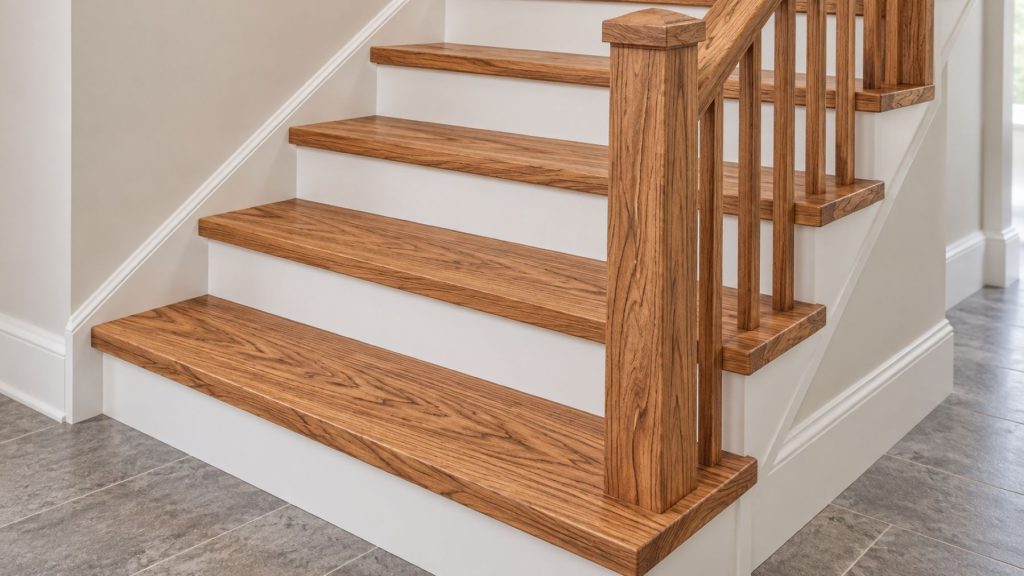

Rock Elm has a history in heavy utility work, furniture, bent components, and veneer production. Its toughness explains its appeal in applications exposed to impact or splitting forces. Modern project selection should still consider defects, grain orientation, and the demands on the finished component.
Hardness and toughness do not confer natural decay resistance. Use sound material in protected service unless an appropriate exterior specification is established. Reclaimed or urban-salvaged stock should be checked for embedded metal before tools meet the wood.
- Furniture and durable interior components
- Bentwood parts from carefully selected stock
- Veneer and panel substrates
- Traditional utility and agricultural components
- Boxes and other heavy-duty wood products
Sustainability & Notes
Dutch elm disease has affected Rock Elm and reduced the availability of mature timber. Surviving trees and local populations have value beyond their lumber, so prefer traceable existing supplies or suitable salvage rather than assuming a large tree should be harvested for a project.
When working with removed elm, follow local guidance for transport, bark handling, and storage of material that may harbor pests. Document the source and the tree’s condition, and assess soundness independently of the reason it was removed.
Comparative Notes & Related Species
Related Guides
- Elm Species Guide
- Understanding Wood Strength: What Makes Wood Strong?
- Understanding Interlocked vs Straight Grain
- Wood Movement and Seasonal Expansion Explained
- Labeling and Cataloging Wood Samples
Compare Wood Properties
See how this species ranks in density and hardness using our Wood Density & Janka Hardness Chart. You can also explore Hardest Woods, Softest Woods, and Most Dense Woods for quick comparisons.
Collector Notes
A verified Rock Elm specimen makes a useful counterpoint to Slippery Elm because the difference between hard and soft elm groups can be explored through both weight and end grain. Record dimensions and moisture condition if comparing sample weights.
Keep tree identification notes attached to the sample. A commercial invoice using rock elm may refer to a broader trade grouping in some markets. Preserve an unfinished cross section and photograph radial and tangential faces under consistent lighting.
Share Your Photos of This Species
Do you have lumber, wood samples, tree photographs, woodworking projects, furniture, carvings, turnings, musical instruments, or other items made from this species?
Exotic Woods of the World welcomes photographs from woodworkers, collectors, sawyers, researchers, and wood enthusiasts around the world. Selected submissions may be featured on this page and throughout our website to help document and showcase real-world examples of this species.
When submitting photos, please include the common name, scientific name (if known), a brief description, and any information you would like us to share with the image.
Wood Sample Collection
This species is part of an ongoing effort to document and preserve wood samples from around the world.
Learn more about contributing to the collection:
Resources
Authoritative botanical and forestry references used in compiling information about this species include:
• USDA Forest Service – Wood Handbook: Wood as an Engineering Material
https://www.fpl.fs.usda.gov/products/publications/
• The Wood Database – Global reference for wood identification, physical properties, and woodworking characteristics
https://www.wood-database.com/
• Royal Botanic Gardens, Kew – Plants of the World Online – Botanical taxonomy and species distribution database
https://powo.science.kew.org/
• International Union for Conservation of Nature (IUCN Red List) – Global conservation status assessments
https://www.iucnredlist.org/
• Convention on International Trade in Endangered Species (CITES) – International trade regulations for protected plant species
https://cites.org/
Additional forestry publications, academic research papers, and regional timber studies may also be referenced where available.
Love This Species?
Enjoy learning about this wood species?
Help support the continued growth of Exotic Woods of the World by participating in our Adopt a Species program. Your support helps fund species research, educational content, photography, videos, and future conservation awareness initiatives.
Support Forest Conservation
This species is part of the growing Exotic Woods of the World reference archive, dedicated to documenting and preserving knowledge of the world’s wood species.
Through the Adopt a Species program, visitors can help support ongoing species research, educational content, photography, video production, and future conservation awareness initiatives.
Contributions help fund the continued expansion of this archive while promoting sustainable forestry education and the long-term appreciation of the world’s forests.
Interested in supporting this species? Visit our Adopt a Species and Conservation Partners pages to learn more.
Availability & Where to Buy
Exotic hardwood availability can vary significantly depending on region, sustainability regulations, and supplier inventory.
As this archive grows, recommended suppliers and specialty wood retailers will be listed here to help woodworkers locate responsibly sourced material.
Lumber Suppliers:
Availability varies — see the Where to Buy Exotic Woods page for current sources.
Related Tools & Products:
Availability varies — see the Where to Buy Exotic Woods page for current sources.
Share This Wood Species
Stay Connected
Follow the latest species additions, educational resources, videos, conservation initiatives, and major project milestones through our Site Updates archive.
The Site Updates archive provides a permanent record of new content, library growth, and future developments across Exotic Woods of the World.