
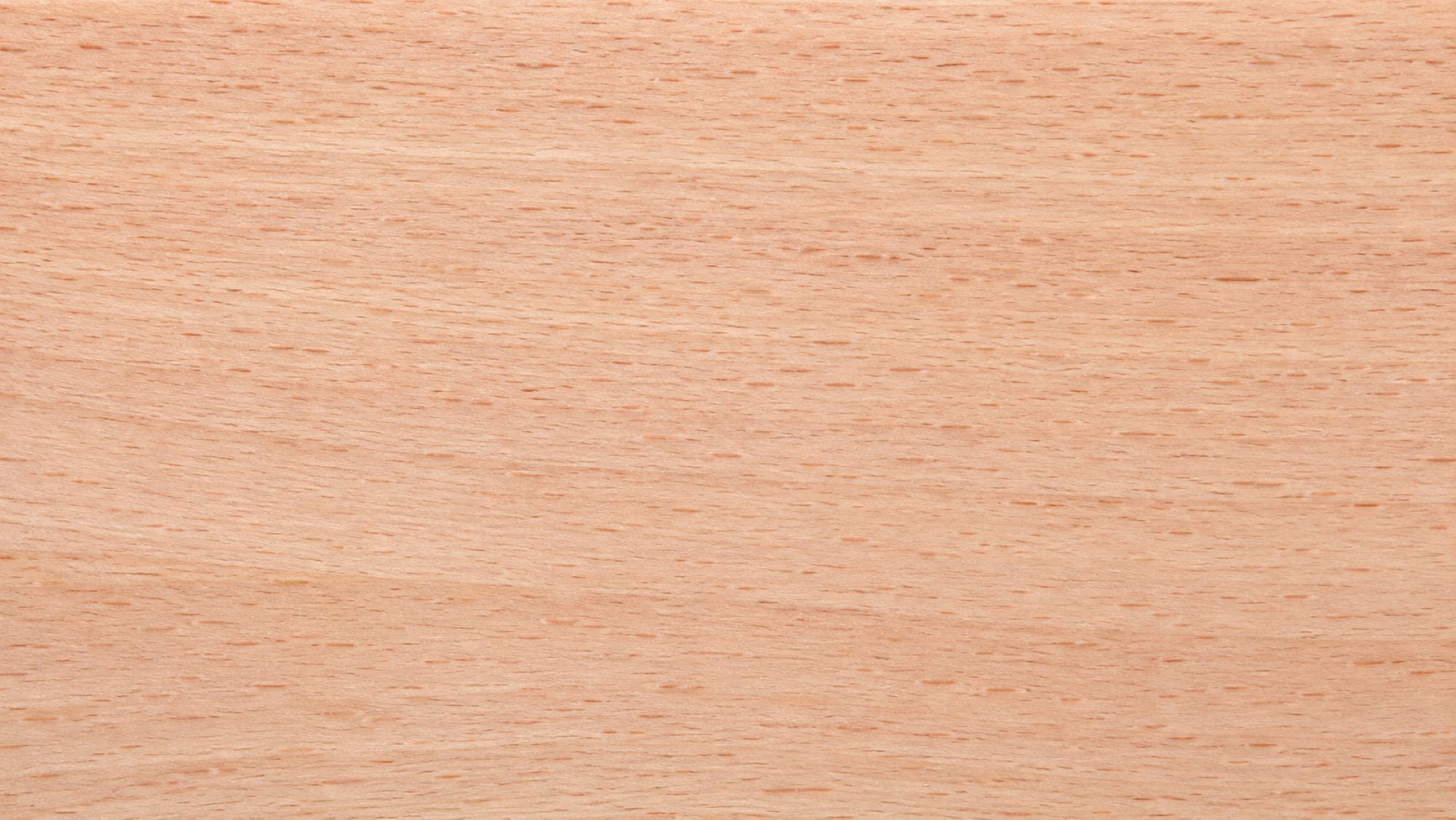
Japanese Beech
Scientific name: Fagus crenata
Overview
Japanese Beech, known as Buna, is a major deciduous forest tree native to Japan. Its close-textured timber has a long history in furniture, bentwood, and everyday wooden articles. Pale material may contain darker false heartwood, giving individual boards different appearances. It is a separate species from Blue Japanese Beech, Fagus japonica, and the scientific name should remain attached to lumber and collection records.
Quick Facts
- Common Name: Japanese Beech
- Scientific Name: Fagus crenata
- Family: Fagaceae
- Region: Asian Woods
- Other Names: Buna; Siebold’s Beech; Shirobuna
- Native Range: Japan, from southwestern Hokkaido through Honshu, Shikoku, and Kyushu
- Tree Size: Around 30 m (98 ft); large trunks can exceed 1.5 m (59 in) diameter
- Average Dried Weight: Approximately 630 kg/m³ (39 lb/ft³), corresponding to a published air-dry specific gravity of 0.63; stock varies
- Janka Hardness: A reliable measured species-specific value was not verified
- Color: Whitish to pale pink or reddish-brown; darker false heartwood may occur
- Grain: Usually unobtrusive, with visible ray figure on suitable surfaces
- Texture: Fine and close; diffuse-porous
Identification Characteristics
Japanese Beech timber can show small, darker ray marks on flatsawn surfaces and broader figure on quartersawn faces. Growth rings tend to be less obvious than in ring-porous ash. Irregular darker central wood may be false heartwood rather than a uniform species color. A documented sample is more reliable than a color match alone.
Key identification traits include:
- Pale white to pink-toned timber
- Small ray marks on flatsawn faces
- Ribbon-like ray figure on quartersawn surfaces
- Fine texture and relatively inconspicuous growth rings
- Possible irregular darker false heartwood

Working Properties
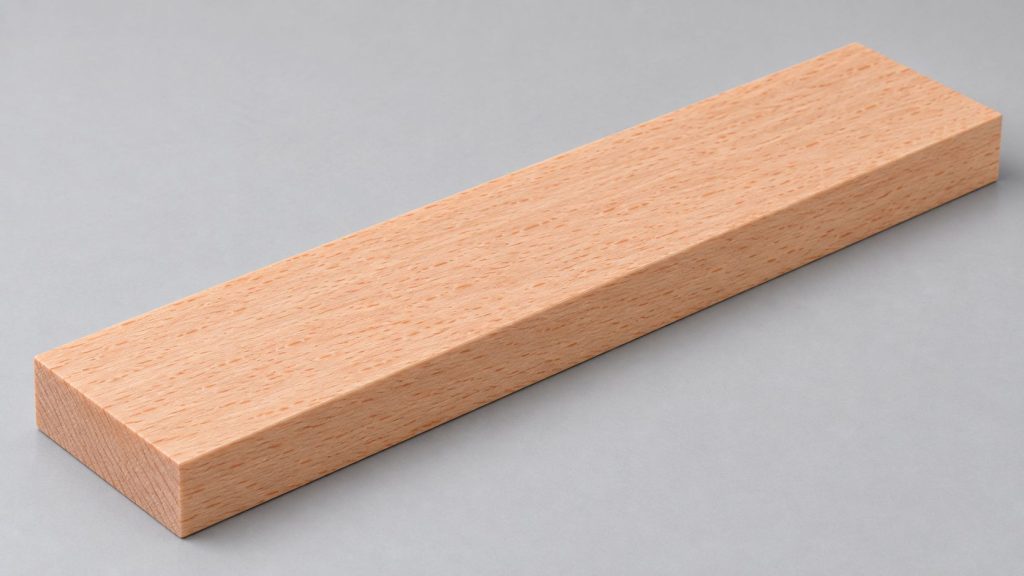
Japanese forestry descriptions report useful machining, bonding, and finishing behavior, as well as suitability for bentwood. Drying needs particular care because distortion and discoloration can occur. Low decay resistance makes sound storage and prompt processing important. Evaluate moisture condition and defects before selecting boards for visible furniture parts.
- Machining: Generally workable with sharp hand or machine tools
- Bending: A traditional bentwood timber; select clear stock and trial the process
- Drying: Control the schedule and check for movement or discoloration
- Gluing: Prepare accurately fitted, clean surfaces
- Finishing: Compare finishes across pale wood and darker areas before use
Safety Note
Use dust extraction and appropriate eye and respiratory protection during machining and sanding. Fine wood dust can irritate the skin and breathing passages. Keep dust off work surfaces and avoid unnecessary exposure.
Common Uses
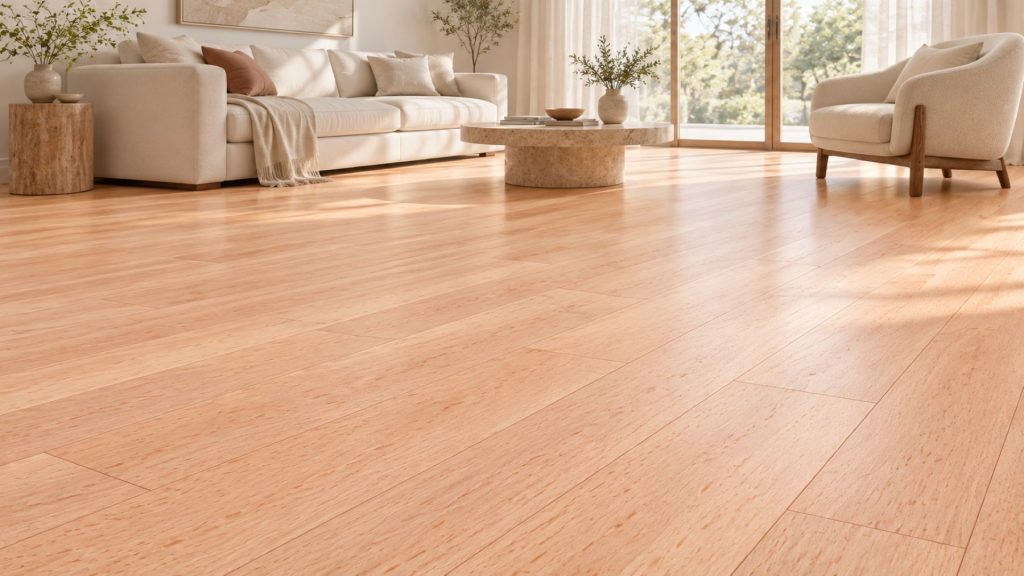
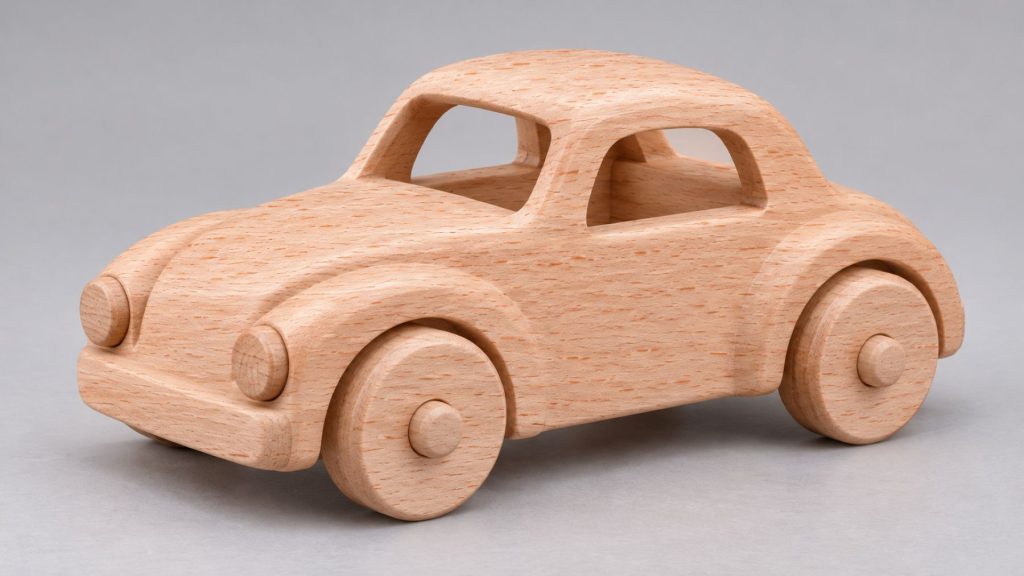
Japanese Beech is used in furniture and a broad range of interior and utility applications.
- Furniture and bentwood components
- Flooring and interior fittings
- Plywood
- Toys and household wooden articles
- Lacquerware blanks and pulp
Sustainability & Notes
Kew reports Japanese Beech as Least Concern under the cited IUCN assessment. Its forests still have ecological value, and Japanese forestry accounts describe historical reductions in timber resources. Responsible sourcing depends on the actual management and harvest, so keep origin and supplier documentation with the purchase.
Comparative Notes & Related Species
Related Guides
- Beech Species Guide
- Best Woods for Furniture Making
- Understanding Wood Shrinkage Values Explained
- Drying & Acclimating Exotic Woods
- How to Identify Wood by End Grain Patterns
Compare Wood Properties
See how this species ranks in density and hardness using our Wood Density & Janka Hardness Chart. You can also explore Hardest Woods, Softest Woods, and Most Dense Woods for quick comparisons.
Collector Notes
Label specimens Fagus crenata and record Buna when it accompanied the material. Preserve an unfinished comparison area and a clean end-grain face. Samples showing ray figure or a transition into false heartwood are useful for comparison, provided their locality and drying history are documented.
Share Your Photos of This Species
Do you have lumber, wood samples, tree photographs, woodworking projects, furniture, carvings, turnings, musical instruments, or other items made from this species?
Exotic Woods of the World welcomes photographs from woodworkers, collectors, sawyers, researchers, and wood enthusiasts around the world. Selected submissions may be featured on this page and throughout our website to help document and showcase real-world examples of this species.
When submitting photos, please include the common name, scientific name (if known), a brief description, and any information you would like us to share with the image.
Wood Sample Collection
This species is part of an ongoing effort to document and preserve wood samples from around the world.
Learn more about contributing to the collection:
Resources
Authoritative botanical and forestry references used in compiling information about this species include:
• USDA Forest Service – Wood Handbook: Wood as an Engineering Material
https://www.fpl.fs.usda.gov/products/publications/
• The Wood Database – Global reference for wood identification, physical properties, and woodworking characteristics
https://www.wood-database.com/
• Royal Botanic Gardens, Kew – Plants of the World Online – Botanical taxonomy and species distribution database
https://powo.science.kew.org/
• International Union for Conservation of Nature (IUCN Red List) – Global conservation status assessments
https://www.iucnredlist.org/
• Convention on International Trade in Endangered Species (CITES) – International trade regulations for protected plant species
https://cites.org/
Additional forestry publications, academic research papers, and regional timber studies may also be referenced where available.
Love This Species?
Enjoy learning about this wood species?
Help support the continued growth of Exotic Woods of the World by participating in our Adopt a Species program. Your support helps fund species research, educational content, photography, videos, and future conservation awareness initiatives.
Support Forest Conservation
This species is part of the growing Exotic Woods of the World reference archive, dedicated to documenting and preserving knowledge of the world’s wood species.
Through the Adopt a Species program, visitors can help support ongoing species research, educational content, photography, video production, and future conservation awareness initiatives.
Contributions help fund the continued expansion of this archive while promoting sustainable forestry education and the long-term appreciation of the world’s forests.
Interested in supporting this species? Visit our Adopt a Species and Conservation Partners pages to learn more.
Availability & Where to Buy
Exotic hardwood availability can vary significantly depending on region, sustainability regulations, and supplier inventory.
As this archive grows, recommended suppliers and specialty wood retailers will be listed here to help woodworkers locate responsibly sourced material.
Lumber Suppliers:
Availability varies — see the Where to Buy Exotic Woods page for current sources.
Related Tools & Products:
Availability varies — see the Where to Buy Exotic Woods page for current sources.
Share This Wood Species
Stay Connected
Follow the latest species additions, educational resources, videos, conservation initiatives, and major project milestones through our Site Updates archive.
The Site Updates archive provides a permanent record of new content, library growth, and future developments across Exotic Woods of the World.