
Eastern Red Cedar
Scientific name: Juniperus virginiana
Overview
Eastern Red Cedar is an aromatic juniper whose richly colored heartwood is familiar in closet lining, chests, and small wooden objects. It belongs to the cypress family, rather than to the true cedars of the Cedrus genus. The trade name aromatic red cedar is useful, but it should remain connected to the scientific name when buying or cataloging timber.
The tree is widespread and can occupy sites from rocky ground to old fields. Lumber often reflects the tree’s branching habit: narrow boards, knots, and changing grain are common. Plan projects around the sound material available rather than expecting the clear, wide stock associated with a much larger forest tree.
Quick Facts
- Common Name: Eastern Red Cedar
- Alternate Common Names: Eastern redcedar; aromatic red cedar; red juniper
- Scientific Name: Juniperus virginiana
- Region: North American Woods — eastern and central North America, extending into southern Canada
- Family: Cupressaceae
- Tree Size: Commonly about 30–65 ft (9–20 m) tall; growth form and trunk diameter vary greatly with site
- Average Dried Weight: Approximately 33 lb/ft³ (530 kg/m³)
- Janka Hardness: Approximately 900 lbf (4,000 N)
- Color: Red to violet-brown heartwood with contrasting pale sapwood
- Grain: Usually straight between knots; irregular around branches
- Texture: Fine and even
Identification Characteristics
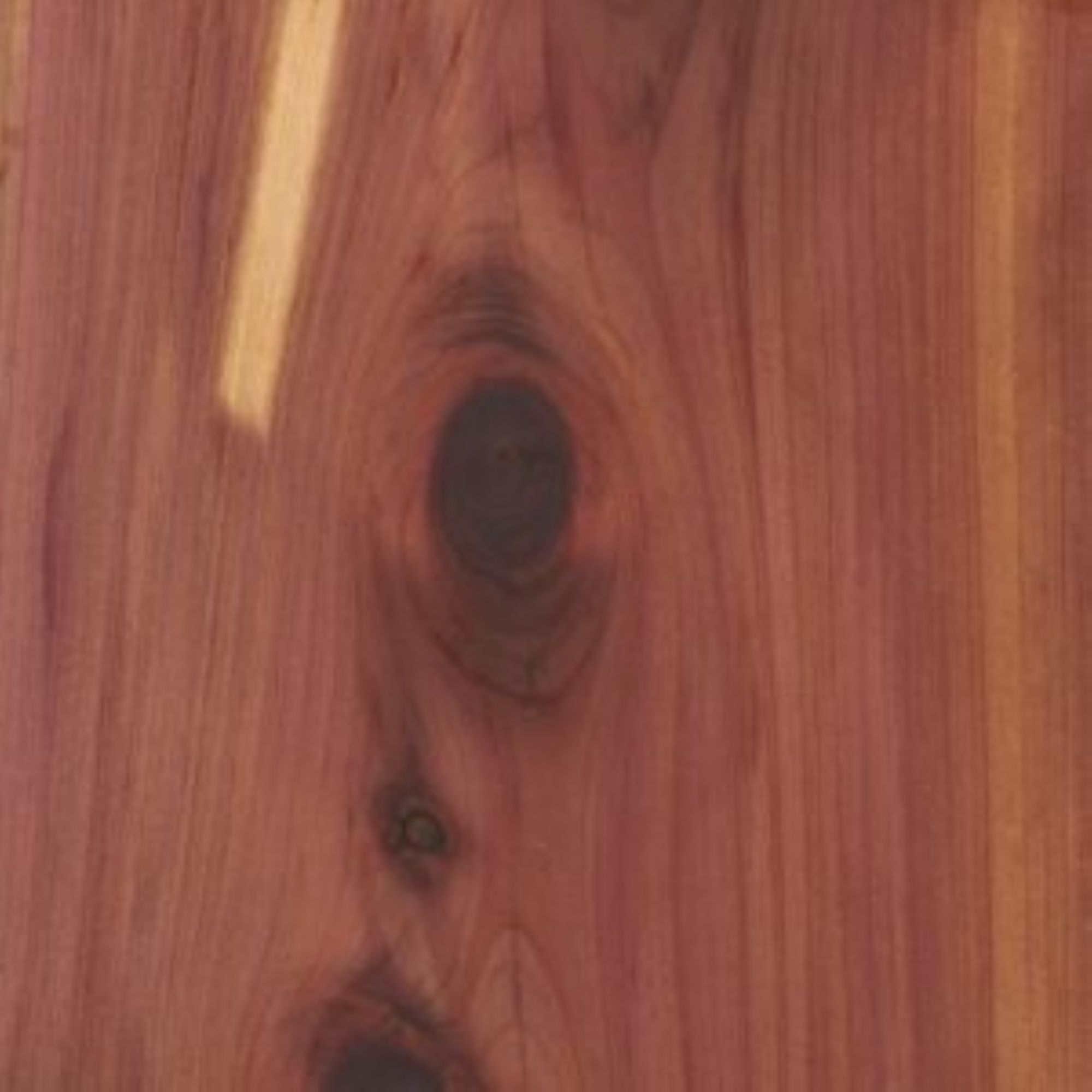
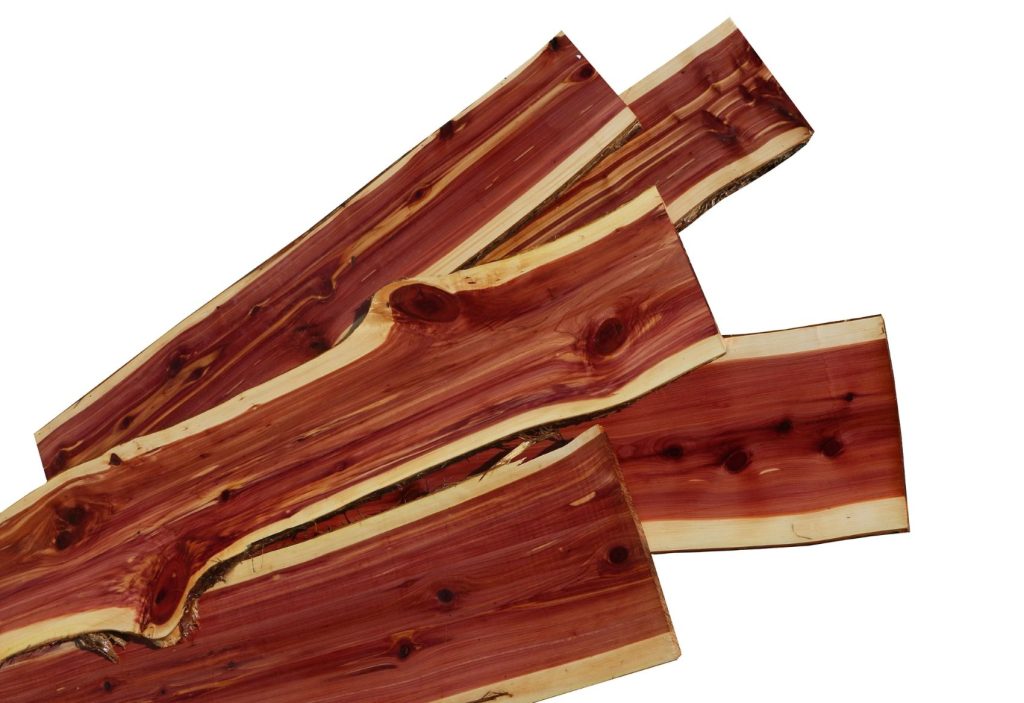
Freshly exposed heartwood can be red or violet-brown beside very pale sapwood. The fine-textured wood has a characteristic cedar-like fragrance. Color changes with exposure and coatings, so photographs of a freshly prepared surface are useful records rather than permanent color standards.
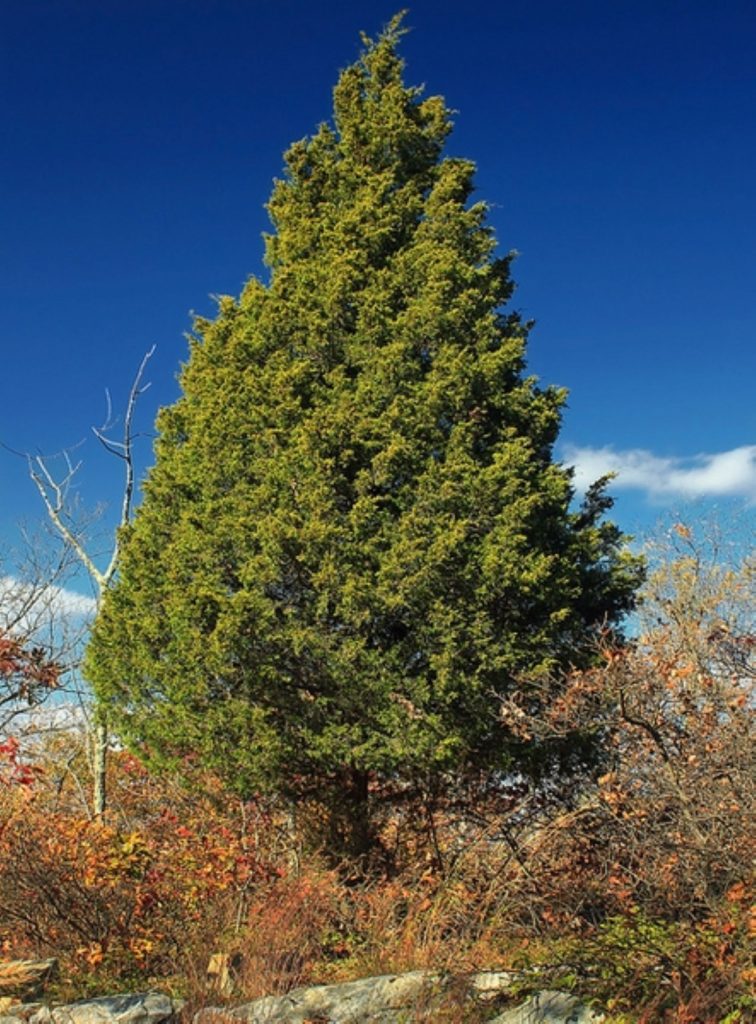
On a clean cross section, normal resin canals are absent. Combine the wood features with tree evidence such as foliage, bark, and the berry-like seed cones. Fragrance alone does not distinguish every aromatic juniper or every wood sold under the cedar name.
Key identification traits include:
- Distinctive aromatic heartwood
- Strong contrast between colored heartwood and pale sapwood
- Fine, even texture
- Knots frequent in commercial boards
- Normal resin canals absent on prepared end grain
Working Properties
Lay out parts to avoid loose knots and short grain in thin or stressed sections. Use sharp tools and support the end of a cut because brittle edges or knot margins can chip. Check cutters regularly and respond to dulling rather than forcing the stock through a deteriorating cut.
Decide whether the finished piece should retain exposed aromatic surfaces or receive a coating. Test the complete finish on an offcut, and allow it to cure before judging color and surface quality. For glue joints, use clean, freshly prepared mating faces and verify the adhesive procedure on representative stock.
- Inspect knots before routing, turning, or making thin parts
- Support end grain and take light finishing cuts
- Predrill near ends to reduce splitting
- Use a finish sample to assess changes in color and scent
- Keep clamp pressure moderate on visible faces
Safety Note
Eastern Red Cedar dust can irritate the skin and respiratory tract. Use effective extraction, eye protection, and suitable respiratory protection when machining or sanding; a pleasant aroma does not make dust safe to breathe. Check salvaged wood for metal and inspect knots before cutting or turning.
Common Uses

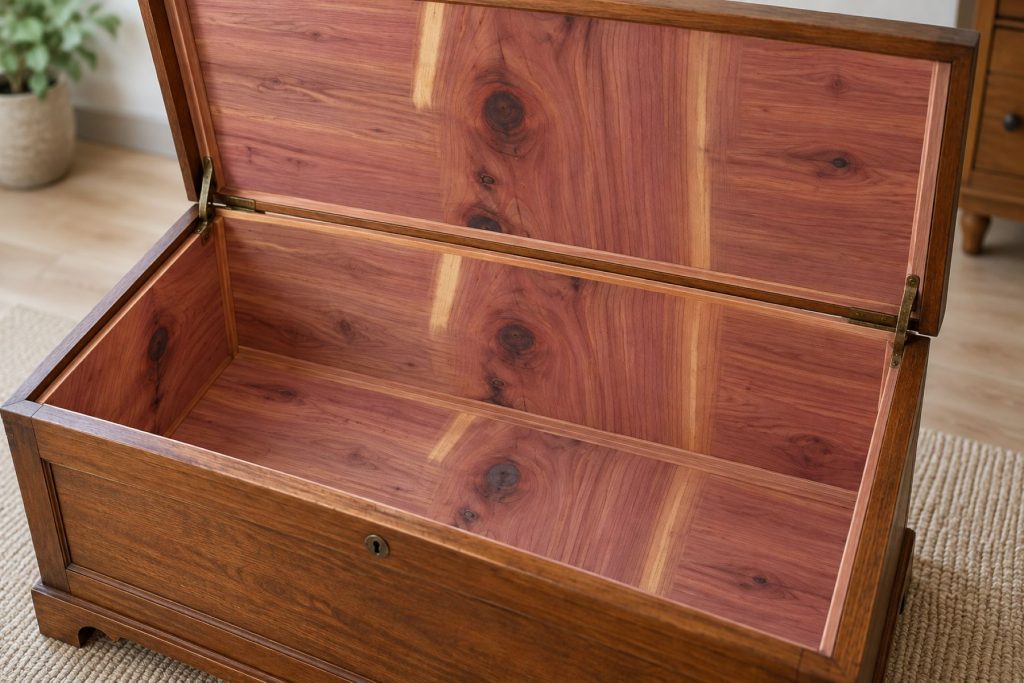
Eastern Red Cedar is widely associated with closet and chest linings, small boxes, turnings, and rustic projects. Its aromatic character is part of the appeal of unfinished interior surfaces. Choose construction details that suit the dimensions and knot pattern of the material.
The heartwood has useful natural decay resistance and a history in fence posts. That performance should not be extended automatically to the pale sapwood or to every outdoor design. For exposed projects, select sound heartwood, drain water away from joints, and account for the expected maintenance and service life.
- Closet and chest linings
- Small boxes and decorative objects
- Turned and carved items
- Rustic furniture and interior accents
- Fence posts and selected exterior heartwood components
Sustainability & Notes
Eastern Red Cedar provides food and shelter for wildlife and can protect vulnerable soil. It has also expanded into some grassland settings as land use and fire patterns changed, so appropriate management differs between a woodland, a pasture, and a conservation grassland.
Locally sourced timber from a documented management project can be useful material. Ask what was removed and why rather than assuming all cutting is either beneficial or harmful. Retain the locality and supplier information, especially when buying boards sold only as red cedar.
Comparative Notes & Related Species
Related Guides
- Cedar Species Guide
- Best Woods for Outdoor Use
- Best Woods for Wood Turning
- Finishing Oils vs Polyurethane on Exotic Species
- Building a Documented Wood Collection
Compare Wood Properties
See how this species ranks in density and hardness using our Wood Density & Janka Hardness Chart. You can also explore Hardest Woods, Softest Woods, and Most Dense Woods for quick comparisons.
Collector Notes
Keep both heartwood and sapwood in a reference specimen if possible. Photograph the freshly prepared, unfinished surfaces, then record later color changes separately. A knot-free end-grain face will usually be more useful for anatomical comparison than a highly figured knot section alone.
Compare the specimen with a documented juniper and with woods bearing other cedar trade names. Record the botanical identity, source location, preparation date, and finish. Avoid transferring the properties of Western Red Cedar or a true cedar to this species just because the common names overlap.
Share Your Photos of This Species
Do you have lumber, wood samples, tree photographs, woodworking projects, furniture, carvings, turnings, musical instruments, or other items made from this species?
Exotic Woods of the World welcomes photographs from woodworkers, collectors, sawyers, researchers, and wood enthusiasts around the world. Selected submissions may be featured on this page and throughout our website to help document and showcase real-world examples of this species.
When submitting photos, please include the common name, scientific name (if known), a brief description, and any information you would like us to share with the image.
Wood Sample Collection
This species is part of an ongoing effort to document and preserve wood samples from around the world.
Learn more about contributing to the collection:
Resources
Authoritative botanical and forestry references used in compiling information about this species include:
• USDA Forest Service – Wood Handbook: Wood as an Engineering Material
https://www.fpl.fs.usda.gov/products/publications/
• The Wood Database – Global reference for wood identification, physical properties, and woodworking characteristics
https://www.wood-database.com/
• Royal Botanic Gardens, Kew – Plants of the World Online – Botanical taxonomy and species distribution database
https://powo.science.kew.org/
• International Union for Conservation of Nature (IUCN Red List) – Global conservation status assessments
https://www.iucnredlist.org/
• Convention on International Trade in Endangered Species (CITES) – International trade regulations for protected plant species
https://cites.org/
Additional forestry publications, academic research papers, and regional timber studies may also be referenced where available.
Love This Species?
Enjoy learning about this wood species?
Help support the continued growth of Exotic Woods of the World by participating in our Adopt a Species program. Your support helps fund species research, educational content, photography, videos, and future conservation awareness initiatives.
Support Forest Conservation
This species is part of the growing Exotic Woods of the World reference archive, dedicated to documenting and preserving knowledge of the world’s wood species.
Through the Adopt a Species program, visitors can help support ongoing species research, educational content, photography, video production, and future conservation awareness initiatives.
Contributions help fund the continued expansion of this archive while promoting sustainable forestry education and the long-term appreciation of the world’s forests.
Interested in supporting this species? Visit our Adopt a Species and Conservation Partners pages to learn more.
Availability & Where to Buy
Exotic hardwood availability can vary significantly depending on region, sustainability regulations, and supplier inventory.
As this archive grows, recommended suppliers and specialty wood retailers will be listed here to help woodworkers locate responsibly sourced material.
Lumber Suppliers:
Availability varies — see the Where to Buy Exotic Woods page for current sources.
Related Tools & Products:
Availability varies — see the Where to Buy Exotic Woods page for current sources.
Share This Wood Species
Stay Connected
Follow the latest species additions, educational resources, videos, conservation initiatives, and major project milestones through our Site Updates archive.
The Site Updates archive provides a permanent record of new content, library growth, and future developments across Exotic Woods of the World.