

Grand Fir
Scientific name: Abies grandis
Overview
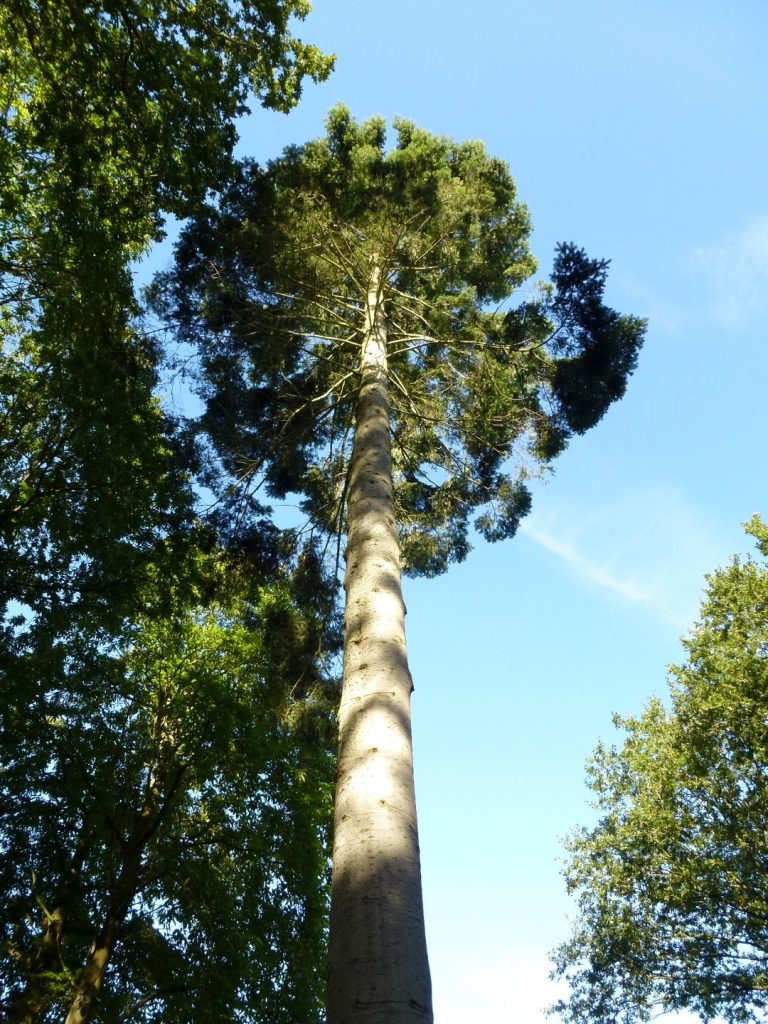
Grand Fir is a large, fast-growing true fir of the Pacific Northwest and adjacent inland forests. It can attain impressive dimensions on favorable moist sites. The timber is much less visually dramatic than the tree: pale, relatively light, and commonly supplied as part of commercial Hem-Fir lumber.
Its practical value lies in usable dimensions and versatility rather than high surface hardness or natural durability. For interior woodworking, choose the individual board for straightness, knot distribution, and dryness. A clean-looking board can still have internal moisture or drying defects that become apparent after resawing or final machining.
Quick Facts
- Common Name: Grand Fir
- Alternate Common Names: Lowland white fir; grand fir (often included in Hem-Fir lumber)
- Scientific Name: Abies grandis
- Region: North American Woods — Pacific Northwest and inland northwestern United States, extending into southern British Columbia
- Family: Pinaceae
- Tree Size: Commonly 100–200 ft (30–60 m) tall, with a trunk 3–4 ft (1–1.2 m) in diameter; exceptional trees are larger
- Average Dried Weight: Approximately 28 lb/ft³ (450 kg/m³)
- Janka Hardness: Approximately 490 lbf (2,180 N)
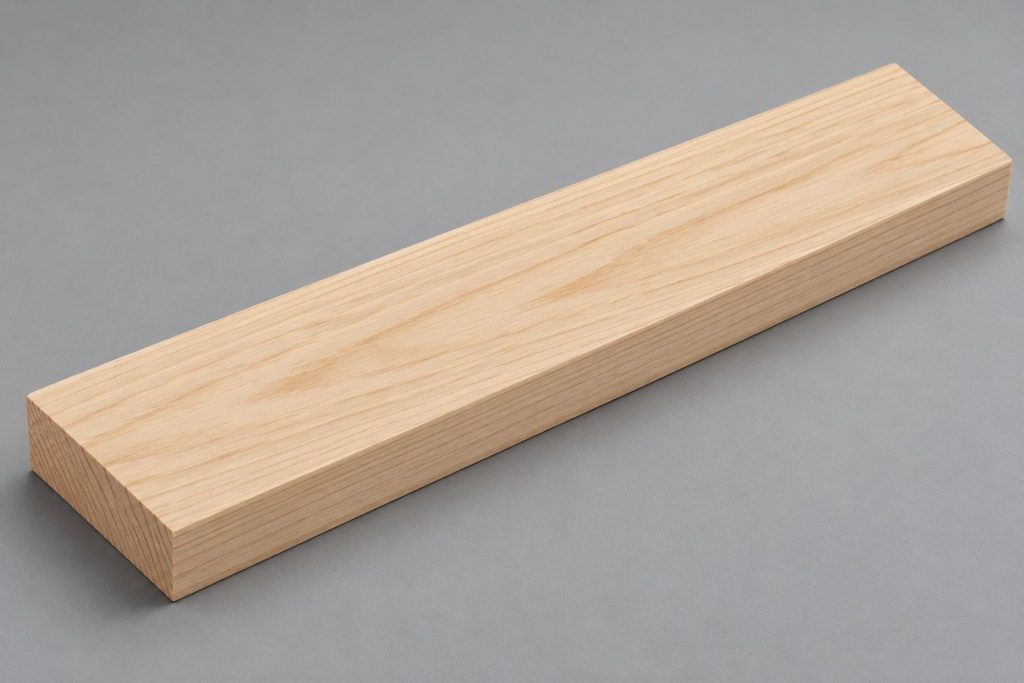
- Color: Creamy white to light brown, sometimes reddish; sapwood poorly differentiated
- Grain: Usually straight, with gradual earlywood–latewood transitions
- Texture: Even, medium to moderately coarse
Identification Characteristics
Grand Fir wood has little separation in color between heartwood and sapwood. Growth rings are visible but generally less sharply contrasted than those of dense southern yellow pine. A prepared end-grain face normally lacks the resin canals associated with pine and spruce.
Those observations help describe true fir wood but do not securely identify Grand Fir as a species. Other firs and hemlocks can look very similar. The geographical source and identification of the standing tree are especially valuable; in areas where Grand Fir meets White Fir, document any uncertainty rather than relying on a guessed wood identification.
Key identification traits include:
- Pale cream to light-brown wood with limited color contrast
- Usually straight grain and moderately even texture
- Normal resin canals absent in the wood
- Soft surfaces can be marked during handling
- Wood appearance alone does not reliably separate true fir species
Working Properties
Before laying out parts, inspect for twist, checks, and uneven moisture. Stack and condition stock with air circulation before bringing it to final dimensions. If a board moves substantially after a rough cut, allow it to settle and reassess the layout before removing more material.
Use sharp cutting edges and support fibers at the end of a cut. Test the sanding and finishing sequence on the same board, since absorption and surface preparation can affect the result. Protect visible faces from clamp pressure, and use joints designed for relatively soft wood rather than depending on small screws driven close to an edge.
- Check several locations for moisture in thick or uneven stock
- Remove drying defects from critical joint locations
- Use sharp cutters and backing pieces for clean edges
- Apply moderate clamping pressure with broad cauls
- Test stain and clear finish together before coating the project
Safety Note
Wood dust can irritate the skin, eyes and respiratory tract. Use effective dust extraction, eye protection and suitable respiratory protection when machining or sanding. Inspect salvaged material for embedded metal, cracks and decay before cutting, and assess dead standing trees professionally before removal.
Common Uses
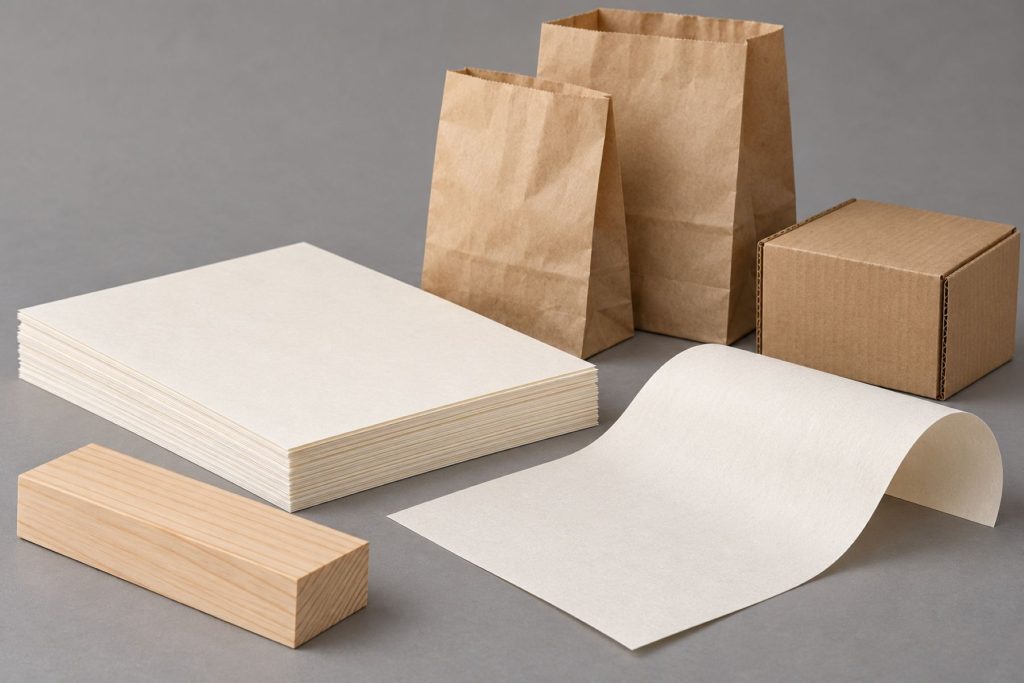

Grand Fir supplies framing lumber, plywood, pulpwood, and general utility products. Clear, well-seasoned material can be used for protected interior components, painted projects, and millwork where appearance and ease of handling matter more than resistance to wear.
A structural application requires a suitable graded product and design values for that product. Natural decay resistance is low, so untreated Grand Fir is a poor default for ground contact or persistently damp construction. Match treatment, detailing, and material specifications to the actual exposure.
- Graded Hem-Fir construction lumber
- Plywood and veneer production
- Pulp and paper products
- Protected interior millwork and light components
- Packaging and other utility woodworking
Sustainability & Notes
Grand Fir occurs in both coastal and inland forest settings and is an important member of mixed conifer stands. Its shade tolerance and rapid growth on suitable sites influence how it responds to forest management. Responsible sourcing should account for regeneration, habitat, and the condition of the source forest.
For a specialty purchase, request a precise species description and locality rather than assuming a Hem-Fir shipment contains Grand Fir. Traceable supply records and credible certification, where available, are more useful than an unsupported blanket sustainability claim.
Comparative Notes & Related Species
Related Guides
- Fir Species Guide
- Wood Movement and Seasonal Expansion Explained
- Moisture Content & Long Term Stability
- How to Identify Wood by End Grain Patterns
- Building a Documented Wood Collection
Compare Wood Properties
See how this species ranks in density and hardness using our Wood Density & Janka Hardness Chart. You can also explore Hardest Woods, Softest Woods, and Most Dense Woods for quick comparisons.
Collector Notes
Keep a source label with every Grand Fir specimen and distinguish confirmed tree-derived samples from commercially grouped lumber. A larger sample showing both radial and tangential faces can illustrate grain more clearly than a small polished cube.
Build a comparison set with White Fir or European Silver Fir, a spruce, and Douglas Fir. Prepare matching end-grain photographs under the same lighting, retain an unfinished face, and label any finished face with the coating used.
Share Your Photos of This Species
Do you have lumber, wood samples, tree photographs, woodworking projects, furniture, carvings, turnings, musical instruments, or other items made from this species?
Exotic Woods of the World welcomes photographs from woodworkers, collectors, sawyers, researchers, and wood enthusiasts around the world. Selected submissions may be featured on this page and throughout our website to help document and showcase real-world examples of this species.
When submitting photos, please include the common name, scientific name (if known), a brief description, and any information you would like us to share with the image.
Wood Sample Collection
This species is part of an ongoing effort to document and preserve wood samples from around the world.
Learn more about contributing to the collection:
Resources
Authoritative botanical and forestry references used in compiling information about this species include:
• USDA Forest Service – Wood Handbook: Wood as an Engineering Material
https://www.fpl.fs.usda.gov/products/publications/
• The Wood Database – Global reference for wood identification, physical properties, and woodworking characteristics
https://www.wood-database.com/
• Royal Botanic Gardens, Kew – Plants of the World Online – Botanical taxonomy and species distribution database
https://powo.science.kew.org/
• International Union for Conservation of Nature (IUCN Red List) – Global conservation status assessments
https://www.iucnredlist.org/
• Convention on International Trade in Endangered Species (CITES) – International trade regulations for protected plant species
https://cites.org/
Additional forestry publications, academic research papers, and regional timber studies may also be referenced where available.
Love This Species?
Enjoy learning about this wood species?
Help support the continued growth of Exotic Woods of the World by participating in our Adopt a Species program. Your support helps fund species research, educational content, photography, videos, and future conservation awareness initiatives.
Support Forest Conservation
This species is part of the growing Exotic Woods of the World reference archive, dedicated to documenting and preserving knowledge of the world’s wood species.
Through the Adopt a Species program, visitors can help support ongoing species research, educational content, photography, video production, and future conservation awareness initiatives.
Contributions help fund the continued expansion of this archive while promoting sustainable forestry education and the long-term appreciation of the world’s forests.
Interested in supporting this species? Visit our Adopt a Species and Conservation Partners pages to learn more.
Availability & Where to Buy
Exotic hardwood availability can vary significantly depending on region, sustainability regulations, and supplier inventory.
As this archive grows, recommended suppliers and specialty wood retailers will be listed here to help woodworkers locate responsibly sourced material.
Lumber Suppliers:
Availability varies — see the Where to Buy Exotic Woods page for current sources.
Related Tools & Products:
Availability varies — see the Where to Buy Exotic Woods page for current sources.
Share This Wood Species
Stay Connected
Follow the latest species additions, educational resources, videos, conservation initiatives, and major project milestones through our Site Updates archive.
The Site Updates archive provides a permanent record of new content, library growth, and future developments across Exotic Woods of the World.