
Horned Quebracho
Scientific name: Schinopsis cornuta
Overview
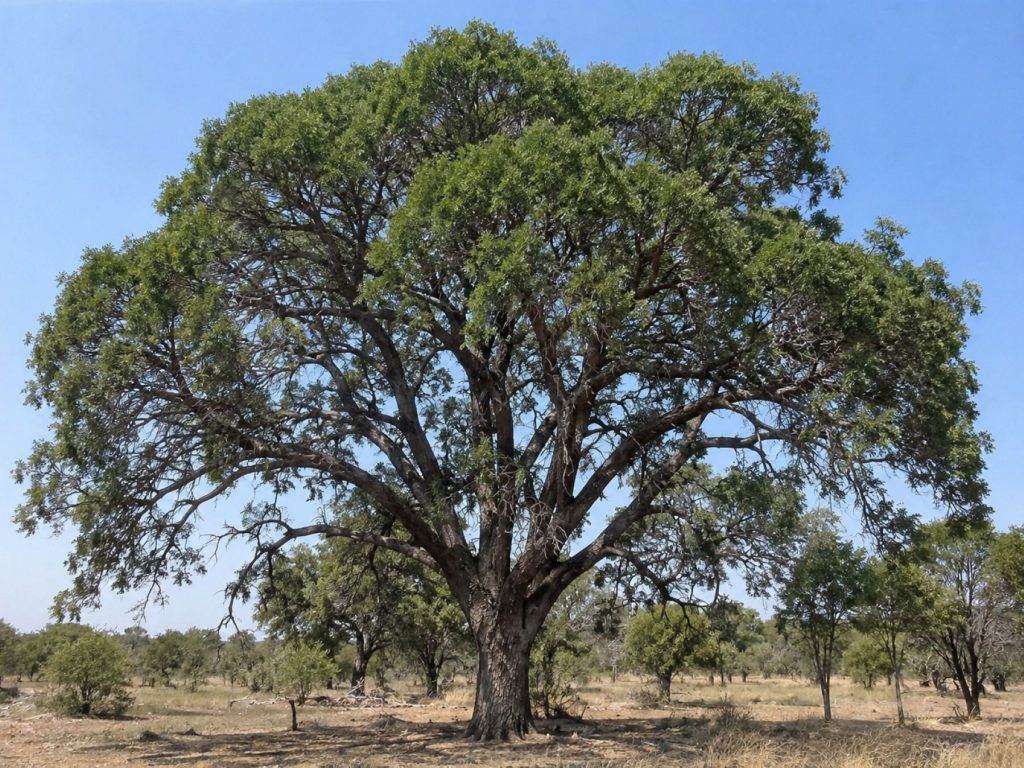
Horned Quebracho is a rare South American hardwood native to the seasonally dry forests of Bolivia and neighboring regions of Paraguay and northern Argentina. A member of the Anacardiaceae family, it belongs to the remarkable Schinopsis genus, which includes several of the world’s densest and most durable hardwoods. Its common name comes from the distinctive horn-like projections found on portions of its branches and trunk, a characteristic that helps distinguish it from other quebracho species.
Like its close relatives, Horned Quebracho produces an exceptionally dense hardwood renowned for its tremendous strength, outstanding durability, and natural resistance to decay, insects, and abrasion. Although rarely encountered in international timber markets, it has long been valued locally for heavy construction, agricultural infrastructure, fence posts, charcoal production, and other demanding applications where longevity is essential.
Quick Facts
- Common Name: Horned Quebracho
- Scientific Name: Schinopsis cornuta
- Region: South American Hardwoods
- Tree Size: 35–65 ft (11–20 m) tall, 1–3 ft (0.3–0.9 m) trunk diameter
- Average Dried Weight: Approximately 74 lbs/ft³ (1,185 kg/m³)
- Janka Hardness: Estimated around 4,400 lbf
- Grain: Interlocked to irregular
- Texture: Fine to medium
Identification Characteristics
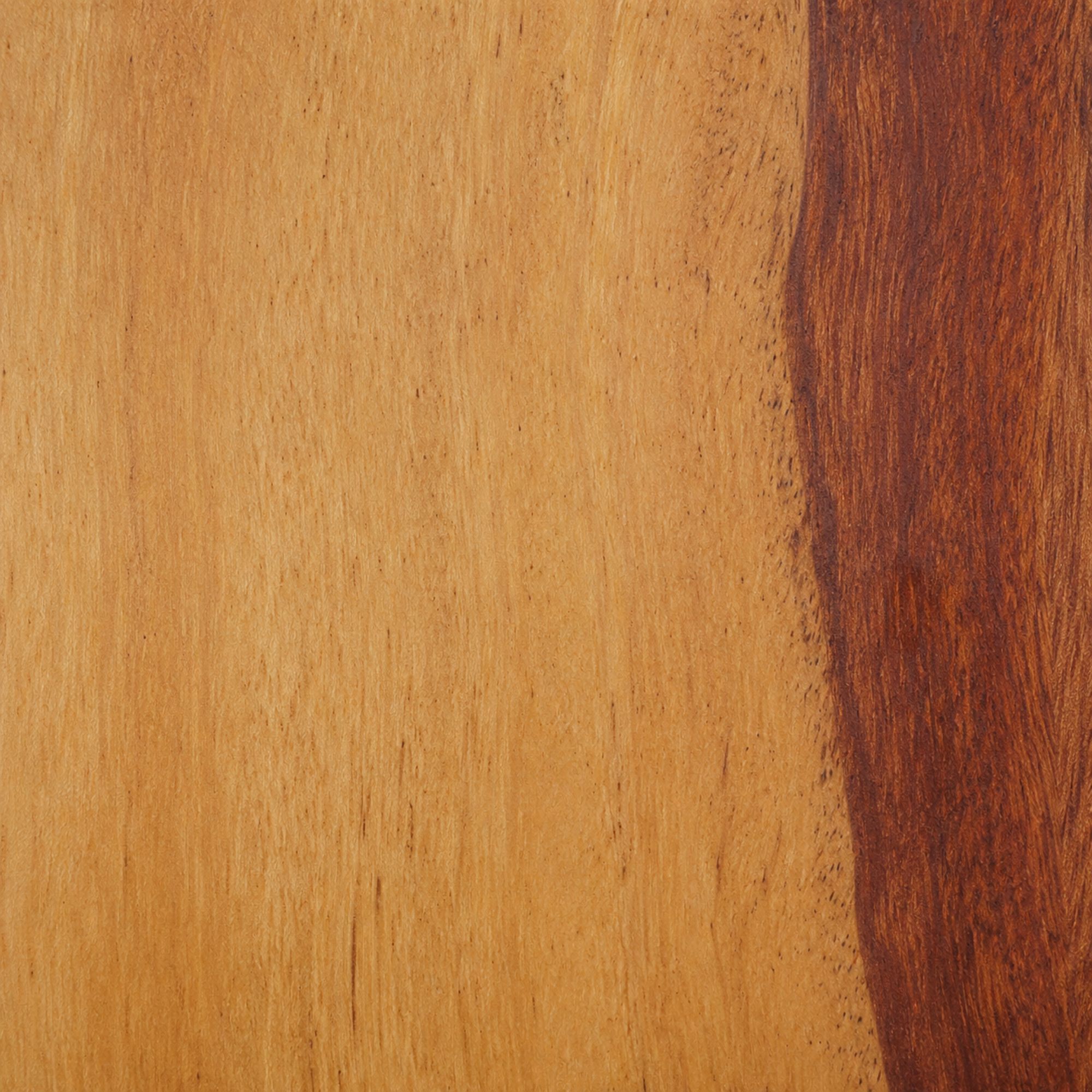
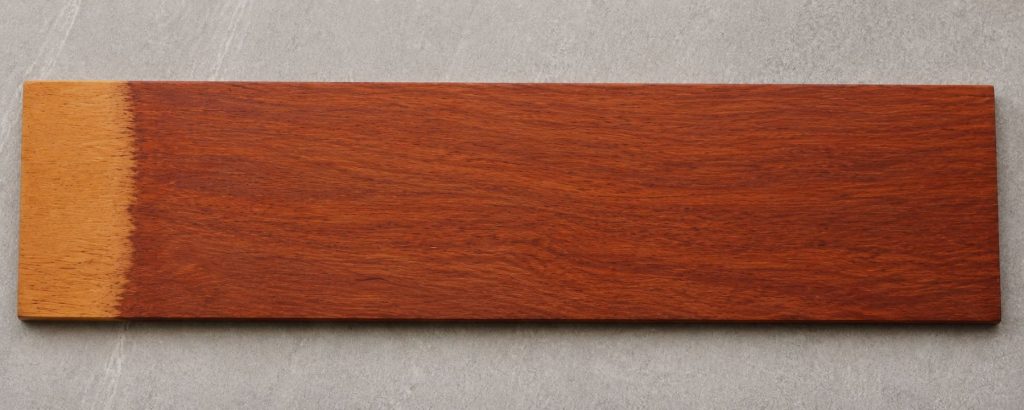
Horned Quebracho develops a heartwood ranging from deep reddish-brown to dark chocolate brown that gradually darkens with age. The sapwood is narrow and pale cream to grayish-white, creating a noticeable contrast with the heartwood. The grain is generally interlocked or irregular, while the texture remains fine to medium. The wood has little natural luster but is exceptionally heavy and rich in tannins. Living trees are often recognized by their distinctive horn-like branch projections, from which the species derives its common name.
Key identification traits include:
- Deep reddish-brown to dark brown heartwood
- Cream to grayish-white sapwood
- Interlocked to irregular grain
- Fine to medium texture
- Extremely dense and heavy
- High tannin content
- Distinctive horn-like branch projections on living trees
Working Properties
Horned Quebracho is extremely difficult to machine because of its exceptional hardness and density. Carbide tooling is strongly recommended, as conventional cutting edges dull rapidly. Interlocked grain can produce tear-out during planing, while pre-drilling is required before installing fasteners. Despite these machining challenges, the wood produces exceptionally durable products capable of withstanding decades of heavy service.
- Extremely difficult to machine
- Rapidly dulls cutting tools
- Carbide tooling recommended
- Interlocked grain may produce tear-out
- Pre-drilling recommended
- Turns with difficulty
- Produces exceptionally durable finished products
Safety Note
Wood dust may cause skin, eye, or respiratory irritation in sensitive individuals. High tannin concentrations may also contribute to skin sensitivity after prolonged exposure. Appropriate dust extraction, respiratory protection, and eye protection are recommended during machining and sanding.
Common Uses
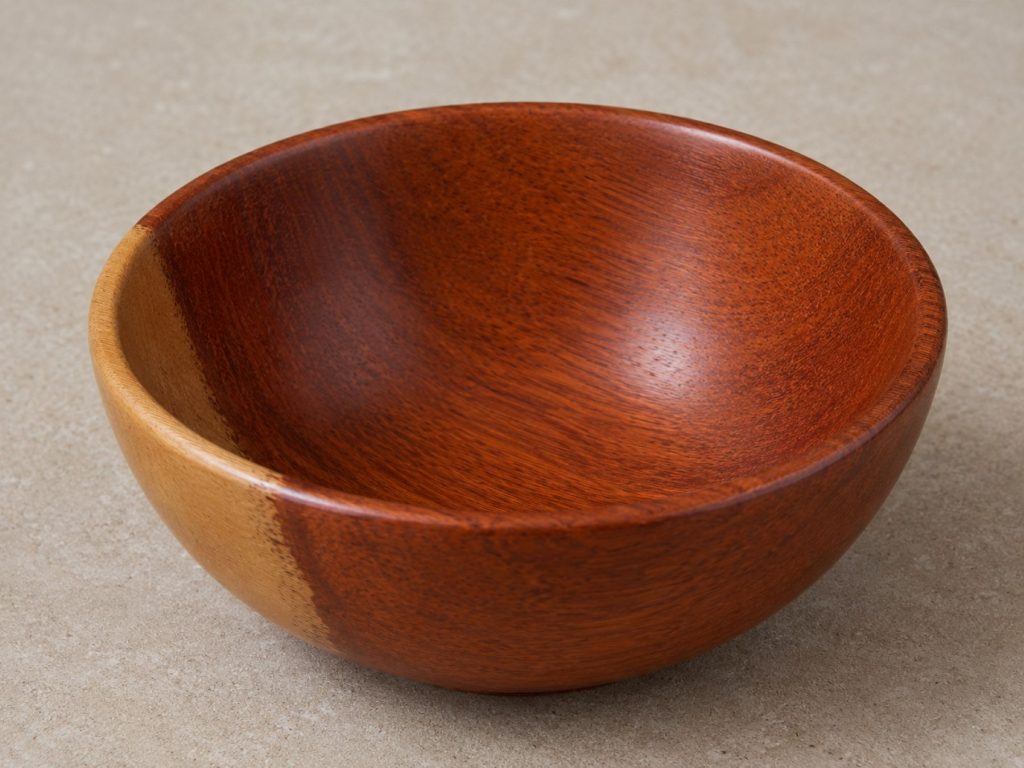
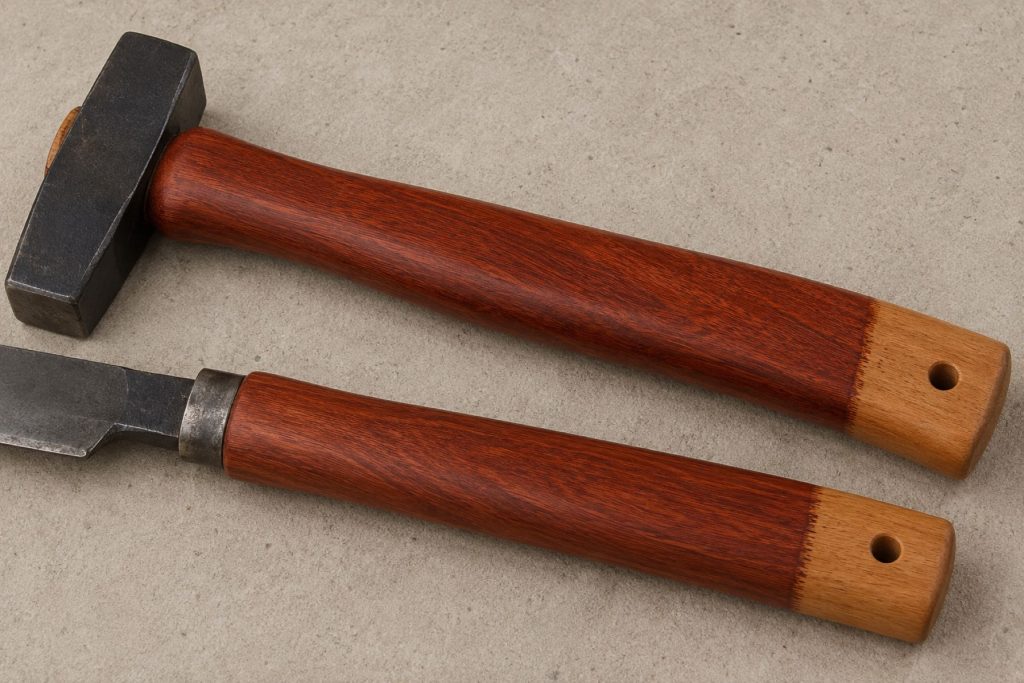
Thanks to its remarkable hardness, exceptional durability, and outstanding resistance to decay and insects, Horned Quebracho is commonly used for demanding applications, including:
- Fence posts
- Heavy construction
- Bridge timbers
- Agricultural equipment
- Industrial flooring
- Mining timbers
- Timber framing
- Heavy exterior structures
- Charcoal production
- Utility poles
Sustainability & Notes
Horned Quebracho occupies a relatively limited natural range within the dry forests of central South America. Like many native species of the Gran Chaco region, it faces pressure from agricultural expansion, land clearing, and historical logging. Because of its naturally slow growth and extremely dense wood, responsible forest management is important to ensure healthy long-term populations.
Its exceptional longevity often allows structures built from Horned Quebracho to remain in service for many decades, reducing the need for frequent replacement.
Comparative Notes & Related Species
Red Quebracho – The best-known member of the genus, prized for its exceptional hardness, durability, and tannin content.
Quebracho Blanco – Another dense Schinopsis species with similar physical properties and resistance to decay.
Boquerón Quebracho – A rare quebracho species native to the Gran Chaco that shares many of the same mechanical characteristics.
Related Guides
Quebracho Species Guide – Compare the various quebracho species and learn how they differ in habitat, identification, and commercial uses.
Understanding Wood Strength: What Makes Wood Strong? – Discover how density and wood anatomy contribute to exceptional strength and durability.
How to Identify Exotic Hardwood by Grain Pattern – Learn how grain structure can help distinguish hardwood species during identification.
Compare Wood Properties
See how this species ranks in density and hardness using our Wood Density & Janka Hardness Chart. You can also explore Hardest Woods, Softest Woods, and Most Dense Woods for quick comparisons.
Collector Notes
Horned Quebracho is one of the rarest members of the Schinopsis genus available to collectors. Its combination of extraordinary density, remarkable durability, and unusual horned growth habit makes it an especially interesting specimen. A documented sample displayed alongside Red Quebracho, Santiago Quebracho, Chaco Quebracho, Quebracho Serrano, Boquerón Quebracho, and Quebracho Blanco showcases the diversity found within one of South America’s most impressive hardwood genera.
Share Your Photos of This Species
Do you have lumber, wood samples, tree photographs, woodworking projects, furniture, carvings, turnings, musical instruments, or other items made from this species?
Exotic Woods of the World welcomes photographs from woodworkers, collectors, sawyers, researchers, and wood enthusiasts around the world. Selected submissions may be featured on this page and throughout our website to help document and showcase real-world examples of this species.
When submitting photos, please include the common name, scientific name (if known), a brief description, and any information you would like us to share with the image.
Wood Sample Collection
This species is part of an ongoing effort to document and preserve wood samples from around the world.
Learn more about contributing to the collection:
Resources
Authoritative botanical and forestry references used in compiling information about this species include:
• USDA Forest Service – Wood Handbook: Wood as an Engineering Material
https://www.fpl.fs.usda.gov/products/publications/
• The Wood Database – Global reference for wood identification, physical properties, and woodworking characteristics
https://www.wood-database.com/
• Royal Botanic Gardens, Kew – Plants of the World Online – Botanical taxonomy and species distribution database
https://powo.science.kew.org/
• International Union for Conservation of Nature (IUCN Red List) – Global conservation status assessments
https://www.iucnredlist.org/
• Convention on International Trade in Endangered Species (CITES) – International trade regulations for protected plant species
https://cites.org/
Additional forestry publications, academic research papers, and regional timber studies may also be referenced where available.
Love This Species?
Enjoy learning about this wood species?
Help support the continued growth of Exotic Woods of the World by participating in our Adopt a Species program. Your support helps fund species research, educational content, photography, videos, and future conservation awareness initiatives.
Support Forest Conservation
This species is part of the growing Exotic Woods of the World reference archive, dedicated to documenting and preserving knowledge of the world’s wood species.
Through the Adopt a Species program, visitors can help support ongoing species research, educational content, photography, video production, and future conservation awareness initiatives.
Contributions help fund the continued expansion of this archive while promoting sustainable forestry education and the long-term appreciation of the world’s forests.
Interested in supporting this species? Visit our Adopt a Species and Conservation Partners pages to learn more.
Availability & Where to Buy
Exotic hardwood availability can vary significantly depending on region, sustainability regulations, and supplier inventory.
As this archive grows, recommended suppliers and specialty wood retailers will be listed here to help woodworkers locate responsibly sourced material.
Lumber Suppliers:
Availability varies — see the Where to Buy Exotic Woods page for current sources.
Related Tools & Products:
Availability varies — see the Where to Buy Exotic Woods page for current sources.
Share This Wood Species
Stay Connected
Follow the latest species additions, educational resources, videos, conservation initiatives, and major project milestones through our Site Updates archive.
The Site Updates archive provides a permanent record of new content, library growth, and future developments across Exotic Woods of the World.