

Japanese Evergreen Oak
Scientific name: Quercus acuta
Overview
Japanese Evergreen Oak, known in Japan as Akagashi, is an evergreen member of the oak family native to East Asia. Its timber has a long history in Japanese crafts, especially applications that require substantial weight and strength. The Japanese name means “red oak,” but this species should not be confused with North American red oak. It belongs to the Asian ring-cupped oak lineage.
Quick Facts
- Common Name: Japanese Evergreen Oak
- Other Names: Akagashi, Japanese Red Oak
- Scientific Name: Quercus acuta
- Family: Fagaceae
- Region: Asian Woods
- Native Range: Central and southern Japan, southern Korea including Jeju, Taiwan, Guangdong and Hong Kong
- Tree Size: Approximately 20 m (66 ft) tall; trunks may reach 1 m (3.3 ft) diameter
- Dried Weight: Roughly 800–1,050 kg/m³ (50–66 lb/ft³), based on reported air-dry specific gravity; moisture basis varies among references
- Janka Hardness: A reliable species-specific value was not verified
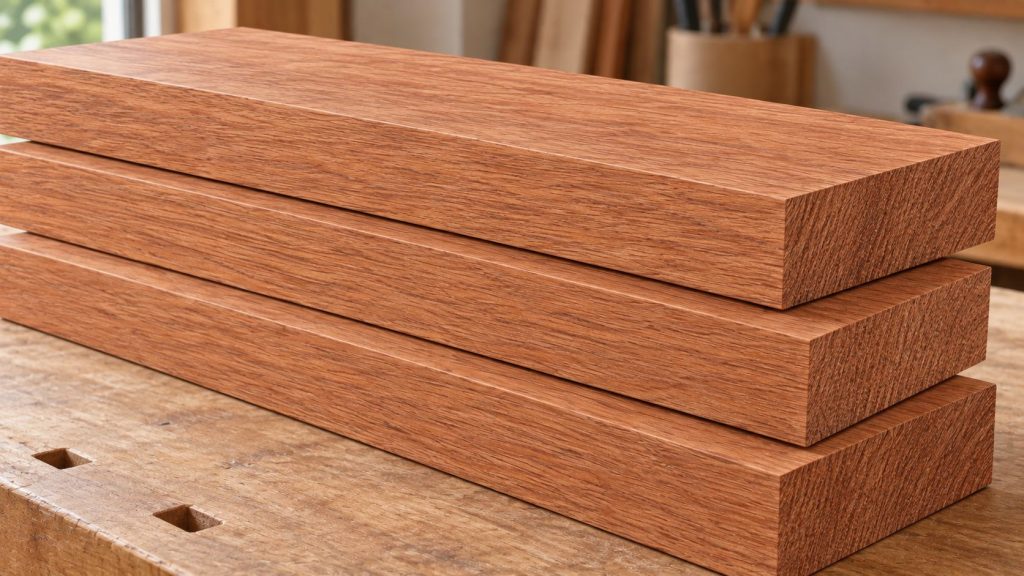
- Color: Pale reddish-brown to red-brown heartwood; pale yellow-brown sapwood
- Grain: Generally straight
- Texture: Fine
- Natural Durability: Moderate in Japanese timber references
Identification Characteristics
The wood combines reddish-brown tones with a relatively fine texture. Published anatomical research describes a radial-porous arrangement, with vessels following radial patterns rather than the conspicuous earlywood bands familiar in many temperate oaks. Color and weight alone cannot establish an exact species identification; documented provenance and end-grain examination are important.
Key identification traits include:
- Reddish-brown wood with a sometimes indistinct sapwood boundary
- Heavy feel relative to many common furniture hardwoods
- Generally straight grain and fine texture
- Radial vessel arrangement visible on a prepared end-grain surface
- Identification supported by provenance rather than color alone

Working Properties
Akagashi is demanding to machine and season. Its substantial density calls for sharp tooling and controlled cuts. Research on Korean material found considerable shrinkage during drying, emphasizing the need to condition stock carefully before fitting components. The following workshop recommendations reflect those properties rather than a guarantee of performance for every board.
- Machining: Expect greater cutting resistance than with lighter hardwoods
- Drying: Allow careful seasoning and monitor for distortion or checking
- Joinery: Acclimate stock and allow for moisture-related movement
- Fastening: Pre-drill dense sections to reduce splitting risk
- Finishing: Prepare a test piece before committing to a finish
- Outdoor Use: Do not assume the decay resistance associated with white oak
Safety Note
Use effective dust extraction and suitable eye and respiratory protection when cutting or sanding. Treat this species with the same dust-control precautions used for other oak woods. No species-specific safety clearance is implied by its traditional uses.
Common Uses
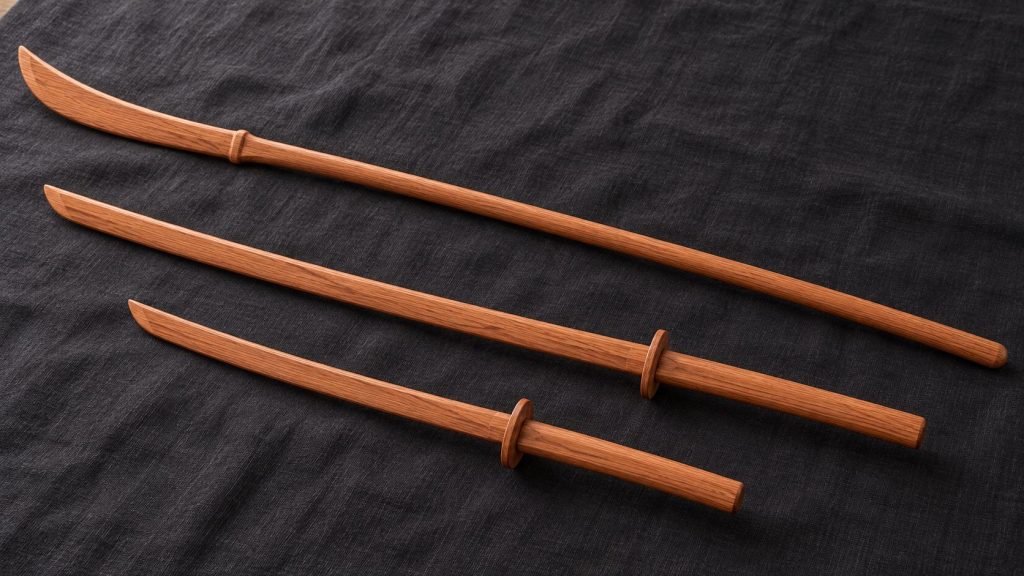

Traditional applications emphasize hard-wearing implements and sporting equipment rather than lightweight construction. Documented uses include:
- Tool and implement handles
- Wooden practice swords and naginata
- Gateball equipment and indoor play equipment
- Historically, cart and vehicle parts
- Historically, machinery components, sleepers, and oars
Sustainability & Notes
Kew’s Plants of the World Online reports an IUCN classification of Least Concern. This describes global extinction risk, not certification of individual lumber supplies. Ask suppliers for the botanical identity, harvest origin, and evidence of legal sourcing. Historic Japanese timber references note reduced availability associated with changes in demand, competing materials, and resource supply. Confirm current trade and import requirements before purchasing internationally.
Comparative Notes & Related Species
- Red Oak – A North American comparison; the shared common name does not indicate the same species.
- White Oak – Compare a familiar commercial oak without transferring its property values to Akagashi.
- Holm Oak – Another evergreen oak, from the Mediterranean region.
Related Guides
- Oak Species Guide
- Wood Identification
- How to Identify Exotic Hardwood by Grain Pattern
- Wood Collecting & Preservation
Compare Wood Properties
See how this species ranks in density and hardness using our Wood Density & Janka Hardness Chart. You can also explore Hardest Woods, Softest Woods, and Most Dense Woods for quick comparisons.
Collector Notes
A documented Akagashi sample adds an East Asian evergreen oak to a collection that may otherwise consist mainly of deciduous European and North American oaks. Record the scientific name, supplier, origin, drying condition, and any alternate trade names. Keep a clean end-grain surface for anatomical comparison. Older references may use the synonym Cyclobalanopsis acuta; retain that name in the sample history while labeling the accepted species as Quercus acuta.
Share Your Photos of This Species
Do you have lumber, wood samples, tree photographs, woodworking projects, furniture, carvings, turnings, musical instruments, or other items made from this species?
Exotic Woods of the World welcomes photographs from woodworkers, collectors, sawyers, researchers, and wood enthusiasts around the world. Selected submissions may be featured on this page and throughout our website to help document and showcase real-world examples of this species.
When submitting photos, please include the common name, scientific name (if known), a brief description, and any information you would like us to share with the image.
Wood Sample Collection
This species is part of an ongoing effort to document and preserve wood samples from around the world.
Learn more about contributing to the collection:
Resources
Authoritative botanical and forestry references used in compiling information about this species include:
• USDA Forest Service – Wood Handbook: Wood as an Engineering Material
https://www.fpl.fs.usda.gov/products/publications/
• The Wood Database – Global reference for wood identification, physical properties, and woodworking characteristics
https://www.wood-database.com/
• Royal Botanic Gardens, Kew – Plants of the World Online – Botanical taxonomy and species distribution database
https://powo.science.kew.org/
• International Union for Conservation of Nature (IUCN Red List) – Global conservation status assessments
https://www.iucnredlist.org/
• Convention on International Trade in Endangered Species (CITES) – International trade regulations for protected plant species
https://cites.org/
Additional forestry publications, academic research papers, and regional timber studies may also be referenced where available.
Love This Species?
Enjoy learning about this wood species?
Help support the continued growth of Exotic Woods of the World by participating in our Adopt a Species program. Your support helps fund species research, educational content, photography, videos, and future conservation awareness initiatives.
Support Forest Conservation
This species is part of the growing Exotic Woods of the World reference archive, dedicated to documenting and preserving knowledge of the world’s wood species.
Through the Adopt a Species program, visitors can help support ongoing species research, educational content, photography, video production, and future conservation awareness initiatives.
Contributions help fund the continued expansion of this archive while promoting sustainable forestry education and the long-term appreciation of the world’s forests.
Interested in supporting this species? Visit our Adopt a Species and Conservation Partners pages to learn more.
Availability & Where to Buy
Exotic hardwood availability can vary significantly depending on region, sustainability regulations, and supplier inventory.
As this archive grows, recommended suppliers and specialty wood retailers will be listed here to help woodworkers locate responsibly sourced material.
Lumber Suppliers:
Availability varies — see the Where to Buy Exotic Woods page for current sources.
Related Tools & Products:
Availability varies — see the Where to Buy Exotic Woods page for current sources.
Share This Wood Species
Stay Connected
Follow the latest species additions, educational resources, videos, conservation initiatives, and major project milestones through our Site Updates archive.
The Site Updates archive provides a permanent record of new content, library growth, and future developments across Exotic Woods of the World.