

Madagascar Rosewood
Scientific name: Dalbergia baronii
Overview
Madagascar Rosewood (Dalbergia baronii) is a dense, richly colored hardwood native to the humid forests of eastern Madagascar. It belongs to the true rosewood genus and is admired for reddish-brown heartwood marked by dark, irregular streaks. The wood has long been selected for fine furniture, cabinetry, decorative veneer, turned objects, and musical instruments. Because Madagascar’s rosewoods have been severely affected by habitat loss and illegal logging, provenance and legality are essential considerations for every purchase.
Quick Facts
- Common Name: Madagascar Rosewood
- Alternate Common Name(s): Madagascar Palisander, Palissandre de Madagascar
- Scientific Name: Dalbergia baronii
- Region: African Woods
- Tree Size: Typically 50–75 ft (15–23 m) tall
- Average Dried Weight: Approximately 58 lb/ft³ (930 kg/m³)
- Janka Hardness: Approximately 2,720 lbf (12,100 N)
- Grain: Usually straight; occasionally interlocked
- Texture: Fine and even, with good natural luster
Identification Characteristics
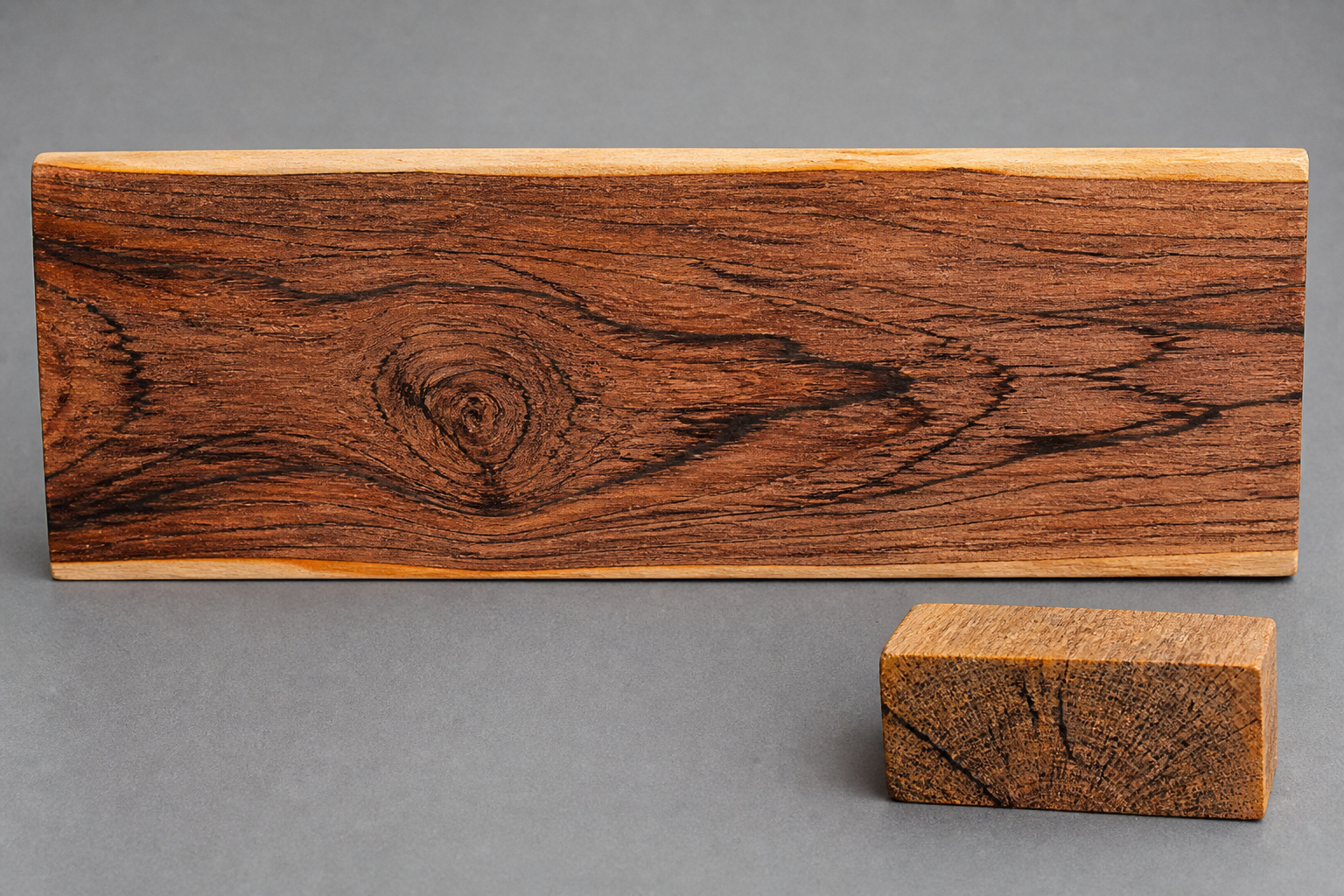
Freshly cut heartwood ranges from yellowish or orange-brown to deep reddish brown and darkens with age. Narrow, nearly black veins often cross and branch through the surface, producing the dramatic spider-web figure associated with high-quality Madagascar rosewood. The pale sapwood is sharply distinct from the heartwood. Surfaces are fine textured and may show a soft natural sheen.
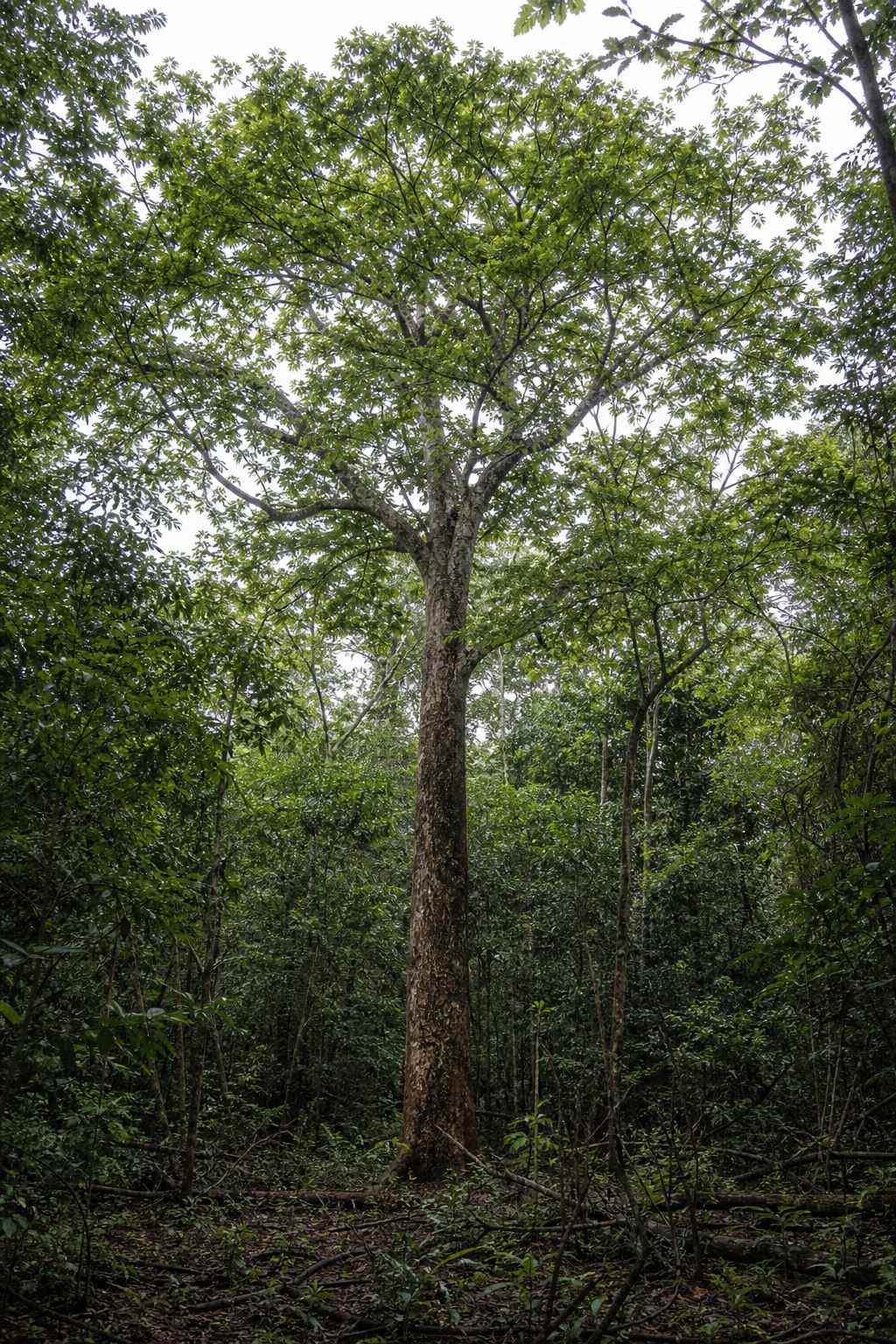
In the forest, D. baronii grows as a medium-sized tree in humid lowland and montane forest. Like many Dalbergia species, it bears compound leaves, small flowers, and flat pods. Exact identification from timber alone can be difficult because several Madagascar rosewoods overlap in appearance.
Key identification traits include:
- Dense, heavy wood that feels substantial for its size
- Orange-brown to reddish-brown heartwood that deepens over time
- Dark brown or black streaks, frequently forming irregular web-like figure
- Pale sapwood with a clear boundary from the heartwood
- Fine, even texture and generally straight grain
- A sweet rosewood-like odor may be noticeable when worked
Working Properties
Madagascar Rosewood machines well for a very dense hardwood and can take exceptionally crisp detail. Its weight, hardness, and occasional interlocked grain call for sharp carbide tooling and controlled feed rates. The timber turns and carves cleanly, sands to a refined surface, and polishes to a deep luster. Natural oils may interfere with some adhesives, so freshly prepared joints and an adhesive appropriate for oily tropical woods are recommended.
- Use sharp cutters and light passes to reduce tear-out in figured or interlocked grain.
- Pre-drill for nails and screws to prevent splitting.
- Degrease bonding surfaces when required and test the glue system on offcuts.
- Expect a moderate blunting effect on cutting edges.
- Apply finishes to a clean surface; test oil-based and film finishes before committing.
- Dry thick stock gradually to minimize checking, though properly dried wood is generally stable in service.
Safety Note
Rosewood dust can irritate the eyes, skin, and respiratory system, and some workers develop allergic sensitivity after repeated exposure. Use effective dust collection, a properly fitted respirator, eye protection, and gloves when appropriate. Wash exposed skin after machining and keep dust out of living areas.
Common Uses
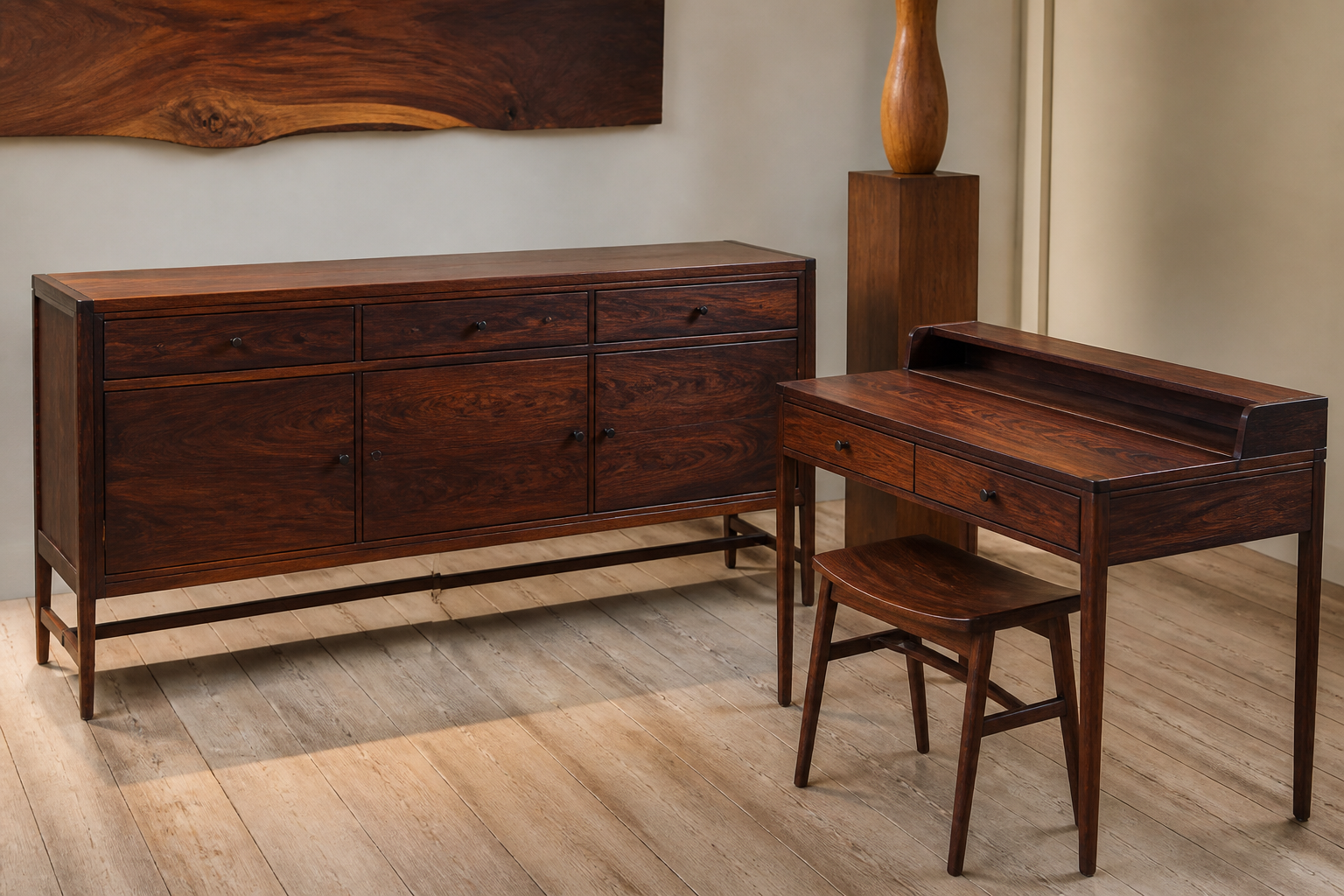
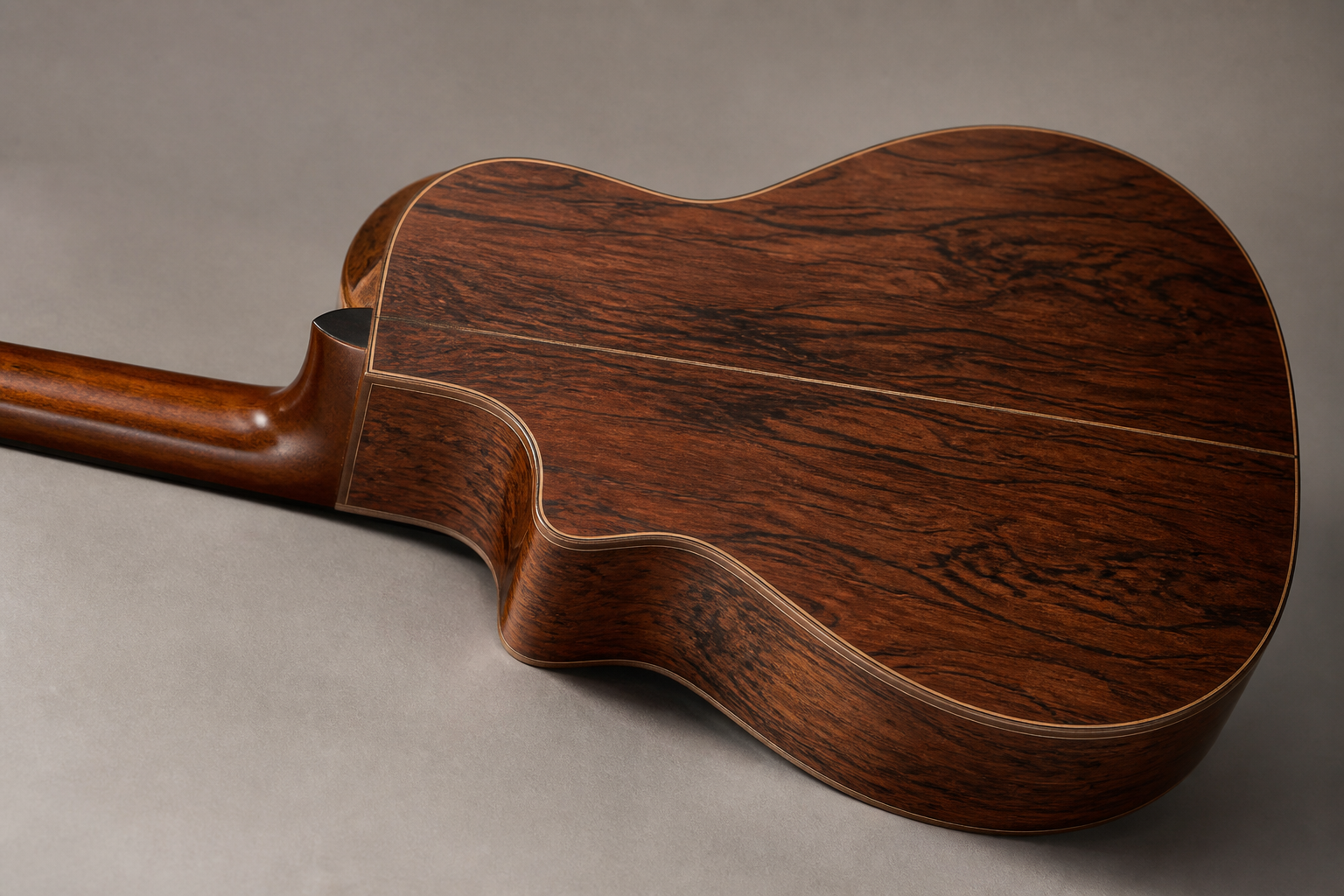
The combination of striking figure, high density, stability, and the ability to take a brilliant polish makes Madagascar Rosewood a prestige material. Modern use should be limited to legally documented stock, reclaimed wood, verified pre-convention material, or small pieces whose chain of custody is clear.
- Fine furniture, cabinetry, boxes, and luxury interior details
- Decorative veneer, marquetry, inlay, and knife scales
- Turned vessels, pens, handles, and small specialty objects
- Acoustic-guitar backs and sides and other musical-instrument components
- Carving, sculpture, and collector wood samples
Sustainability & Notes
Dalbergia baronii is endemic to Madagascar, where forest conversion and illegal timber extraction have placed exceptional pressure on rosewood populations. Madagascar populations of Dalbergia are regulated through CITES Appendix II. International shipment may require permits and supporting documentation, and national restrictions can be more stringent. Regulations change, so buyers and sellers should verify current requirements before moving wood across borders.
Choose reclaimed or long-held documented inventory whenever possible. For newer stock, request the scientific name, country of harvest, harvest date, permits, invoices, and an unbroken chain of custody. A common name alone is not sufficient evidence because multiple Madagascar Dalbergia species are traded under similar names.
Comparative Notes & Related Species
Brazilian Rosewood – Often shows comparable dark streaking, but is a different species with its own strict trade history and controls.
East Indian Rosewood – Usually more purple-brown and commonly available from managed sources, with less frequent black spider-web figure.
Cocobolo – A dense Central American rosewood that often has brighter orange, red, and black banding and a more oily feel.
African Blackwood – Generally darker, finer textured, and even denser, commonly used for woodwind instruments and turnery.
Related Guides
- How to Identify Exotic Hardwood by Grain Pattern
- How to Store Exotic Wood Samples
- Wood Identification
Compare Wood Properties
See how this species ranks in density and hardness using our Wood Density & Janka Hardness Chart. You can also explore Hardest Woods, Softest Woods, and Most Dense Woods for quick comparisons.
Collector Notes
Older samples may darken substantially, so protect a freshly sanded reference area from light when documenting color. Label each sample with the supplier, purchase date, claimed origin, and any permit or inventory information. Never remove material from protected forests or living trees.
Share Your Photos of This Species
Do you have lumber, wood samples, tree photographs, woodworking projects, furniture, carvings, turnings, musical instruments, or other items made from this species?
Exotic Woods of the World welcomes photographs from woodworkers, collectors, sawyers, researchers, and wood enthusiasts around the world. Selected submissions may be featured on this page and throughout our website to help document and showcase real-world examples of this species.
When submitting photos, please include the common name, scientific name (if known), a brief description, and any information you would like us to share with the image.
Wood Sample Collection
This species is part of an ongoing effort to document and preserve wood samples from around the world.
Learn more about contributing to the collection:
Resources
Authoritative botanical and forestry references used in compiling information about this species include:
• USDA Forest Service – Wood Handbook: Wood as an Engineering Material
https://www.fpl.fs.usda.gov/products/publications/
• The Wood Database – Global reference for wood identification, physical properties, and woodworking characteristics
https://www.wood-database.com/
• Royal Botanic Gardens, Kew – Plants of the World Online – Botanical taxonomy and species distribution database
https://powo.science.kew.org/
• International Union for Conservation of Nature (IUCN Red List) – Global conservation status assessments
https://www.iucnredlist.org/
• Convention on International Trade in Endangered Species (CITES) – International trade regulations for protected plant species
https://cites.org/
Additional forestry publications, academic research papers, and regional timber studies may also be referenced where available.
Love This Species?
Enjoy learning about this wood species?
Help support the continued growth of Exotic Woods of the World by participating in our Adopt a Species program. Your support helps fund species research, educational content, photography, videos, and future conservation awareness initiatives.
Support Forest Conservation
This species is part of the growing Exotic Woods of the World reference archive, dedicated to documenting and preserving knowledge of the world’s wood species.
Through the Adopt a Species program, visitors can help support ongoing species research, educational content, photography, video production, and future conservation awareness initiatives.
Contributions help fund the continued expansion of this archive while promoting sustainable forestry education and the long-term appreciation of the world’s forests.
Interested in supporting this species? Visit our Adopt a Species and Conservation Partners pages to learn more.
Availability & Where to Buy
Exotic hardwood availability can vary significantly depending on region, sustainability regulations, and supplier inventory.
As this archive grows, recommended suppliers and specialty wood retailers will be listed here to help woodworkers locate responsibly sourced material.
Lumber Suppliers:
Availability varies — see the Where to Buy Exotic Woods page for current sources.
Related Tools & Products:
Availability varies — see the Where to Buy Exotic Woods page for current sources.
Share This Wood Species
Stay Connected
Follow the latest species additions, educational resources, videos, conservation initiatives, and major project milestones through our Site Updates archive.
The Site Updates archive provides a permanent record of new content, library growth, and future developments across Exotic Woods of the World.