
Striped Maple
Scientific name: Acer pensylvanicum
Overview
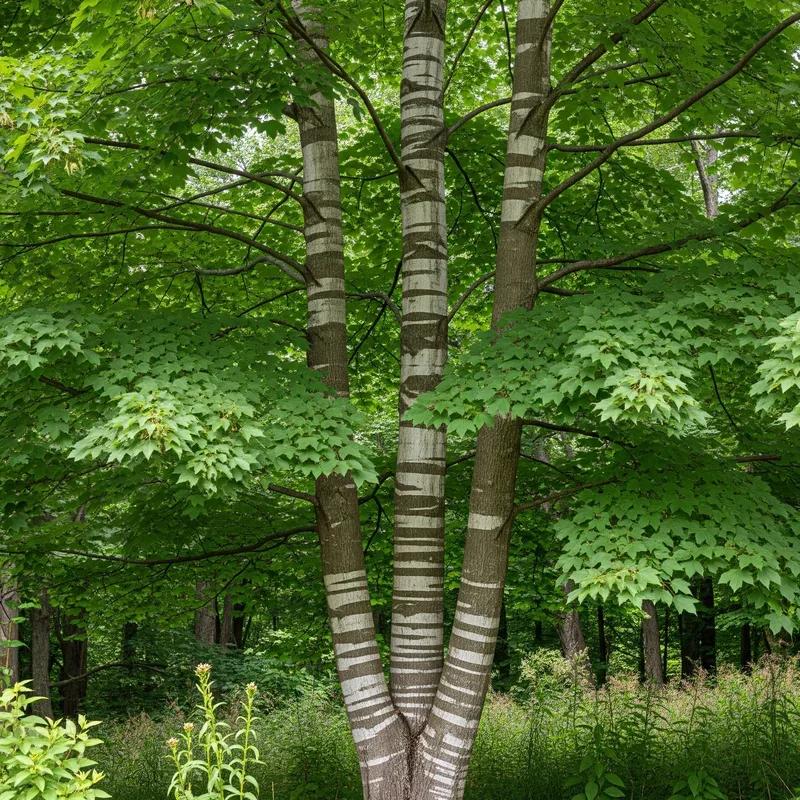
Striped Maple is a small North American hardwood native to the cool forests of the northeastern United States and southeastern Canada. Despite its scientific name, Acer pensylvanicum, the species occurs well beyond Pennsylvania, ranging from Nova Scotia and southern Quebec south through the Appalachian Mountains into northern Georgia. A member of the Sapindaceae family, it is easily recognized by its distinctive green bark marked with long white vertical stripes, giving rise to its common name.
Unlike the large commercial maples harvested for lumber, Striped Maple is primarily an understory tree and rarely reaches timber size. Although its wood has limited commercial value, it shares the fine texture, close grain, and good workability common to many maple species. The tree is valued more for its ornamental beauty, wildlife benefits, and importance in native forest ecosystems than for lumber production.
Quick Facts
- Common Name: Striped Maple
- Scientific Name: Acer pensylvanicum
- Region: North American Hardwoods
- Tree Size: 20–40 ft (6–12 m) tall, 8–16 in (20–40 cm) trunk diameter
- Average Dried Weight: Approximately 36 lbs/ft³ (575 kg/m³)
- Janka Hardness: Approximately 850 lbf
- Grain: Straight
- Texture: Fine and uniform
Identification Characteristics
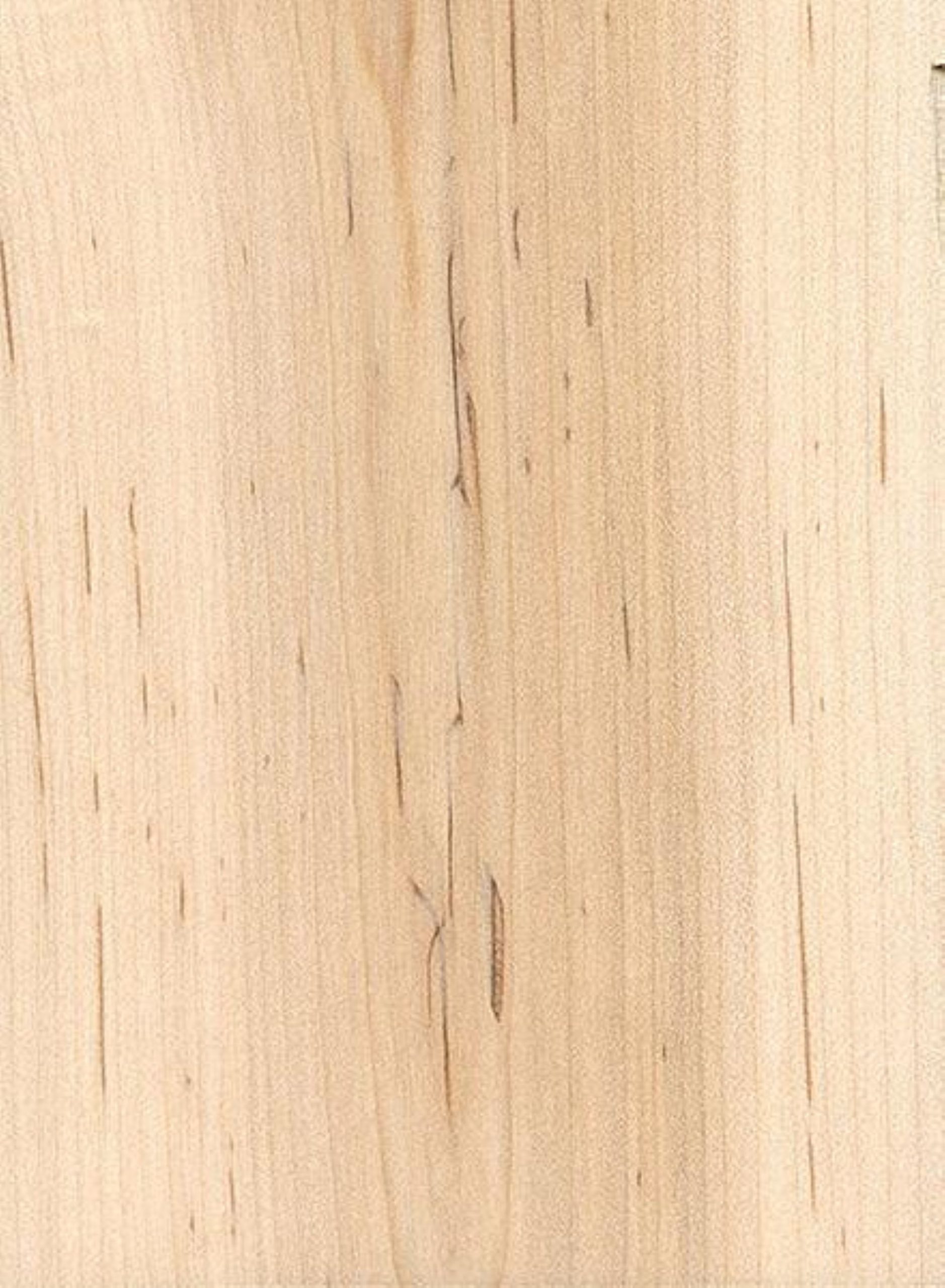
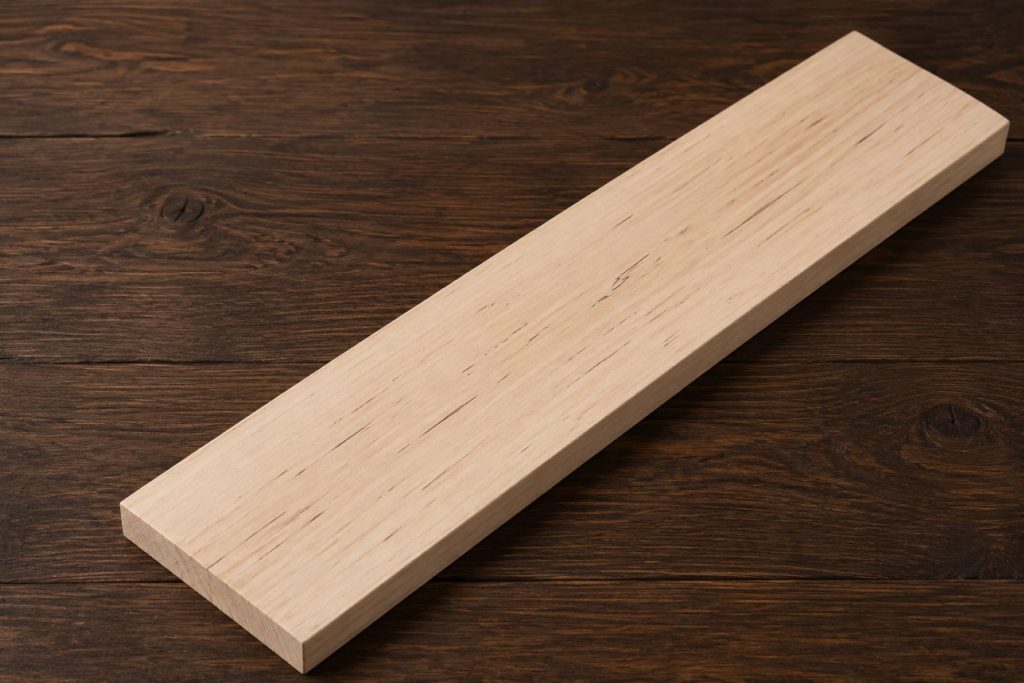
Striped Maple produces pale cream to light brown heartwood that blends gradually into nearly white sapwood. The grain is generally straight with a fine, uniform texture and smooth appearance. The tree’s most recognizable feature is its smooth green bark with distinctive white vertical stripes, which remain visible even on mature trees. Its broad leaves and arching branches further distinguish it from other native maples.
Key identification traits include:
- Light cream to pale brown heartwood
- Nearly white sapwood
- Straight grain
- Fine, uniform texture
- Smooth green bark with white vertical stripes
- Low natural luster
- Small-diameter trunks
Working Properties
Because of its small size, Striped Maple is seldom processed into commercial lumber. When available, the wood machines easily with both hand and power tools. Its fine texture allows for smooth surfaces, and it glues, sands, and finishes well.
- Machines easily
- Excellent carving characteristics
- Turns well
- Sands to a smooth finish
- Glues readily
- Accepts stains and clear finishes well
- Good dimensional stability
Safety Note
Wood dust may cause mild skin, eye, or respiratory irritation in sensitive individuals. Standard woodworking safety practices, including dust collection and respiratory protection, are recommended during machining and sanding.
Common Uses
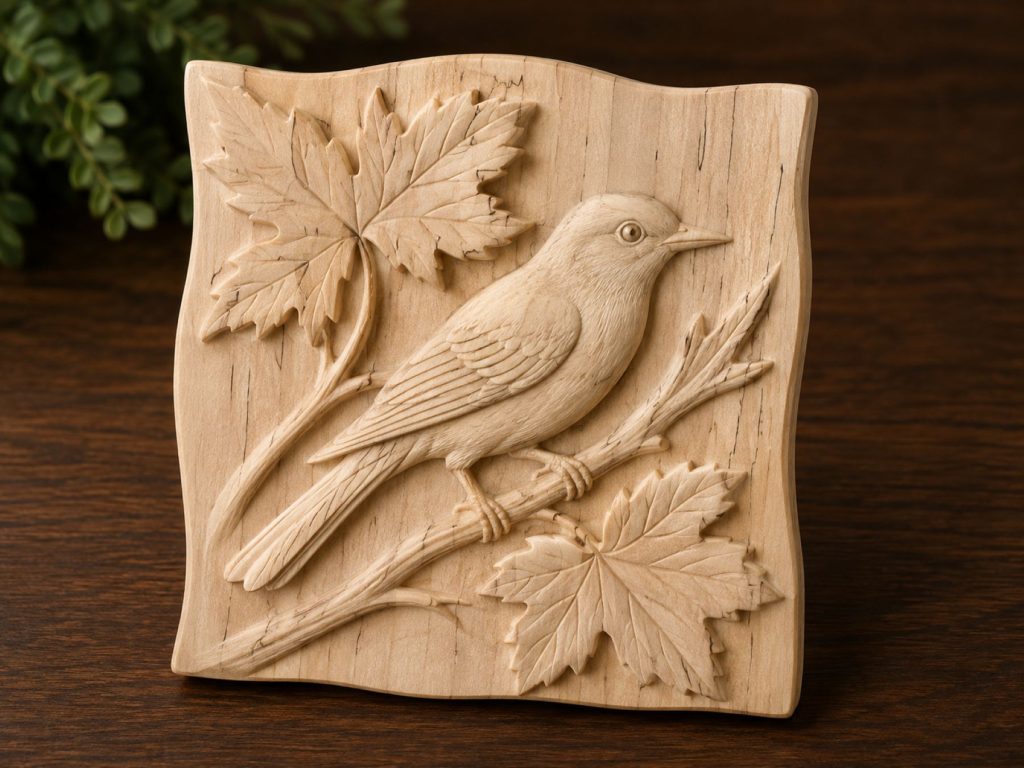
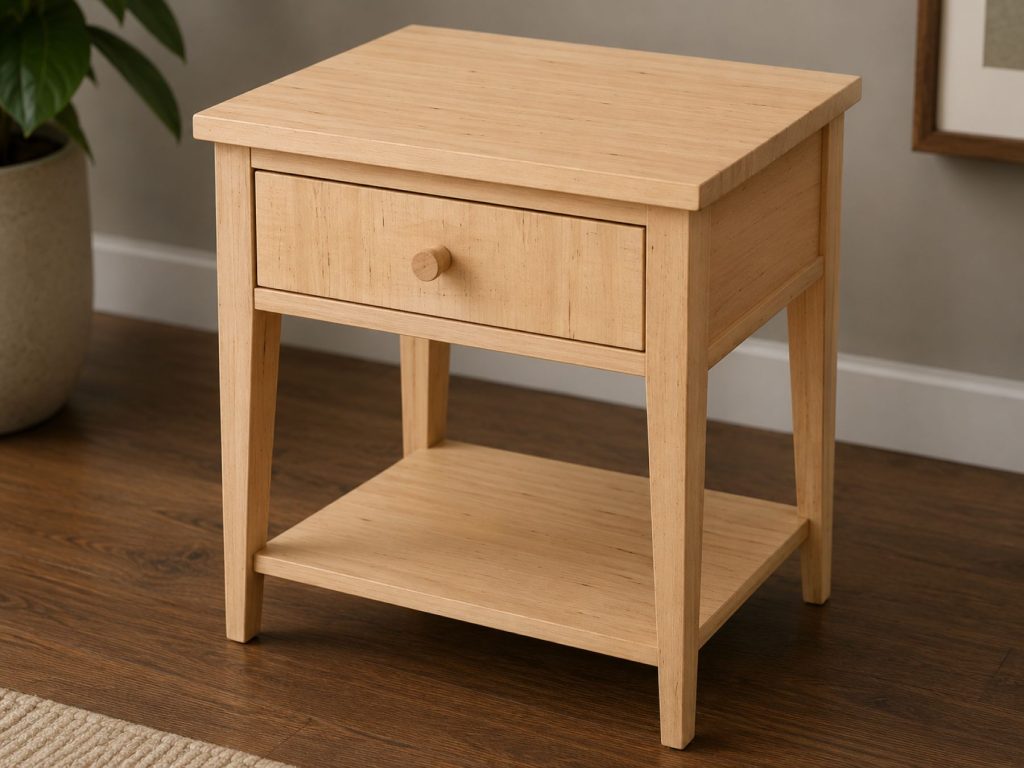
Although rarely harvested commercially, Striped Maple is used for numerous specialty woodworking applications, including:
- Wood carvings
- Turned objects
- Walking sticks
- Small furniture
- Decorative boxes
- Craft projects
- Specialty tool handles
- Educational wood collections
- Ornamental landscaping
- Wildlife habitat restoration
Sustainability & Notes
Striped Maple is widespread throughout the cool hardwood forests of eastern North America, where it serves as an important understory species. Its seeds provide food for birds and small mammals, while deer, moose, and rabbits browse its young shoots and foliage. Because the tree rarely reaches large dimensions, it is seldom harvested for lumber and is more commonly appreciated as a native ornamental and ecological species.
Its distinctive striped bark makes it one of the easiest maple species to recognize in the forest throughout the year.
Comparative Notes & Related Species
Rocky Mountain Maple – Another small native maple that occupies mountain forests in western North America and is seldom harvested commercially.
Mountain Maple – A cold-hardy understory maple found throughout northern forests with similar growth habits and ecological importance.
Black Maple – A much larger commercial maple valued for furniture, flooring, cabinetry, and specialty woodworking.
Related Guides
Maple Species Guide – Compare maple species from around the world and learn how they differ in appearance, habitat, and woodworking characteristics.
Labeling and Cataloging Wood Samples – Learn effective methods for organizing and documenting both common and uncommon hardwood specimens.
Understanding Chatoyance in Wood
Explore Understanding Chatoyance in Wood to learn how grain orientation and reflected light can create the shifting visual depth seen in highly figured examples of this species.
Compare Wood Properties
See how this species ranks in density and hardness using our Wood Density & Janka Hardness Chart. You can also explore Hardest Woods, Softest Woods, and Most Dense Woods for quick comparisons.
Collector Notes
Striped Maple is an excellent collector species because it represents one of North America’s most distinctive understory maples. Although it has little commercial timber importance, its unusual striped bark, limited lumber availability, and ecological significance make authenticated wood samples relatively uncommon. A documented specimen complements collections featuring Rocky Mountain Maple, Mountain Maple, Black Maple, Vine Maple, and other members of the diverse Acer genus.
Share Your Photos of This Species
Do you have lumber, wood samples, tree photographs, woodworking projects, furniture, carvings, turnings, musical instruments, or other items made from this species?
Exotic Woods of the World welcomes photographs from woodworkers, collectors, sawyers, researchers, and wood enthusiasts around the world. Selected submissions may be featured on this page and throughout our website to help document and showcase real-world examples of this species.
When submitting photos, please include the common name, scientific name (if known), a brief description, and any information you would like us to share with the image.
Wood Sample Collection
This species is part of an ongoing effort to document and preserve wood samples from around the world.
Learn more about contributing to the collection:
Resources
Authoritative botanical and forestry references used in compiling information about this species include:
• USDA Forest Service – Wood Handbook: Wood as an Engineering Material
https://www.fpl.fs.usda.gov/products/publications/
• The Wood Database – Global reference for wood identification, physical properties, and woodworking characteristics
https://www.wood-database.com/
• Royal Botanic Gardens, Kew – Plants of the World Online – Botanical taxonomy and species distribution database
https://powo.science.kew.org/
• International Union for Conservation of Nature (IUCN Red List) – Global conservation status assessments
https://www.iucnredlist.org/
• Convention on International Trade in Endangered Species (CITES) – International trade regulations for protected plant species
https://cites.org/
Additional forestry publications, academic research papers, and regional timber studies may also be referenced where available.
Love This Species?
Enjoy learning about this wood species?
Help support the continued growth of Exotic Woods of the World by participating in our Adopt a Species program. Your support helps fund species research, educational content, photography, videos, and future conservation awareness initiatives.
Support Forest Conservation
This species is part of the growing Exotic Woods of the World reference archive, dedicated to documenting and preserving knowledge of the world’s wood species.
Through the Adopt a Species program, visitors can help support ongoing species research, educational content, photography, video production, and future conservation awareness initiatives.
Contributions help fund the continued expansion of this archive while promoting sustainable forestry education and the long-term appreciation of the world’s forests.
Interested in supporting this species? Visit our Adopt a Species and Conservation Partners pages to learn more.
Availability & Where to Buy
Exotic hardwood availability can vary significantly depending on region, sustainability regulations, and supplier inventory.
As this archive grows, recommended suppliers and specialty wood retailers will be listed here to help woodworkers locate responsibly sourced material.
Lumber Suppliers:
Availability varies — see the Where to Buy Exotic Woods page for current sources.
Related Tools & Products:
Availability varies — see the Where to Buy Exotic Woods page for current sources.
Share This Wood Species
Stay Connected
Follow the latest species additions, educational resources, videos, conservation initiatives, and major project milestones through our Site Updates archive.
The Site Updates archive provides a permanent record of new content, library growth, and future developments across Exotic Woods of the World.