

African Barwood
Scientific name: Pterocarpus lucens
Overview
African Barwood (Pterocarpus lucens) is a deciduous shrub or small to medium-sized tree of seasonally dry tropical Africa. Also called small-leaved bloodwood, it grows from the Sahel across eastern Africa and reappears in parts of southern Africa. The tree supplies durable local timber, firewood, fodder, edible plant parts, tannin, and traditional materials. When its bark is cut it releases a sticky red gum, a characteristic shared with other bloodwoods.
Quick Facts
- Common Name: African Barwood
- Alternate Common Name(s): Small-Leaved Bloodwood
- Scientific Name: Pterocarpus lucens
- Region: African Woods
- Tree Size: Up to about 59 ft (18 m) tall
- Average Dried Weight: Reliable published data is limited
- Janka Hardness: Reliable published data is limited
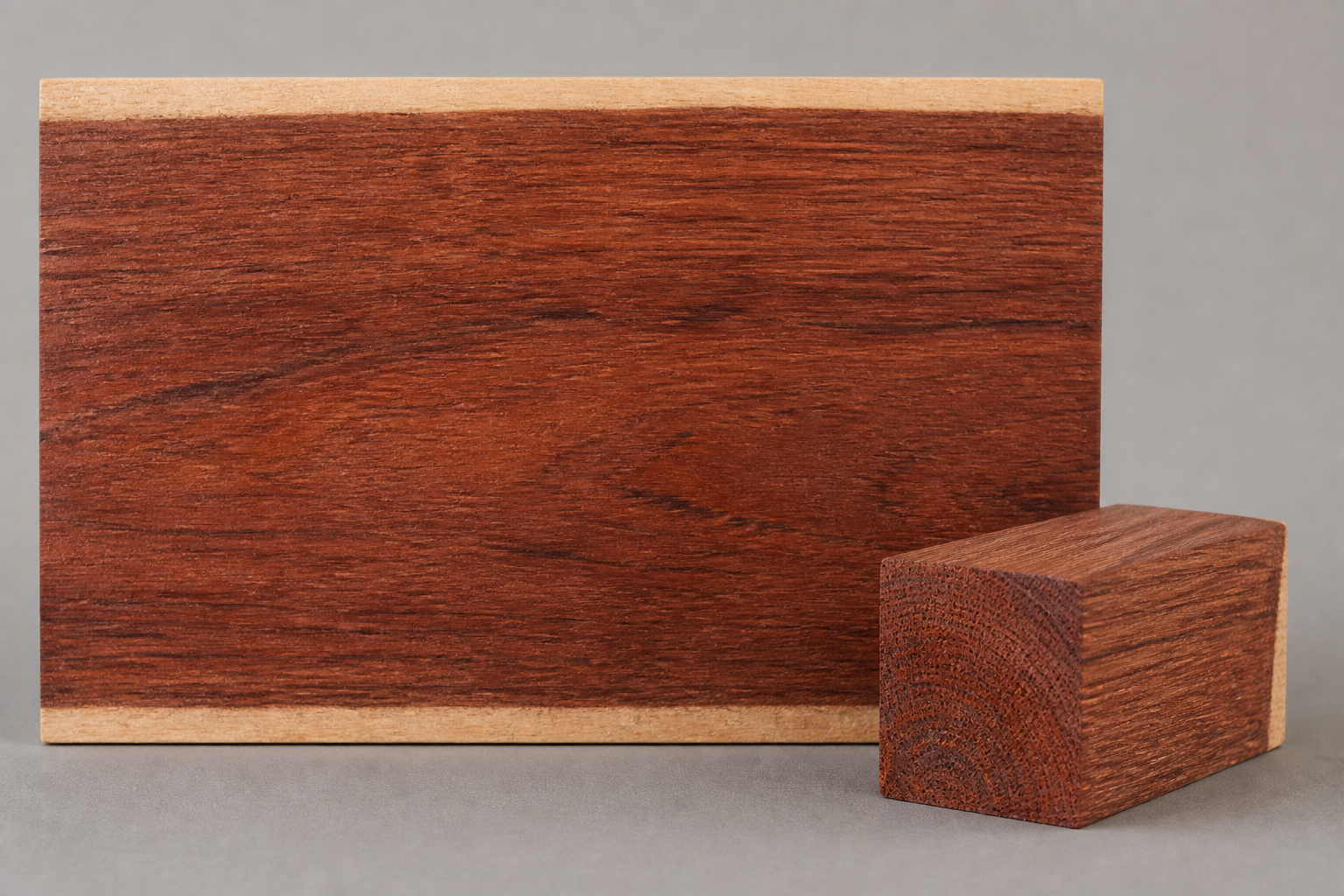
- Grain: Usually straight to mildly irregular
- Texture: Moderately coarse and even
Identification Characteristics
The species varies greatly with site. On deep, well-drained sandy soils it may form a substantial tree or dense stand, while rocky or lateritic ground produces a low, many-branched shrub. Bark is dark gray-brown, fissured or flaky, and exudes red sticky resin when damaged. Compound leaves usually carry five or seven small glossy green leaflets that are paler and finely hairy beneath.
Sweetly scented pale-yellow pea flowers appear briefly in the dry season. The pale cream-brown fruit is oval, flattened, and surrounded by a membranous wing; a thick central chamber protects one or occasionally two seeds.
Key identification traits include:
- Highly variable shrub or tree adapted to dry woodland and savanna
- Dark gray-brown fissured or flaky bark
- Red sticky gum released from cuts
- Small glossy compound leaflets
- Brief display of fragrant yellow flowers
- Flat, oval, winged fruits that remain on branches after maturity

Working Properties
Published shop data is less complete than for major commercial padauks, and verified material should be tested before production. The wood’s practical reputation supports construction and carved uses, but density and grain can vary. Sharp tools, controlled cuts, and gradual drying are sensible precautions.
- Use sharp carbide-edged cutters and light passes.
- Reverse cutting direction when grain begins to lift.
- Pre-drill near ends and edges before fastening.
- Test adhesive and finish compatibility on an offcut.
- Seal end grain and dry thick pieces slowly.
- Record weight and moisture content for authenticated samples.
Safety Note
Bloodwood and padauk dust may irritate skin, eyes, and airways. Use extraction, eye protection, and a fitted respirator during machining and sanding. Red gum, edible leaves, or traditional medicinal use should not be interpreted as evidence that sawdust is safe.
Common Uses
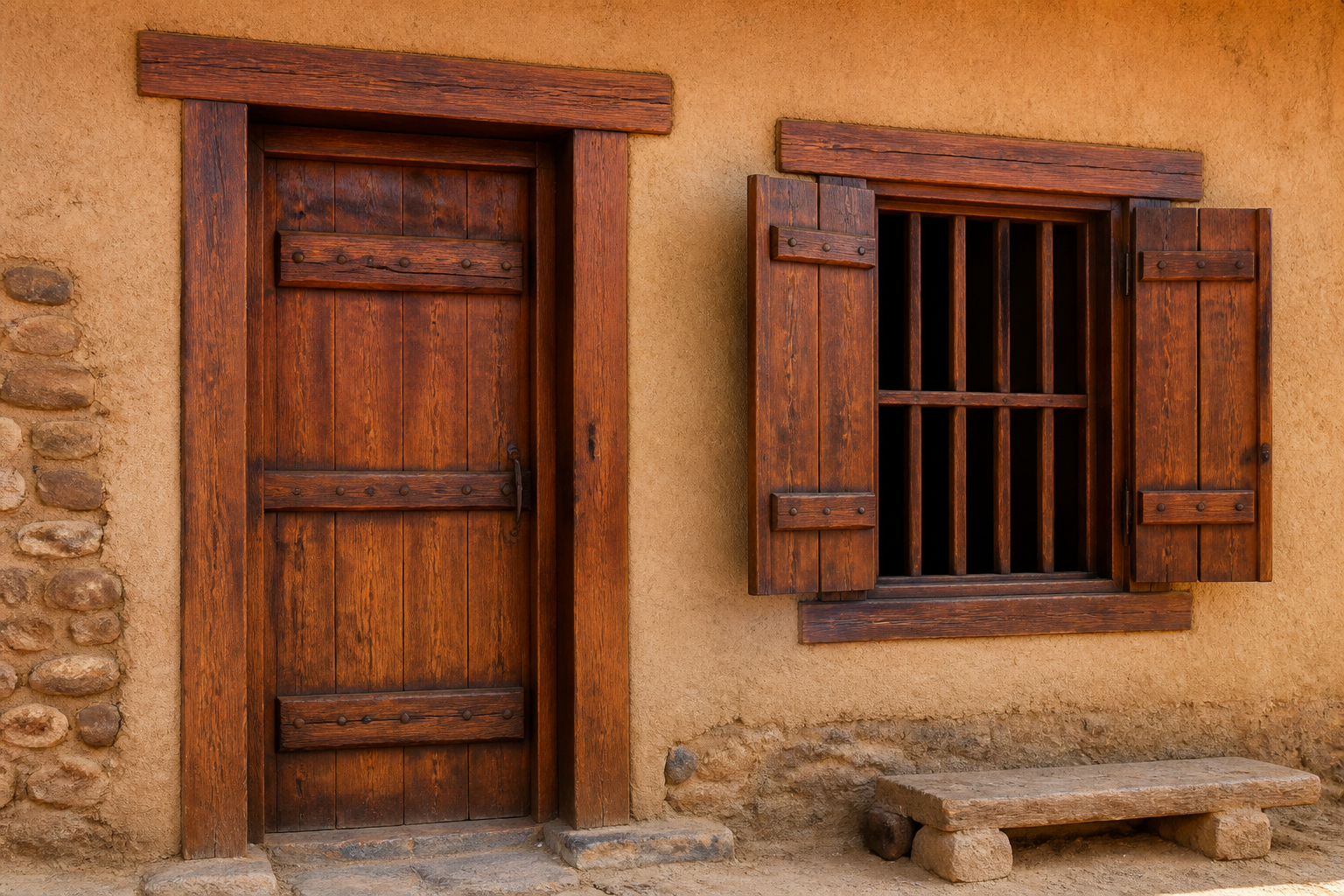

African Barwood is especially important locally. Timber is used in houses and for practical objects, while branches and stems become fuelwood or charcoal. Leaves are browsed by livestock, and bark and other plant parts have traditional uses.
- House posts, doors, frames, and general rural construction
- Furniture, stools, bowls, mortars, handles, and carving
- Fuelwood and charcoal
- Fodder and locally consumed plant parts
- Tanning and traditional preparations
Sustainability & Notes
The species is broadly distributed and has been assessed globally as Least Concern, but that does not mean every population is secure. Northern Burkina Faso and other heavily used regions have experienced strong local pressure from construction cutting, fuel demand, repeated fodder harvest, drought, and poor regeneration. Termite damage and prolonged dry seasons can further weaken stressed trees.
Favor legally harvested local material and suppliers who can identify the species and origin. Retaining seed trees, limiting branch removal, protecting seedlings, and supporting natural regeneration are important where communities depend on the tree for several products.
Comparative Notes & Related Species
African Padauk – Usually larger, more humid-forest associated, and better known for vivid orange-red commercial timber.
Mukula – A red-timbered south-central African species that has faced intense export pressure.
Round-Leaved Bloodwood – A close relative from southern Africa with broader rounded foliage.
Brenan’s Bloodwood – Another southern African relative; careful botanical identification is required.
Related Guides
- Wood Identification
- How to Identify Exotic Hardwood by Grain Pattern
- How to Store Exotic Wood Samples
Compare Wood Properties
See how this species ranks in density and hardness using our Wood Density & Janka Hardness Chart. You can also explore Hardest Woods, Softest Woods, and Most Dense Woods for quick comparisons.
Collector Notes
Label samples with full botanical name, locality, supplier, and date. The trade name barwood has been applied inconsistently, so provenance is essential.
Share Your Photos of This Species
Do you have lumber, wood samples, tree photographs, woodworking projects, furniture, carvings, turnings, musical instruments, or other items made from this species?
Exotic Woods of the World welcomes photographs from woodworkers, collectors, sawyers, researchers, and wood enthusiasts around the world. Selected submissions may be featured on this page and throughout our website to help document and showcase real-world examples of this species.
When submitting photos, please include the common name, scientific name (if known), a brief description, and any information you would like us to share with the image.
Wood Sample Collection
This species is part of an ongoing effort to document and preserve wood samples from around the world.
Learn more about contributing to the collection:
Resources
Authoritative botanical and forestry references used in compiling information about this species include:
• USDA Forest Service – Wood Handbook: Wood as an Engineering Material
https://www.fpl.fs.usda.gov/products/publications/
• The Wood Database – Global reference for wood identification, physical properties, and woodworking characteristics
https://www.wood-database.com/
• Royal Botanic Gardens, Kew – Plants of the World Online – Botanical taxonomy and species distribution database
https://powo.science.kew.org/
• International Union for Conservation of Nature (IUCN Red List) – Global conservation status assessments
https://www.iucnredlist.org/
• Convention on International Trade in Endangered Species (CITES) – International trade regulations for protected plant species
https://cites.org/
Additional forestry publications, academic research papers, and regional timber studies may also be referenced where available.
Love This Species?
Enjoy learning about this wood species?
Help support the continued growth of Exotic Woods of the World by participating in our Adopt a Species program. Your support helps fund species research, educational content, photography, videos, and future conservation awareness initiatives.
Support Forest Conservation
This species is part of the growing Exotic Woods of the World reference archive, dedicated to documenting and preserving knowledge of the world’s wood species.
Through the Adopt a Species program, visitors can help support ongoing species research, educational content, photography, video production, and future conservation awareness initiatives.
Contributions help fund the continued expansion of this archive while promoting sustainable forestry education and the long-term appreciation of the world’s forests.
Interested in supporting this species? Visit our Adopt a Species and Conservation Partners pages to learn more.
Availability & Where to Buy
Exotic hardwood availability can vary significantly depending on region, sustainability regulations, and supplier inventory.
As this archive grows, recommended suppliers and specialty wood retailers will be listed here to help woodworkers locate responsibly sourced material.
Lumber Suppliers:
Availability varies — see the Where to Buy Exotic Woods page for current sources.
Related Tools & Products:
Availability varies — see the Where to Buy Exotic Woods page for current sources.
Share This Wood Species
Stay Connected
Follow the latest species additions, educational resources, videos, conservation initiatives, and major project milestones through our Site Updates archive.
The Site Updates archive provides a permanent record of new content, library growth, and future developments across Exotic Woods of the World.