
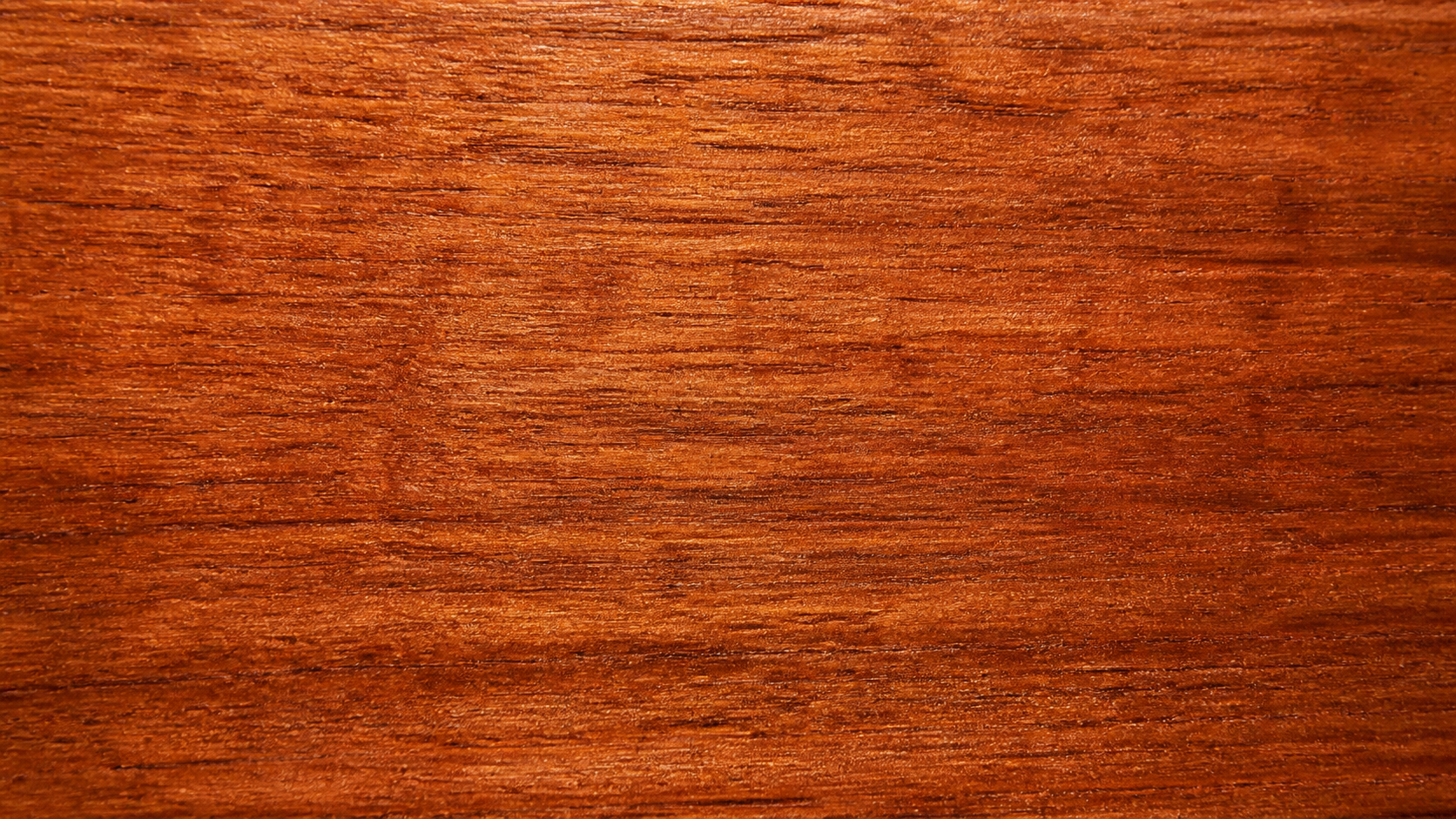
Round-Leaved Bloodwood
Scientific name: Pterocarpus rotundifolius
Overview
Round-Leaved Bloodwood (Pterocarpus rotundifolius) is a deciduous woodland tree or shrub native from Tanzania and Angola south to northern South Africa and Eswatini. It is recognized by its rounded crown, broad rounded leaflets, fragrant yellow to orange-yellow flowers, and winged fruits. Its often short or poorly shaped bole limits commercial lumber production, but the wood remains useful locally for furniture, handles, utensils, wagon parts, and fuel.
Quick Facts
- Common Name: Round-Leaved Bloodwood
- Alternate Common Name(s): Round-Leaved Teak
- Scientific Name: Pterocarpus rotundifolius
- Region: African Woods
- Tree Size: Up to about 59 ft (18 m) tall
- Average Dried Weight: Varies by source and growing conditions
- Janka Hardness: Reliable published data is unavailable
- Grain: Usually straight to irregular
- Texture: Medium and even
Identification Characteristics
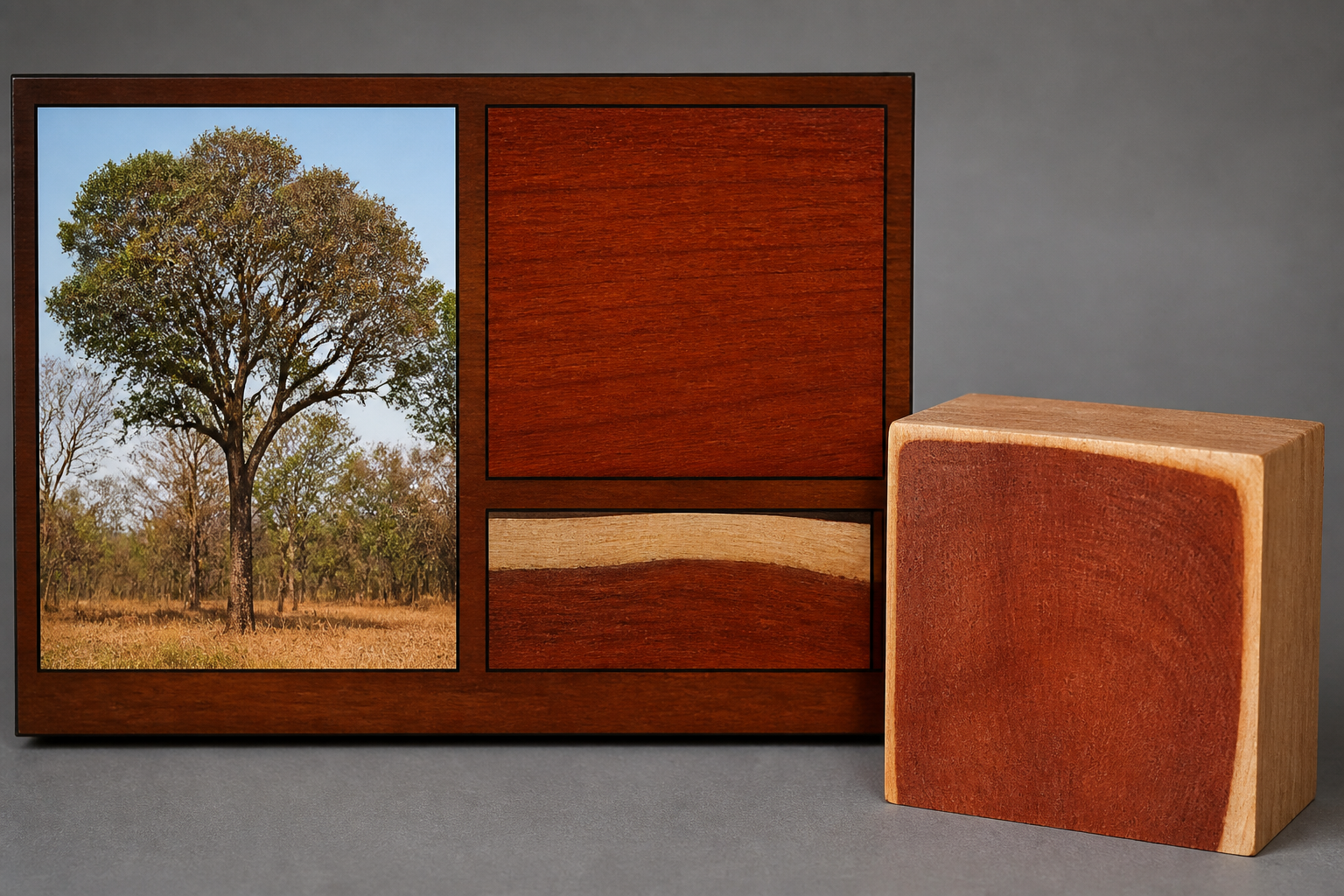
The tree has a rounded crown and gray or brown bark that flakes in scales. Young parts may be gray-silky or tawny-hairy. Broad, rounded leaflets distinguish it from narrower-leaved relatives. Profuse fragrant yellow or orange-yellow flowers are carried in loose spreading panicles.
Fruits are obovate to broadly elliptic, somewhat curved, and 1–2 seeded. Their narrow leathery wing surrounds a raised, radiating-veined center.
Key identification traits include:
- Deciduous tree or shrub with rounded crown
- Gray-brown scaling bark
- Broad rounded leaflets
- Fragrant yellow to orange-yellow flowers
- Flattened winged pods with raised central veins
- Warm reddish-brown timber from an often short bole

Working Properties
Material varies with subspecies, site, and bole quality. Use sharp tooling and test authenticated stock before production. The wood is suitable for turning, carving, furniture, and impact-resistant handles, while defects and irregular grain may reduce recovery from small stems.
- Inspect logs and boards for sweep, knots, and checks.
- Use light cuts on irregular grain.
- Pre-drill near ends and edges.
- Dry slowly with ends sealed.
- Test adhesives and finishes on offcuts.
- Keep authenticated samples labeled.
Safety Note
Use dust extraction, eye protection, and a fitted respirator. Bloodwood dust and extractives may irritate skin and airways; individual sensitivity varies.
Common Uses
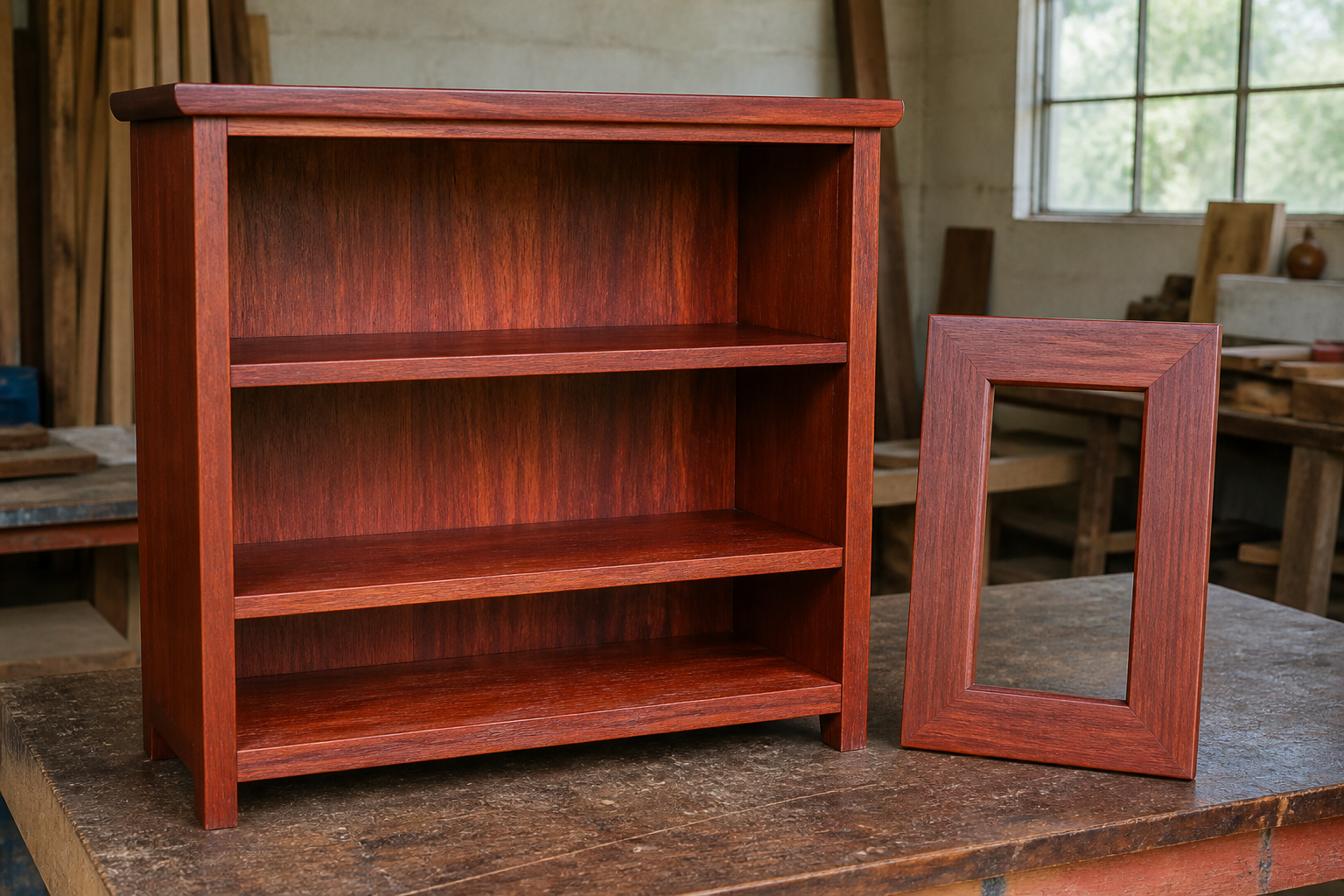

- Furniture, shelves, and picture frames
- Household utensils, bowls, and carving
- Wagon wheels and durable axe handles
- Firewood
- Fodder, bee forage, ornamental planting, and soil improvement
Sustainability & Notes
The species is widespread and not generally considered threatened, but local harvesting and land conversion still matter. Its multipurpose value for fuel, forage, bees, ornament, and soil conservation can exceed its limited commercial timber role. Retaining mature trees and encouraging seedlings supports woodland resilience.
Comparative Notes & Related Species
Mukula (Pterocarpus tinctorius) – A related southern and central African redwood species.
African Barwood (Pterocarpus lucens) – A dry-region relative used locally for timber and household objects.
Brenan’s Bloodwood (Pterocarpus brenanii) – Another African Pterocarpus compared by anatomy and provenance.
Related Guides
- Wood Identification
- How to Identify Exotic Hardwood by Grain Pattern
- How to Store Exotic Wood Samples
Compare Wood Properties
See how this species ranks in density and hardness using our Wood Density & Janka Hardness Chart. You can also explore Hardest Woods, Softest Woods, and Most Dense Woods for quick comparisons.
Collector Notes
Label the full scientific name, subspecies if known, locality, supplier, and date. Preserve both heartwood and sapwood when possible.
Share Your Photos of This Species
Do you have lumber, wood samples, tree photographs, woodworking projects, furniture, carvings, turnings, musical instruments, or other items made from this species?
Exotic Woods of the World welcomes photographs from woodworkers, collectors, sawyers, researchers, and wood enthusiasts around the world. Selected submissions may be featured on this page and throughout our website to help document and showcase real-world examples of this species.
When submitting photos, please include the common name, scientific name (if known), a brief description, and any information you would like us to share with the image.
Wood Sample Collection
This species is part of an ongoing effort to document and preserve wood samples from around the world.
Learn more about contributing to the collection:
Resources
Authoritative botanical and forestry references used in compiling information about this species include:
• USDA Forest Service – Wood Handbook: Wood as an Engineering Material
https://www.fpl.fs.usda.gov/products/publications/
• The Wood Database – Global reference for wood identification, physical properties, and woodworking characteristics
https://www.wood-database.com/
• Royal Botanic Gardens, Kew – Plants of the World Online – Botanical taxonomy and species distribution database
https://powo.science.kew.org/
• International Union for Conservation of Nature (IUCN Red List) – Global conservation status assessments
https://www.iucnredlist.org/
• Convention on International Trade in Endangered Species (CITES) – International trade regulations for protected plant species
https://cites.org/
Additional forestry publications, academic research papers, and regional timber studies may also be referenced where available.
Love This Species?
Enjoy learning about this wood species?
Help support the continued growth of Exotic Woods of the World by participating in our Adopt a Species program. Your support helps fund species research, educational content, photography, videos, and future conservation awareness initiatives.
Support Forest Conservation
This species is part of the growing Exotic Woods of the World reference archive, dedicated to documenting and preserving knowledge of the world’s wood species.
Through the Adopt a Species program, visitors can help support ongoing species research, educational content, photography, video production, and future conservation awareness initiatives.
Contributions help fund the continued expansion of this archive while promoting sustainable forestry education and the long-term appreciation of the world’s forests.
Interested in supporting this species? Visit our Adopt a Species and Conservation Partners pages to learn more.
Availability & Where to Buy
Exotic hardwood availability can vary significantly depending on region, sustainability regulations, and supplier inventory.
As this archive grows, recommended suppliers and specialty wood retailers will be listed here to help woodworkers locate responsibly sourced material.
Lumber Suppliers:
Availability varies — see the Where to Buy Exotic Woods page for current sources.
Related Tools & Products:
Availability varies — see the Where to Buy Exotic Woods page for current sources.
Share This Wood Species
Stay Connected
Follow the latest species additions, educational resources, videos, conservation initiatives, and major project milestones through our Site Updates archive.
The Site Updates archive provides a permanent record of new content, library growth, and future developments across Exotic Woods of the World.