
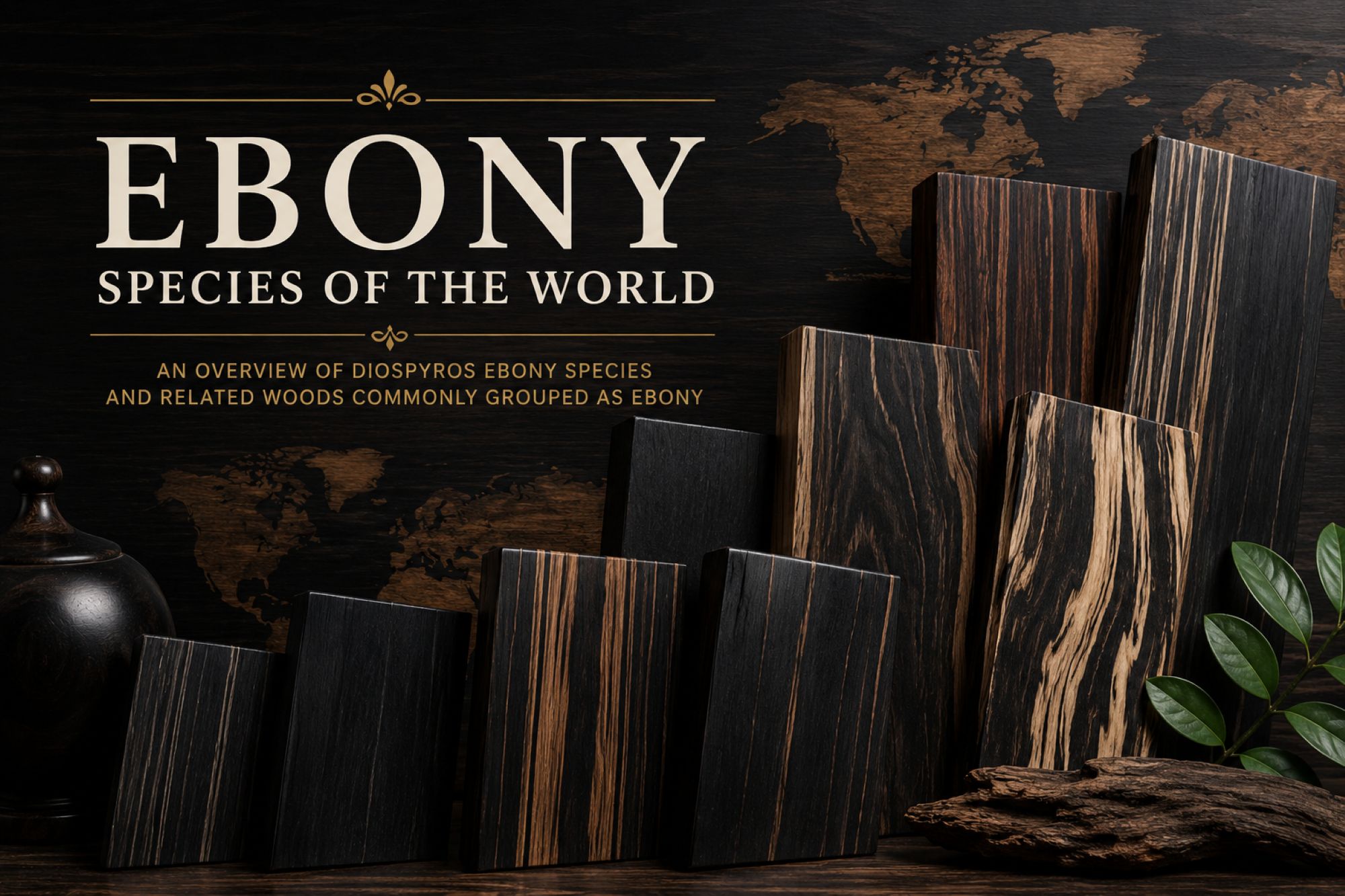
Ebony Species of the World
An educational overview of Diospyros ebony species and related woods commonly grouped as ebony throughout the world.
Overview
Ebony is one of the most recognizable and historically prized hardwood groups in the world. Known for its deep black coloration, extreme density, fine texture, and smooth natural finish, ebony has been used for centuries in luxury woodworking, musical instruments, carving, decorative inlay, and collectible craftsmanship.
Most true ebony species belong to the Diospyros genus, which contains hundreds of species distributed across Africa, Asia, Oceania, and parts of the Americas. While not every Diospyros species produces traditional black ebony heartwood, several species have become internationally known for their dark coloration and exceptional density.
Ebony woods are often associated with luxury, rarity, and fine detail work due to their appearance, hardness, and finishing qualities.
What Makes a Wood an Ebony?
Ebony species vary significantly in color, figure, and density, but many share several recognizable characteristics.
Common Ebony Characteristics
- Very dark brown to jet black heartwood
- Fine, smooth texture
- Extremely dense hardwood structure
- High natural polish and luster
- Minimal visible pore structure
- Excellent dimensional stability
- Sharp detail retention for carving and turning
- Slow growth and limited availability
- Premium appearance in finished work
Some ebony species display dramatic striping, marbling, or contrasting coloration rather than solid black heartwood.
Diospyros Species and True Ebonies
The following woods are among the most recognized species commonly grouped as ebony.
Gabon Ebony (Diospyros crassiflora)
One of the most famous true black ebonies, Gabon Ebony is prized for its nearly jet-black coloration, extreme density, and use in musical instruments and luxury woodworking.
Ceylon Ebony (Diospyros ebenum)
Ceylon Ebony is historically regarded as one of the finest ebony species in the world due to its uniform black coloration and exceptional finishing qualities.
Macassar Ebony (Diospyros celebica)
Macassar Ebony is known for its dramatic black and brown striping, making it one of the most visually distinctive ebony species.
Mun Ebony (Diospyros mun)
A Southeast Asian ebony species recognized for decorative contrast and dark heartwood coloration.
Malaysian Blackwood (Diospyros ferrea)
A dense tropical hardwood associated with ebony trade groups and valued for its dark appearance and durability.
Black and White Ebony (Diospyros malabarica)
Known for dramatic color contrast and decorative figure, Black and White Ebony is popular among woodturners and collectors.
Persimmon (Diospyros kaki)
Although lighter in color than traditional ebony species, Persimmon belongs to the Diospyros genus and shares botanical relationships with true ebonies.
American Persimmon (Diospyros virginiana)
An important North American member of the Diospyros genus historically associated with specialty woodworking and tool applications.
Other Woods Commonly Associated With Ebony
Several woods are commercially associated with ebony due to their coloration or density despite not belonging to the Diospyros genus.
Examples may include:
- African Blackwood
- Black Palm
- Bog Oak
- Wenge
These woods may resemble ebony visually but differ botanically and structurally.
Ebony Identification Characteristics
Ebony woods are often identifiable through a combination of color, density, texture, and finishing behavior.
Common Identification Traits
- Dark black or dark brown heartwood
- Fine, tight grain structure
- Smooth polished surface
- High density and weight
- Subtle pore visibility
- Crisp machining characteristics
- Strong contrast in striped species
Some ebony species may display brown, gold, gray, or cream-colored streaking depending on species and region.
Conservation and Trade Concerns
Many ebony species face conservation concerns due to slow growth rates, limited natural distribution, and high international demand.
Illegal harvesting and export restrictions have affected several ebony-producing regions, particularly in Africa and Southeast Asia.
Responsible sourcing and verified legality are increasingly important when purchasing ebony lumber, veneers, or finished products.
Several species are monitored or regulated under international trade agreements to help protect remaining populations.
Related Wood Species and Guides
Explore additional wood family and trade-group overview pages:
- Sustainability and Exotic Hardwood Trade
- Rosewoods of the World
- Shorea Species Overview
- African Mahogany Species Guide
- Purpleheart Species Guide
Compare Wood Properties
Compare density, hardness, and working characteristics across hundreds of wood species using the Exotic Woods of the World database.
Related resources:
- Wood Grain Patterns and Figure Explained
- Wood Density and Janka Hardness Chart
- Hardest Woods in the World
- Most Dense Woods in the World
Collector Notes
Ebony species remain among the most collectible woods in the world due to their rarity, appearance, density, and historical use in luxury craftsmanship.
Highly figured or unusually dark ebony material is especially sought after by collectors, instrument makers, woodturners, and specialty craftsmen. As availability continues to decline for some species, legally sourced ebony has become increasingly valuable within both woodworking and collector communities.