

Trident Maple
Scientific name: Acer buergerianum
Overview
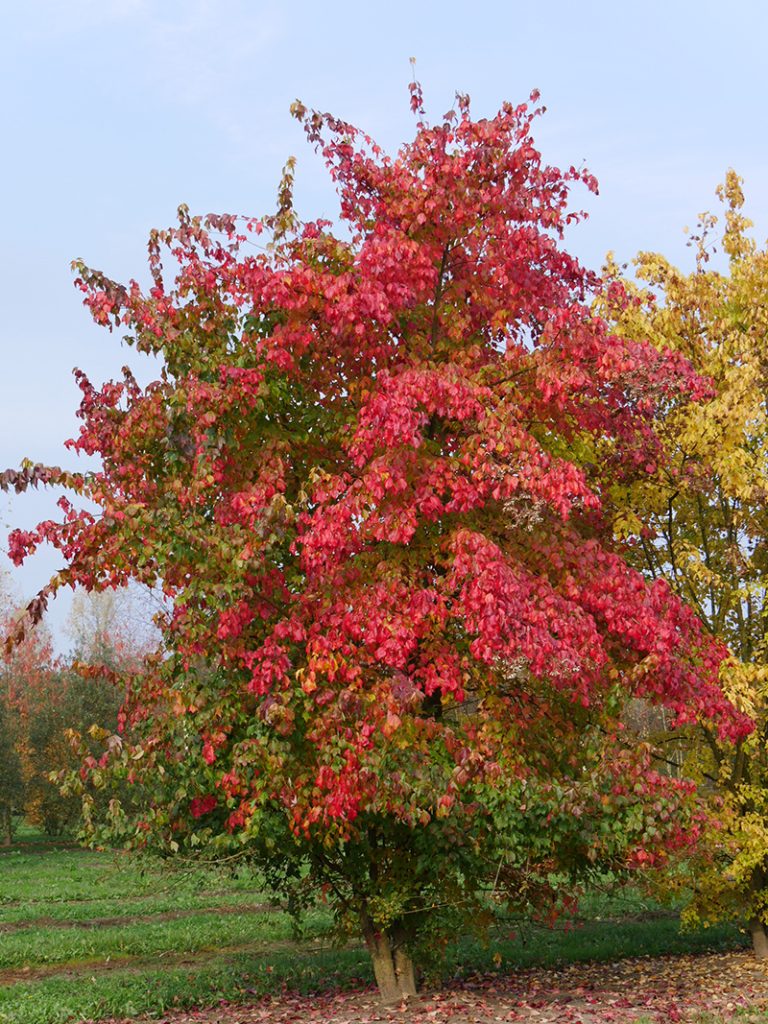
Trident Maple is a small to medium-sized deciduous hardwood tree in the Sapindaceae family, native to eastern Asia. Acer buergerianum occurs naturally in China and neighboring parts of the region and has been widely cultivated elsewhere as an ornamental landscape tree. It is easily recognized by its distinctive three-lobed leaves, which give the species its common name.
The wood is generally pale cream, yellowish brown, or light tan, sometimes developing warmer pinkish or reddish-brown tones in older central wood. Grain is usually straight to somewhat irregular, while texture is fine and even. Like many maples, carefully prepared surfaces can become exceptionally smooth and attractive.
Trident Maple is much better known as an ornamental and bonsai species than as a commercial timber tree. Its relatively modest trunk size limits conventional lumber production, but salvaged material can be useful for turning, carving, boxes, handles, decorative objects, and other small woodworking projects. This also makes properly identified specimens particularly interesting for comprehensive maple collections.
Quick Facts
- Common Name: Trident Maple
- Alternate Common Name(s): Three-Toothed Maple, Buerger Maple
- Scientific Name: Acer buergerianum
- Region: Asian Hardwoods
- Tree Size: Approximately 20–40 ft (6–12 m) tall, occasionally larger
- Average Dried Weight: Reliable standardized species-specific value not widely documented
- Janka Hardness: Reliable standardized species-specific value not widely documented
- Grain: Generally straight to somewhat irregular
- Texture: Fine and even
Identification Characteristics
Trident Maple generally produces pale cream to yellowish-brown or light tan wood. Older central portions of the trunk can sometimes develop warmer brown, pinkish, or reddish tones.
Sapwood is generally pale, and heartwood differentiation may be relatively subtle compared with strongly colored tropical hardwoods. Grain is usually straight in clear sections but can become irregular around branches, crotches, and other areas of changing growth.
Key identification traits include:
- Pale cream to yellowish-brown wood
- Occasional light tan or reddish-brown tones
- Generally subtle heartwood and sapwood contrast
- Usually straight grain
- Occasionally irregular grain
- Fine and even texture
- Smooth finished surfaces

Working Properties
Trident Maple’s fine, relatively even texture makes sound material suitable for precise small-scale woodworking. Sharp tools can produce clean surfaces, while its relatively small dimensions make the species particularly appropriate for turning, carving, and decorative work.
Irregular grain around branch junctions and other figured areas may require lighter cuts to prevent localized tear-out.
- Machines reasonably well
- Responds well to sharp cutting tools
- Suitable for detailed carving
- Suitable for wood turning
- Sands to a smooth surface
- Irregular grain requires careful machining
- Accepts finishes well
Safety Note
Detailed toxicity and allergy information specifically associated with Trident Maple wood dust is limited. As with other hardwoods, dust produced during sawing, routing, turning, and sanding can irritate the eyes, skin, and respiratory system.
Appropriate dust collection, eye protection, and respiratory protection are recommended during woodworking operations.
Common Uses
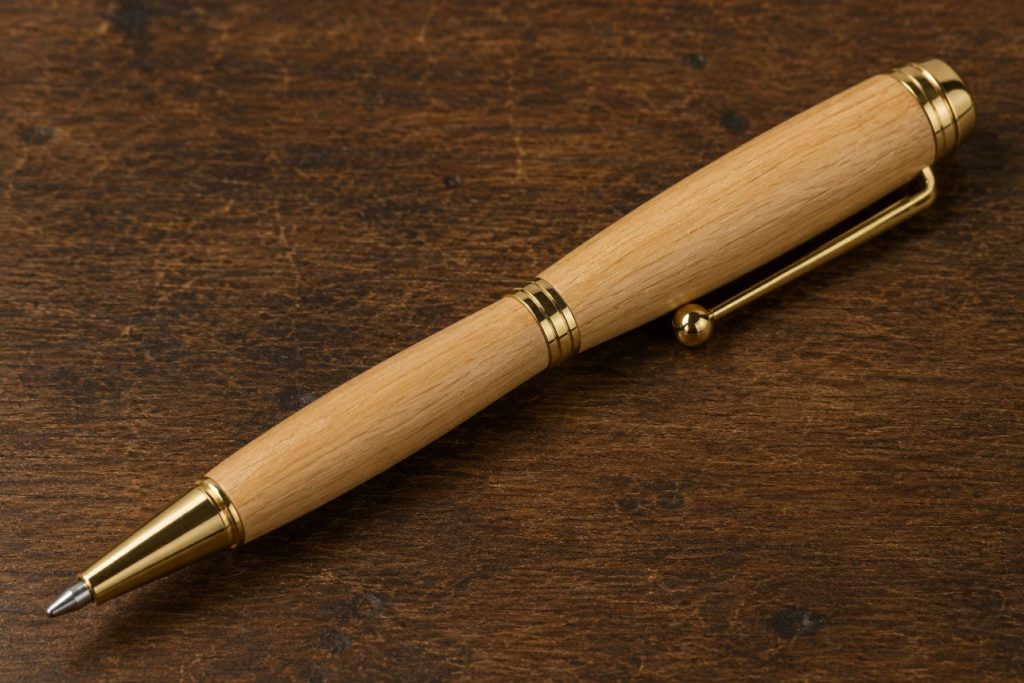
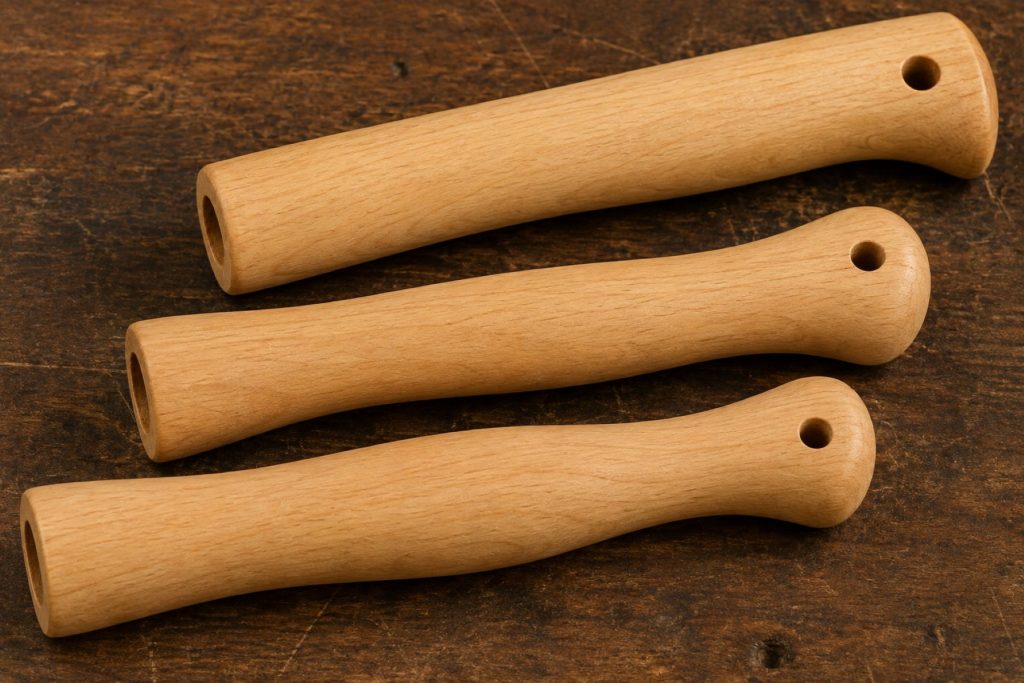
Trident Maple is primarily cultivated as an ornamental and bonsai tree rather than harvested as a commercial timber species. When salvaged material becomes available, its fine texture makes it useful for numerous small-scale woodworking applications, including:
- Wood turning
- Carving
- Small bowls
- Decorative boxes
- Handles
- Pens
- Craft objects
- Small furniture components
- Decorative accents
- Wood collections
Sustainability & Notes
Trident Maple is widely cultivated outside its native Asian range because of its attractive foliage, autumn coloration, tolerance of urban environments, and adaptability to pruning and shaping.
It is especially prominent in bonsai cultivation. Its relatively small leaves, branching characteristics, attractive bark, and ability to respond to repeated pruning have made it one of the better-known maple species among bonsai growers.
Because the tree has substantially greater economic importance as an ornamental than as a timber species, woodworking material commonly originates from landscape removals, storm damage, pruning, or other salvage sources rather than dedicated forest harvesting.
Using salvaged Trident Maple can provide useful woodworking material while preserving a record of a species that rarely appears in the conventional lumber trade.
Comparative Notes & Related Species
Japanese Maple – Another Asian maple strongly associated with ornamental horticulture and bonsai. Both species produce relatively small trunks compared with major commercial timber maples.
Amur Maple – A small northeastern Asian maple commonly cultivated as an ornamental and similarly encountered as salvaged woodworking material rather than conventional lumber.
Vine Maple – A smaller North American maple whose irregular growth and limited dimensions make it useful for turning, carving, decorative projects, and collector specimens.
Related Guides
Maple Species Guide
Explore the diversity of Acer and compare Trident Maple with Japanese Maple, Amur Maple, Sugar Maple, Black Maple, Vine Maple, Rocky Mountain Maple, and other maple species.
Maple vs. Oak
Compare two major hardwood groups based on grain, appearance, hardness, woodworking characteristics, applications, and other properties.
Best Woods for Wood Turning
Explore woods used for bowls, vessels, pens, handles, and decorative turning based on grain, density, hardness, stability, and workability.
Understanding Chatoyance in Wood
Learn how grain orientation, figure, and reflected light can create changing visual effects in maple and other hardwoods.
How to Identify Wood by End Grain Patterns
Explore how pores, rays, growth boundaries, and other anatomical features visible on end grain can assist with wood identification.
Compare Wood Properties
See how this species ranks in density and hardness using our Wood Density & Janka Hardness Chart. You can also explore Hardest Woods, Softest Woods, and Most Dense Woods for quick comparisons.
Collector Notes
Trident Maple is an interesting collector species because it represents another Asian member of Acer that is far better known as a living ornamental tree than as a source of lumber.
A documented specimen displayed alongside Japanese Maple and Amur Maple creates a particularly useful Asian maple grouping. Expanding the collection with Sugar Maple, Black Maple, Vine Maple, Rocky Mountain Maple, Striped Maple, and Mountain Maple can demonstrate the considerable variation found throughout the genus.
Specimens obtained from bonsai material can also be unusual collector pieces, although their small dimensions generally limit them to sample-sized sections.
Collector labels should retain the scientific name, geographic origin, acquisition information, and whether the material came from a native tree, landscape removal, or cultivated specimen whenever that information is available.
Share Your Photos of This Species
Do you have lumber, wood samples, tree photographs, woodworking projects, furniture, carvings, turnings, musical instruments, or other items made from this species?
Exotic Woods of the World welcomes photographs from woodworkers, collectors, sawyers, researchers, and wood enthusiasts around the world. Selected submissions may be featured on this page and throughout our website to help document and showcase real-world examples of this species.
When submitting photos, please include the common name, scientific name (if known), a brief description, and any information you would like us to share with the image.
Wood Sample Collection
This species is part of an ongoing effort to document and preserve wood samples from around the world.
Learn more about contributing to the collection:
Resources
Authoritative botanical and forestry references used in compiling information about this species include:
• USDA Forest Service – Wood Handbook: Wood as an Engineering Material
https://www.fpl.fs.usda.gov/products/publications/
• The Wood Database – Global reference for wood identification, physical properties, and woodworking characteristics
https://www.wood-database.com/
• Royal Botanic Gardens, Kew – Plants of the World Online – Botanical taxonomy and species distribution database
https://powo.science.kew.org/
• International Union for Conservation of Nature (IUCN Red List) – Global conservation status assessments
https://www.iucnredlist.org/
• Convention on International Trade in Endangered Species (CITES) – International trade regulations for protected plant species
https://cites.org/
Additional forestry publications, academic research papers, and regional timber studies may also be referenced where available.
Love This Species?
Enjoy learning about this wood species?
Help support the continued growth of Exotic Woods of the World by participating in our Adopt a Species program. Your support helps fund species research, educational content, photography, videos, and future conservation awareness initiatives.
Support Forest Conservation
This species is part of the growing Exotic Woods of the World reference archive, dedicated to documenting and preserving knowledge of the world’s wood species.
Through the Adopt a Species program, visitors can help support ongoing species research, educational content, photography, video production, and future conservation awareness initiatives.
Contributions help fund the continued expansion of this archive while promoting sustainable forestry education and the long-term appreciation of the world’s forests.
Interested in supporting this species? Visit our Adopt a Species and Conservation Partners pages to learn more.
Availability & Where to Buy
Exotic hardwood availability can vary significantly depending on region, sustainability regulations, and supplier inventory.
As this archive grows, recommended suppliers and specialty wood retailers will be listed here to help woodworkers locate responsibly sourced material.
Lumber Suppliers:
Availability varies — see the Where to Buy Exotic Woods page for current sources.
Related Tools & Products:
Availability varies — see the Where to Buy Exotic Woods page for current sources.
Share This Wood Species
Stay Connected
Follow the latest species additions, educational resources, videos, conservation initiatives, and major project milestones through our Site Updates archive.
The Site Updates archive provides a permanent record of new content, library growth, and future developments across Exotic Woods of the World.