
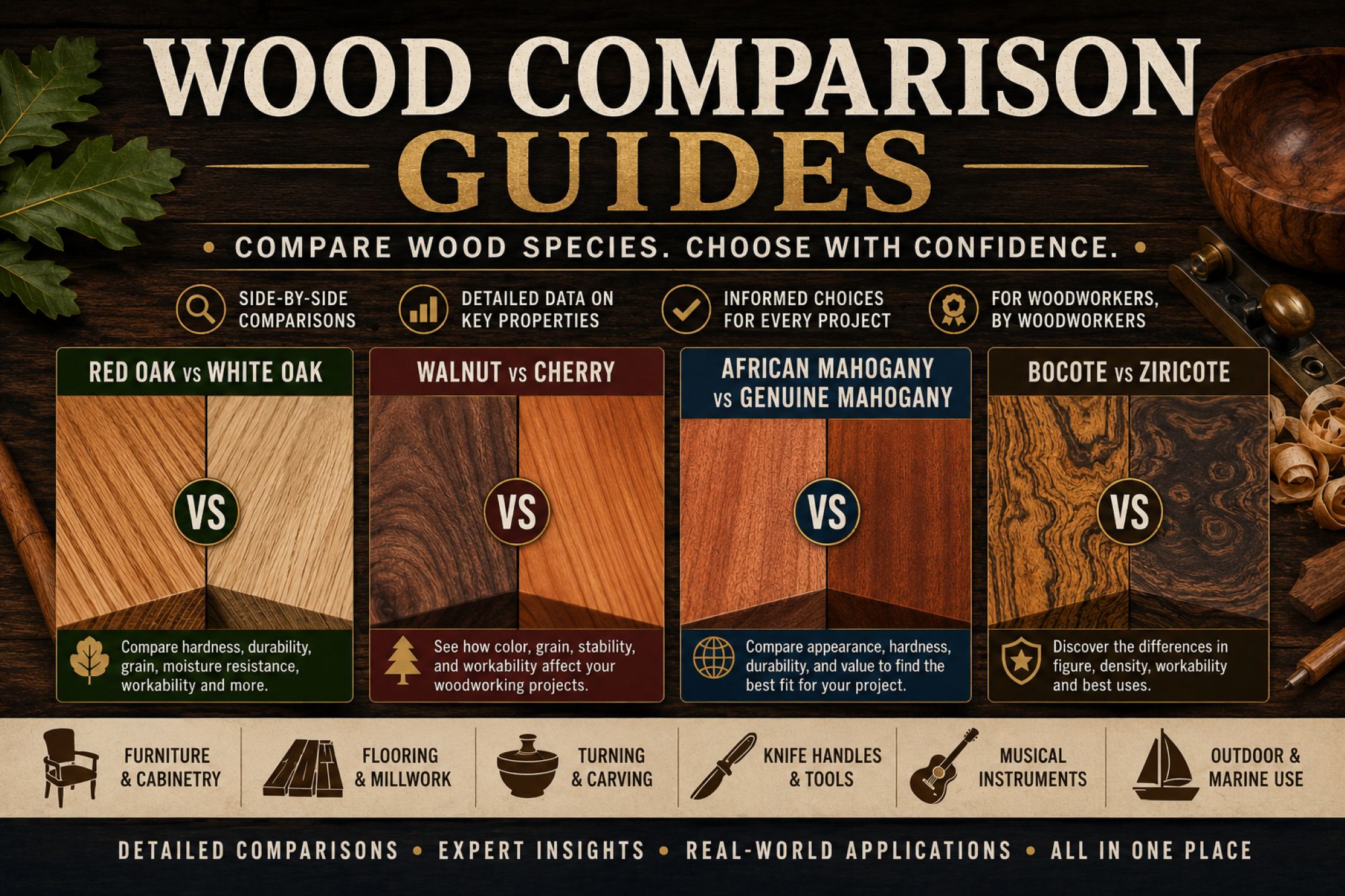
Wood Comparison Guides
Compare wood species side by side to better understand their appearance, hardness, density, durability, workability, stability, and the woodworking applications where each species excels.
Overview
Choosing the right wood often means comparing two or more species with similar characteristics. While many woods may appear alike at first glance, differences in hardness, density, grain pattern, durability, dimensional stability, workability, and cost can significantly affect a project’s success.
The Wood Comparison Guides collection is designed to help woodworkers, collectors, furniture makers, woodturners, and woodworking enthusiasts make informed decisions by providing detailed, side-by-side comparisons of the world’s most popular hardwoods and softwoods.
Each comparison examines the strengths and weaknesses of both species, highlights their best applications, and provides a category-by-category breakdown to help determine which wood is best suited for your needs.
Whether you’re selecting lumber for fine furniture, hardwood flooring, cabinetry, knife handles, musical instruments, or outdoor projects, these guides provide an easy-to-understand comparison of the characteristics that matter most.
What You’ll Find in Every Comparison
Each Wood Comparison Guide includes detailed side-by-side evaluations of:
- Appearance
- Grain and Texture
- Janka Hardness
- Density
- Dimensional Stability
- Natural Durability
- Workability
- Turning Performance
- Carving Performance
- Furniture Applications
- Cabinetry Applications
- Flooring Performance
- Knife Handle Suitability
- Musical Instrument Applications
- Outdoor Performance (when applicable)
- Availability
- Overall Value
- Final Recommendation
Each guide concludes with an overall winner while explaining the strengths and ideal uses of both species.
Featured Wood Comparisons
Red Oak vs. White Oak
Compare two of North America’s most widely used hardwoods, examining their hardness, moisture resistance, flooring performance, cabinetry applications, and overall durability.
Walnut vs. Cherry
Discover the differences between two classic furniture woods, comparing color, grain, stability, workability, and heirloom furniture applications.
African Mahogany vs. Genuine Mahogany
Explore how African Mahogany compares with Genuine Mahogany in appearance, hardness, stability, durability, workability, and value.
Bocote vs. Ziricote
Compare two spectacular exotic hardwoods known for their dramatic grain patterns, premium appearance, knife handle performance, and luxury woodworking applications.
Domestic Hardwood Comparisons
The following comparisons are planned for future publication:
- Hard Maple vs. Soft Maple
- White Oak vs. Hickory
- Walnut vs. Maple
- Cherry vs. Maple
- Maple vs. Oak
- Ash vs. Hickory
- Birch vs. Maple
- White Ash vs. Red Oak
- Beech vs. Maple
- Sycamore vs. Maple
- Hickory vs. Oak
Additional comparisons will be added as the Exotic Woods of the World archive continues to grow.
Exotic Hardwood Comparisons
Future comparison guides include:
- Purpleheart vs. Padauk
- Cocobolo vs. Kingwood
- Ebony vs. African Blackwood
- Wenge vs. Ebony
- Sapele vs. Genuine Mahogany
- Bubinga vs. Rosewood
- Zebrawood vs. Wenge
- Teak vs. Ipe
- Zebrawood vs. Goncalo Alves
- Leopardwood vs. Lacewood
- Bloodwood vs. Padauk
- Goncalo Alves vs. Bocote
Softwood Comparisons
Future guides will compare some of the world’s most important commercial softwoods.
Planned comparisons include:
- Pine vs. Spruce
- Pine vs. Fir
- Pine vs. Cedar
- Douglas-fir vs. Hemlock
- Cedar vs. Redwood
- Cypress vs. Cedar
- Spruce vs. Fir
- White Pine vs. Longleaf Pine
Compare Woods by Application
Looking for the best wood for a specific project? These comparison guides can help narrow your choices.
Furniture
Compare woods commonly used in:
- Fine Furniture
- Dining Tables
- Bedroom Furniture
- Shaker Furniture
- Heirloom Projects
Cabinetry
Compare species used for:
- Kitchen Cabinets
- Bathroom Vanities
- Built-ins
- Architectural Millwork
Flooring
Compare flooring favorites based on:
- Hardness
- Wear Resistance
- Stability
- Appearance
Knife Handles
Compare premium handle woods based on:
- Density
- Stability
- Moisture Resistance
- Figure
- Durability
Musical Instruments
Compare tonewoods commonly used for:
- Guitars
- Ukuleles
- Fingerboards
- Decorative Components
Outdoor Projects
Compare woods based on:
- Decay Resistance
- Moisture Resistance
- Longevity
- Exterior Performance
Why Compare Wood Species?
Many wood species share similar appearances but perform very differently in real-world applications.
Understanding these differences can help you:
- Choose the best wood for your project
- Avoid costly mistakes
- Improve long-term durability
- Select the proper hardness
- Understand workability differences
- Compare overall value
- Discover suitable substitutes for expensive or rare species
Whether you’re building furniture, installing flooring, crafting knife handles, or collecting exotic woods, informed comparisons lead to better results.
Related Guides
Continue exploring the Exotic Woods of the World guide library:
- Wood Family & Species Guides
- Best Woods for Furniture
- Best Woods for Flooring
- Best Woods for Cabinetry
- Best Woods for Knife Handles
- Best Woods for Wood Turning
- Wood Grain Patterns and Figure Explained
- Wood Density and Janka Hardness Chart
- Understanding Wood Movement and Seasonal Expansion
Collector Notes
Comparing wood species is one of the best ways to understand the remarkable diversity found throughout the woodworking world. Even closely related species can differ significantly in appearance, hardness, stability, durability, and workability. By examining these characteristics side by side, woodworkers and collectors gain a deeper appreciation for the strengths of each species and can confidently select the best material for every project.
As additional comparison guides are published, this collection will continue to expand, creating one of the most comprehensive wood comparison resources available online.