
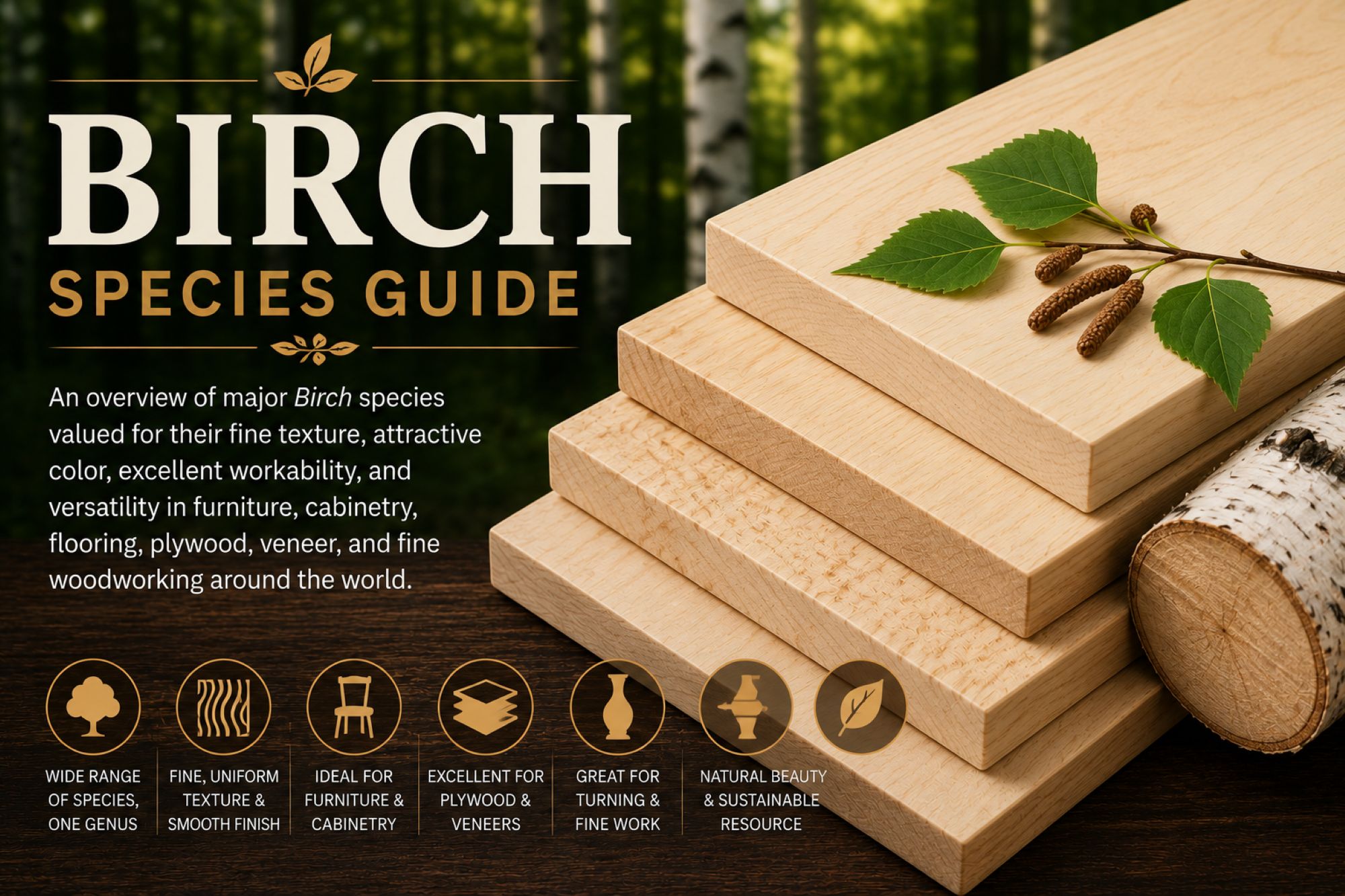
Birch Species Guide
Overview of major Birch species including Yellow Birch, Paper Birch, Sweet Birch, and other important hardwoods used in furniture, flooring, plywood, cabinetry, and commercial timber production throughout the world.
Overview
The Betula genus, commonly known as Birch, contains some of the most widely distributed and economically important hardwood species in the Northern Hemisphere. Native to North America, Europe, and Asia, Birch trees are valued for their attractive appearance, excellent workability, and versatility in both commercial and fine woodworking applications.
Birch wood has long been used for furniture, cabinetry, flooring, plywood, veneer, turned objects, and specialty woodworking. Certain species are also prized for decorative figure, while others have historically been important for paper production, bark products, and traditional crafts.
This guide serves as an overview of the broader Birch group and its most notable timber-producing species.
The Betula Genus
The Betula genus belongs to the Betulaceae family and contains more than 60 recognized species distributed throughout temperate and boreal regions.
Birch species are known for:
- Fine, uniform texture
- Excellent machining properties
- Attractive coloration
- Good strength characteristics
- Versatile woodworking applications
- Important plywood production
- Decorative bark
- Broad geographic distribution
Many Birch species are among the most recognizable trees in northern forests.
Notable Birch Species
The Birch genus contains numerous commercially important timber species.
Featured Birch Species
Yellow Birch (Betula alleghaniensis)
The most important commercial Birch species in North America, Yellow Birch is widely used for furniture, cabinetry, flooring, veneer, and millwork.
Paper Birch (Betula papyrifera)
One of North America’s most recognizable trees, Paper Birch is known for its distinctive white bark and versatility in woodworking applications.
Sweet Birch (Betula lenta)
A dense and durable species valued for furniture, flooring, cabinetry, and specialty woodworking projects.
River Birch (Betula nigra)
A popular ornamental and utility species recognized for its distinctive peeling bark and adaptability.
Silver Birch (Betula pendula)
A highly important European timber species known for its attractive appearance and commercial value.
Additional Birch Species
The following species are notable members of the Betula genus and may be added to the Exotic Woods of the World archive in the future:
- Gray Birch (Betula populifolia)
- Downy Birch (Betula pubescens)
- Japanese White Birch (Betula platyphylla)
- Monarch Birch (Betula maximowicziana)
- Erman’s Birch (Betula ermanii)
- Himalayan Birch (Betula utilis)
- Water Birch (Betula occidentalis)
- Alaska Birch (Betula neoalaskana)
- Sweet Birch (Betula lenta)
- Dwarf Birch (Betula nana)
As additional Birch species are added to Exotic Woods of the World, they will be incorporated into this guide and linked to their individual species pages.
Common Characteristics of Birch Woods
Although individual species vary, many Birch woods share several defining characteristics.
Common Birch Traits
- Medium-density hardwood structure
- Fine, uniform texture
- Light cream to pale brown coloration
- Good machining characteristics
- Smooth finishing qualities
- Moderate durability
- Excellent veneer properties
- Strong dimensional stability
Birch is often chosen when a smooth, consistent appearance is desired.
Common Uses
Birch woods are used throughout the world in a wide variety of woodworking applications.
Common Applications
- Furniture
- Cabinetry
- Flooring
- Plywood
- Veneer
- Millwork
- Turned objects
- Interior trim
- Decorative woodworking
- Toys
- Kitchenware
- Specialty wood products
Its combination of workability and affordability has made Birch a staple hardwood in many industries.
Birch Identification Characteristics
Many Birch species share several recognizable visual characteristics.
Common Identification Traits
- Cream to pale yellow coloration
- Fine, uniform texture
- Closed grain structure
- Smooth appearance
- Subtle growth rings
- Good natural luster
- Clean finishing qualities
The trees themselves are often recognized by their distinctive bark patterns and coloration.
Sustainability and Conservation
Most commercially harvested Birch species remain abundant throughout their native ranges and are managed through established forestry programs.
Sustainability considerations may vary depending on:
- Species
- Harvest region
- Forest management practices
- Certification programs
- Conservation regulations
Many Birch forests benefit from sustainable forestry practices throughout North America, Europe, and Asia.
Related Wood Family and Trade Group Pages
Explore additional wood family and trade-group guides:
- Maple Species Guide
- Ash Species Guide
- Oak Species Guide
- Hickory Species Guide
- Wood Families & Trade Groups
Compare Wood Properties
Compare Birch woods alongside hundreds of hardwood species using the Exotic Woods of the World database.
Related resources:
- Wood Density and Janka Hardness Chart
- Hardest Woods in the World
- Most Dense Woods in the World
- Wood Grain Patterns and Figure Explained
Collector Notes
Birch represents one of the most versatile hardwood groups in the world. From the premium furniture-grade timber of Yellow Birch to the iconic white bark of Paper Birch and the strength of Sweet Birch, the Betula genus offers remarkable diversity for woodworkers and collectors alike. Understanding the broader Birch group helps place individual species within their proper botanical context while highlighting the importance of these valuable northern hardwoods.