
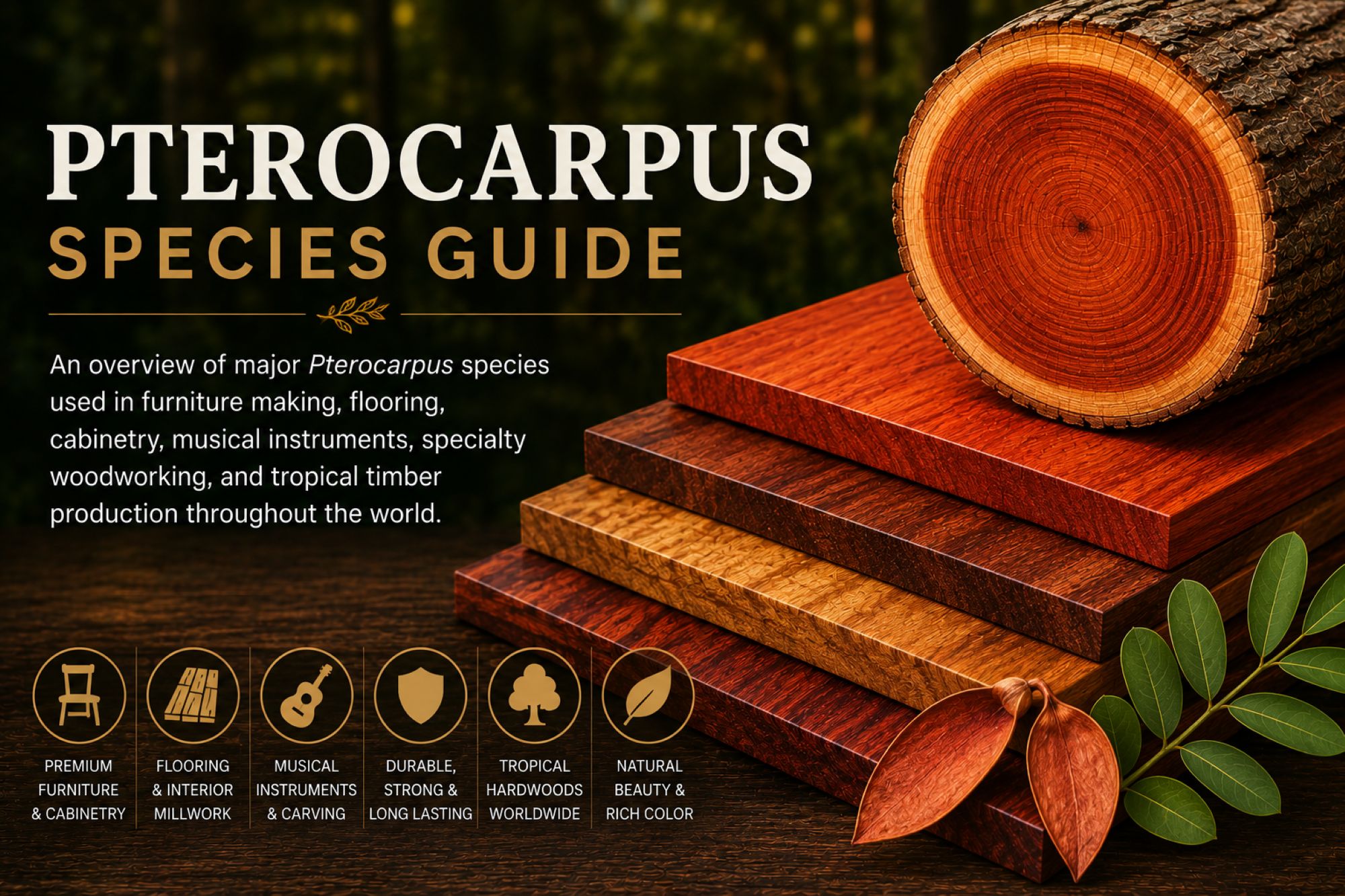
Pterocarpus Species Guide
Overview of major Pterocarpus species used in furniture making, flooring, cabinetry, musical instruments, specialty woodworking, and tropical timber production throughout the world.
Overview
The Pterocarpus genus contains some of the world’s most recognizable and highly valued tropical hardwoods. Found throughout Africa, Asia, Central America, and South America, Pterocarpus species are known for their attractive coloration, durability, workability, and decorative grain patterns.
Several members of the genus are marketed under well-known trade names such as Padauk, Narra, Muninga, and Kosso. These woods have long been prized for furniture making, flooring, cabinetry, musical instruments, carving, and specialty woodworking applications.
This guide serves as an overview of the broader Pterocarpus genus and its most notable timber-producing species.
The Pterocarpus Genus
The Pterocarpus genus belongs to the Fabaceae family, one of the largest plant families in the world.
Pterocarpus species are known for:
- Attractive reddish and golden-brown coloration
- Excellent workability
- Good durability
- Decorative grain patterns
- Strong dimensional stability
- Fine furniture applications
- Musical instrument use
- Valuable commercial timber production
Many species develop rich colors that deepen and mature beautifully with age.
Notable Pterocarpus Species
The genus contains numerous commercially important timber species distributed throughout tropical regions of the world.
Featured Pterocarpus Species
African Padauk (Pterocarpus soyauxii)
One of Africa’s most recognizable hardwoods, African Padauk is valued for its bright reddish-orange coloration, durability, and excellent woodworking properties.
Asian Padauk (Pterocarpus macrocarpus)
A highly prized Southeast Asian hardwood used in furniture, flooring, carving, and architectural woodworking.
Andaman Padauk (Pterocarpus dalbergioides)
Native to the Andaman Islands, this species produces attractive reddish timber valued for fine woodworking and furniture applications.
Narra (Pterocarpus indicus)
The national tree of the Philippines and one of Asia’s most celebrated furniture woods, prized for its beauty and decorative figure.
Muninga (Pterocarpus angolensis)
An important African hardwood known for its stability, workability, and use in high-quality furniture production.
Kosso (Pterocarpus erinaceus)
A West African hardwood valued for furniture, flooring, cabinetry, and decorative woodworking applications.
Additional Pterocarpus Species
The following species are notable members of the genus and may be added to the Exotic Woods of the World archive in the future:
- Red Sandalwood (Pterocarpus santalinus)
- Indian Kino Pterocarpus marsupium
- Pterocarpus officinalis
- Sangre (Pterocarpus rohrii)
- Acapulco Rosewood (Pterocarpus acapulcensis)
- Mildbraed’s Pterocarpus Pterocarpus mildbraedii
- African Barwood Pterocarpus lucens
- Tessmann’s Padauk (Pterocarpus tessmannii)
- Brenan’s Bloodwood (Pterocarpus brenanii)
- Osun (Pterocarpus osun)
- Round-Leaved Bloodwood (Pterocarpus rotundifolius)
- Mukula (Pterocarpus tinctorius)
As additional Pterocarpus species are added to Exotic Woods of the World, they will be incorporated into this guide and linked to their individual species pages.
Common Characteristics of Pterocarpus Woods
Although individual species vary, many Pterocarpus woods share several recognizable traits.
Common Pterocarpus Traits
- Medium to high-density hardwood structure
- Fine to medium texture
- Attractive coloration
- Good natural luster
- Straight to interlocked grain
- Excellent workability
- Good durability
- Strong dimensional stability
These qualities have made the genus one of the most respected hardwood groups among woodworkers.
Common Uses
Pterocarpus woods are used throughout the world in both decorative and structural applications.
Common Applications
- Fine furniture
- Cabinetry
- Flooring
- Musical instruments
- Veneer
- Turned objects
- Carving
- Architectural millwork
- Decorative woodworking
- Specialty wood products
Many species are particularly valued for their ability to combine beauty with durability.
Identification Characteristics
While species vary considerably, many members of the genus share several visual characteristics.
Common Identification Traits
- Golden-brown to reddish-orange heartwood
- Fine to medium texture
- Moderate natural luster
- Attractive grain patterns
- Good figure development
- Straight or slightly interlocked grain
- Rich color variation
Many species darken and mature in color over time.
Sustainability and Conservation
Several Pterocarpus species face increasing conservation concerns due to habitat loss, illegal logging, and high commercial demand.
Sustainability considerations may vary depending on:
- Species
- Country of origin
- Harvest regulations
- Certification programs
- Forest management practices
Responsible sourcing helps support the long-term conservation of tropical hardwood resources worldwide.
Related Wood Family and Trade Group Pages
Explore additional wood family and trade-group guides:
- Rosewoods of the World
- Acacia Species Guide
- Purpleheart Species Guide
- Eucalyptus Species Overview
- Wood Families & Trade Groups
Compare Wood Properties
Compare Pterocarpus woods alongside hundreds of hardwood species using the Exotic Woods of the World database.
Related resources:
- Wood Density and Janka Hardness Chart
- Hardest Woods in the World
- Most Dense Woods in the World
- Wood Grain Patterns and Figure Explained
Collector Notes
The Pterocarpus genus contains some of the most beautiful and commercially important hardwoods in the world. From the vivid coloration of Padauk to the highly prized figure of Narra, these species have earned a reputation for combining durability, workability, and visual appeal. Understanding the broader Pterocarpus genus helps collectors appreciate the remarkable diversity found within one of the world’s premier hardwood groups.